What should I look for when booking a luxury African safari?
When booking a luxury African safari, look beyond the room and compare the quality of guiding, wildlife location,…
Read article

Travel Guide
An African safari can look financially impossible when students begin researching it online. Search for Serengeti and you may find luxury tented camps charging hundreds or even thousands of dollars per night. Search for Botswana and…
An African safari can look financially impossible when students begin researching it online. Search for Serengeti and you may find luxury tented camps charging hundreds or even thousands of dollars per night. Search for Botswana and the results may feature private aircraft and ultra-exclusive wilderness lodges. Search for gorilla trekking and you immediately encounter the additional cost of a regulated trekking permit.
For someone paying university fees, saving for a graduation trip, traveling during a gap year or working with a limited summer budget, it can seem as though safari belongs entirely to wealthy travelers. That conclusion is wrong. Africa certainly has one of the world’s most sophisticated luxury-travel industries, but wildlife itself is not a luxury product. Students can experience lions, elephants, giraffes, zebras, chimpanzees and even mountain gorillas through carefully designed budget African safaris, group departures, camping itineraries, simpler lodges and intelligently planned road travel.
The crucial skill is understanding which safari expenses genuinely matter and which can be reduced. A mountain gorilla does not behave differently because you slept in a US$70 guesthouse instead of a US$700 lodge. A lion in the Masai Mara does not reserve its best behavior for luxury vehicles. The Serengeti sunset is identical whether you return afterward to an extravagant suite or a straightforward tented camp.
Students therefore need to stop trying to imitate luxury safari itineraries at a lower price and instead design trips specifically for value. This detailed guide to student safari deals in Africa explains how to do that.
Before reducing the price, understand what creates it. Unlike an ordinary city holiday, a safari often includes a dedicated vehicle, fuel, a professional driver-guide, national park entrance charges, accommodation, meals and travel through remote regions. Some activities require special permits. Gorilla trekking is the clearest example. Domestic flights can add substantial cost. Premium safari camps also charge high rates because operating in remote wilderness involves complex logistics. Food, fuel, staff supplies and maintenance may need to travel long distances. Students cannot realistically eliminate these costs.
But they can distribute, replace or reduce many of them.
Transportation is one of the strongest areas for saving money. A private 4×4 used by one traveler can be expensive. Place four, five or six travelers into an appropriately designed vehicle and the transport cost per person can drop substantially. This is why student small-group safaris are so valuable. The guide’s cost is shared. Fuel is shared. The safari vehicle is shared. Some transfer expenses are shared. Each traveler still pays personal accommodation and park fees, but group economics make the overall package much more manageable. For university friends planning a graduation safari, traveling together can therefore create significant savings before changing any destination.
Do not assume bigger is always better. A twelve- or twenty-person overland trip may reduce costs further but produces a different experience from a six-person 4×4 safari. Wildlife viewing requires visibility. Photography requires space. Getting in and out of a vehicle repeatedly takes time. For a wildlife-focused safari, a group small enough for reasonable viewing access often produces the best balance between affordability and quality. Ask the operator for the maximum vehicle occupancy, not merely whether the tour is described as “small group.”
Backpacking and safari travel overlap, but they are not the same. A student can backpack between cities and towns using public transport. Inside many major wildlife areas, however, a suitable safari vehicle and guide become important. Attempting to convert every stage of a safari into independent backpacking can create poor logistics and sometimes compromise safety or access.
A stronger strategy is hybrid travel. Travel inexpensively before and after the wildlife section. Use hostels or guesthouses in major towns. Then join a professionally arranged group safari for the days when you actually need safari infrastructure.
There is no universally cheapest country. The best option depends on airfare, park fees, trip length, wildlife goals and starting city. However, Uganda, Kenya, Tanzania and South Africa all provide strong possibilities for student travelers for different reasons. Uganda stands out for travelers wanting primates and savannah wildlife. Kenya has an enormous established group-safari industry. Tanzania provides the iconic Serengeti and Ngorongoro circuit with numerous scheduled options. South Africa offers flexible combinations of independent travel and guided wildlife experiences.
Uganda can provide extraordinary value for students who want a genuinely diverse wildlife trip. The country combines mountain gorillas, chimpanzees, savannah wildlife, boat safaris, waterfalls, lakes and adventure activities. A longer road trip can therefore provide more ecological variety than a safari focused only on classic grassland game viewing. The principal budgeting challenge is gorilla trekking.
The official permit represents a significant fixed expense. Yet that does not automatically make the total journey unaffordable. Students can reduce accommodation costs, travel as a group, choose an efficient route and avoid luxury properties.
The phrase cheap gorilla trekking needs to be understood carefully. There is no legitimate strategy whereby a student negotiates an unofficial discounted permit at the forest entrance. Gorilla tourism is regulated. The correct way to create a more affordable experience is to reduce the surrounding safari costs. Share transport. Use budget accommodation. Combine trekking with other destinations efficiently. Avoid unnecessary flights. Travel with friends. A well-designed budget gorilla safari in Uganda can therefore be considerably cheaper than a luxury gorilla itinerary while providing the same core regulated encounter with a habituated gorilla family.
Bwindi Impenetrable National Park is the center of Uganda’s gorilla tourism. The park has several trekking sectors. Safari routing should consider the sector assigned by the permit because accommodation and road transfers need to match it. Students should resist booking the cheapest lodge they find online without checking geography. Bwindi is mountainous. A lodge associated broadly with “Bwindi” can still be far from the actual trekking starting point. Saving money on the room while adding an extremely long predawn transfer is poor value.
One of the strongest ways to increase the value of a Uganda student trip is combining gorillas with Queen Elizabeth National Park. This adds traditional wildlife without requiring an entirely separate international journey.
Game drives provide opportunities for elephants, buffaloes, antelopes and predators. The Kazinga Channel boat safari adds hippos, waterbirds and animals approaching the shoreline. A student who imagined Uganda only as a gorilla destination suddenly receives a much broader safari.
Students with additional time can include chimpanzee trekking in Uganda. Kibale National Park is the country’s most famous chimpanzee destination. Other forest experiences may fit different routes. Chimpanzee trekking is highly energetic compared with the quieter character of gorilla observation. Chimpanzees move through the forest, vocalize loudly and interact socially. For biology, conservation or environmental-science students, combining gorillas and chimpanzees can become much more than tourism. It becomes an immersive lesson in primate ecology.
Uganda works especially well for small university groups. Students studying conservation, zoology, geography, development, tourism, photography or environmental science can combine safari with educational interests. However, academic framing should never be used to intrude on wildlife or communities. Responsible travel still requires regulated permits and respectful tourism practices.
Kenya is one of the easiest countries for travelers looking for budget group safari departures. Nairobi is a major international gateway. The tourism industry is highly developed. The Masai Mara National Reserve remains the country’s flagship wildlife destination. Short itineraries can also include Lake Nakuru, Amboseli or other regions depending on time and budget.
The Mara is frequently presented through photographs of luxury tented camps. Students should look beyond these. Budget camps and simpler accommodations exist in the broader ecosystem. Scheduled group safaris can distribute vehicle expenses. The main decision should be location. If a cheap property sits far from productive wildlife-viewing areas, the daily journey may consume valuable safari time. Ask which gate is used. Ask how long the morning transfer takes. Ask whether park fees are included.
No. One of the biggest mistakes made by budget travelers is believing the Masai Mara is only worthwhile during the Great Migration. The ecosystem contains substantial resident wildlife throughout the year. Lions, cheetahs, elephants, giraffes, buffaloes, hyenas and other animals remain. Students who travel outside the highest-demand migration period may find better accommodation prices and fewer vehicles while still enjoying excellent game viewing. This can be a far better budget strategy than forcing travel into the most expensive weeks.
Amboseli National Park is famous for elephants and the visual relationship between wildlife and Mount Kilimanjaro when visibility permits. For students interested in photography, elephant ecology or landscape, Amboseli can add something fundamentally different from the Mara. However, every additional park adds fuel, accommodation and entrance fees. Students with only four or five days may gain more from spending meaningful time in one or two places than rushing through three.
Tanzania is often more expensive than students initially expect because the northern safari circuit contains several major fee structures and usually relies on 4×4 vehicles. Yet budget Tanzania safaris remain possible. The primary strategy is joining a group. A shared vehicle dramatically changes the economics. Camping can reduce accommodation costs. Mid-range group departures can also provide good value.
The Serengeti National Park is one of those destinations worth saving for. Students interested in ecology have probably encountered it in documentaries and textbooks long before visiting. Seeing the ecosystem in person reveals scale that television cannot communicate. The horizon itself becomes part of the wildlife experience. Budget travel should focus on spending enough time inside the park rather than simply being able to say you visited. A one-night Serengeti itinerary involving huge transfers may be technically cheaper but experientially weak. Two or three nights provide far more opportunity.
Ngorongoro Conservation Area adds substantial value to a Tanzania journey because it differs so radically from Serengeti. Descending into the crater introduces concentrated wildlife in an extraordinary volcanic landscape. Crater-rim luxury accommodation is not necessary. Budget-oriented groups can stay in less expensive areas of the highlands or around Karatu and travel for the crater visit.
Students therefore save on accommodation while preserving the main wildlife activity.
Camping is one of the classic ways to control Tanzania safari costs. But understand what kind of camping is offered. Some group programs use basic campsites with simple tents and shared facilities. Others use upgraded camping arrangements. Mobile tented camps may actually sit at a much higher price level. Students should ask for precise descriptions. “Camping safari” can describe very different products.
Students with flexible university schedules should investigate the Tanzania green season. Rates may be more attractive outside high-demand periods. The landscape becomes beautiful. Birdlife is excellent. The southern Serengeti migration ecosystem can be particularly fascinating during the broader calving season. A cheaper season does not automatically mean a worse safari. In some cases, it can mean a better photographic experience.
South Africa offers a very different approach. Independent travel infrastructure is extensive. Students can arrange city accommodation themselves, travel around Cape Town and then join a short safari. Kruger National Park provides one of the continent’s most accessible major wildlife experiences. Scheduled group safaris, lodge packages and self-drive options create a broad price range.
For confident travelers who meet rental and driving requirements, self-drive can reduce costs. Kruger’s established road network makes independent exploration more practical than in many remote African parks. However, cost is not the only consideration. A professional guide understands tracks, behavior, habitat and recent wildlife activity. First-time safari travelers may see significantly more and understand much more on a guided drive. One budget strategy is combining self-drive travel with selected professional game drives.
South Africa is particularly good for students because safari can form one part of a larger independent trip. Spend several days in Cape Town using budget accommodation. Explore beaches and city attractions. Travel with friends to reduce transfer costs. Then allocate several days to safari. This creates a varied African holiday without paying safari-level daily rates throughout the entire trip.
Rwanda provides efficient access to mountain gorilla trekking but is generally a premium gorilla destination. Students with strict budgets may find Uganda more flexible for a longer primate-and-wildlife journey. However, Rwanda’s compact geography can reduce the number of transfer days required. Students already traveling through Kigali should compare the complete trip cost rather than looking only at one permit or hotel rate.
Botswana is more challenging for low-budget safari travelers because many of its famous camps operate under a premium low-volume model. Classic Okavango fly-in safaris can be expensive. That does not mean students must exclude Botswana entirely. Mobile camping, group overland trips and road-accessible experiences around Chobe National Park can provide more economical alternatives.
Chobe is one of the easiest ways to add Botswana to a broader southern Africa trip. Kasane acts as a major gateway. Travelers can join scheduled game drives and boat safaris. Victoria Falls is geographically close enough to create practical regional combinations. Students backpacking through southern Africa can therefore experience Botswana without necessarily booking a week of luxury Okavango camps.
Namibia is attractive to students who enjoy road travel and landscapes as much as traditional wildlife. Etosha, Sossusvlei, the Namib Desert and the Atlantic coast can form part of a longer journey. Distances are substantial. Fuel costs need to be considered. Traveling with several friends can distribute vehicle expenses. A scheduled overland tour is another option for students who do not want to drive themselves.
African overland tours can provide some of the lowest per-day costs for long multi-country journeys. Travelers may use large expedition-style vehicles, stay in campsites or simple accommodation and travel substantial distances as a group. These trips are social. They often attract younger travelers. The trade-off is less flexibility and sometimes larger group sizes. A serious wildlife photographer may prefer a smaller 4×4 safari even if it costs more.
Luxury affects the experience around wildlife far more than the wildlife itself. A luxury traveler may fly directly into the Serengeti. A student may drive. A luxury traveler may return to a private plunge pool. A student may return to a simple tented camp. A luxury traveler may have a private vehicle. A student may share with five others. But when both vehicles stop beside a herd of elephants, the elephants belong to neither traveler.
This is why students should spend money first on access and time. Get into the right park. Stay long enough. Use a reliable operator. Everything else can be simplified.
Student calendars often create specific windows. North American and European summer holidays typically make June through August particularly attractive. Unfortunately, these months overlap with high safari demand across many regions. That does not mean students cannot travel then. It means early planning becomes important. Those with flexibility should consider May, September, October, January, February or other shoulder periods depending on destination.
June can be an excellent time across East and southern Africa. Demand is building but may not yet be at the intensity of later peak weeks in every destination. Uganda gorilla trekking is popular. Southern African dry-season wildlife viewing strengthens. Students finishing university examinations may find June especially practical.
July is outstanding but busy. Kenya and Tanzania attract substantial wildlife tourism. Botswana enters a premium safari period. Uganda and Rwanda gorilla permits can be highly sought after. Students traveling in July should reserve early rather than depending on last-minute deals.
August is similarly popular. Wildlife viewing can be superb, but accommodation and vehicle availability can become constrained. A last-minute student safari is still possible in some circumstances, but flexibility about lodge and exact routing becomes essential.
Students whose academic calendar permits September travel may find an excellent balance. Wildlife viewing remains strong across many dry-season regions. Family holiday demand may decline after schools reopen. Some destinations remain expensive, but availability can improve. Graduates and gap-year travelers should consider this period seriously.
University winter breaks and post-exam travel can also open excellent African opportunities. Tanzania’s broader southern Serengeti calving cycle is particularly important around this period. Uganda and Rwanda remain strong for primate experiences. Students should not assume “summer safari” is the only viable safari.
Yes, but relying on them is risky. A lodge may discount unsold rooms. A group departure may have one remaining seat. An operator may run a short promotion. But high-value components such as gorilla permits, premium migration camps and specific small-group departures can sell out rather than become cheaper. Students who require exact dates should book early. Travelers who are completely flexible can take greater advantage of last-minute availability.
For a first African safari, early planning usually wins. It gives access to better vehicle schedules, accommodation and permits. Late booking works best for travelers willing to change destination, accommodation standard or dates. A student saying, “I can travel anywhere in East Africa within these three weeks” has far more last-minute flexibility than one saying, “I must trek gorillas on July 17 and sleep at this lodge.”
Do not begin with discount codes. Begin with route design. A geographically efficient safari automatically saves fuel and time. Avoid crossing the same road repeatedly. Do not add one distant park simply because it appears famous. Stay near the activity. Share transport. Travel in a small group. Use budget or mid-range lodging. These structural decisions can save far more than a minor online promotion.
Travelers frequently ask whether national parks provide student entrance discounts. Rules vary by destination and may depend on residency, institutional status, nationality, approved educational programs or specific documentation. Never build the trip budget around an assumed student discount until the responsible authority or operator confirms eligibility. An international student identification card does not automatically entitle a traveler to reduced safari fees everywhere in Africa.
Formal educational groups may occasionally operate under different structures from ordinary leisure tourists, particularly when working with recognized institutions or research programs. These arrangements must be verified in advance. Students should never present an ordinary holiday as academic research simply to obtain lower fees. Responsible tourism depends on legitimate use of conservation revenue systems.
There is no single daily figure because African safari costs vary enormously. Instead, divide the trip into components. International flight. Safari package. Special permits. Visa or entry costs where applicable. Travel insurance. Accommodation before and after safari. Meals not included. Optional activities. Tips. Personal spending. Emergency reserve. A student who knows the full trip cost can make intelligent trade-offs.
International airfare can rival the cost of a short safari. Compare gateway airports. Nairobi, Johannesburg, Cape Town, Kilimanjaro, Entebbe and Kigali may provide very different flight prices depending on origin. Do not book the cheapest long-haul ticket before understanding the safari route. A ticket saving US$150 can create an extra US$400 regional transfer. Optimize the entire journey.
An open-jaw itinerary means arriving in one city and departing from another. For example, a multi-country East African traveler might avoid unnecessary backtracking by flying into one gateway and home from another. Whether this saves money depends on airfares and safari structure. Students should compare it with a standard return ticket rather than assuming it is expensive.
Road travel generally costs less than flying, particularly when several travelers share the vehicle. But excessive driving wastes safari time. A twelve-hour road journey undertaken purely to save a flight may require another hotel night and leave everyone exhausted. The cheapest transportation method is not always the best value.
Safari accommodation varies dramatically. Luxury tents may have private pools, huge decks and elaborate interior design. Students can choose simpler properties with clean rooms, proper beds, private or shared bathrooms and reliable meals. Location remains important. Never sacrifice so much on accommodation that you create expensive daily transfers.
Hostels and guesthouses can significantly reduce non-safari expenses. Spend inexpensively in Nairobi, Entebbe, Kigali, Arusha, Cape Town or Johannesburg where appropriate, then use the larger portion of the budget for protected-area days. The reverse strategy—luxury city hotel followed by an excessively rushed safari—rarely makes sense for wildlife-focused students.
Camping provides both savings and atmosphere. Hearing wildlife from a tent can become one of the most memorable parts of the trip. But students need to understand the camping standard. Ask about mattresses, tents, toilets, showers and whether guests help with camp setup. Basic does not necessarily mean uncomfortable, but expectations should match reality.
Many road-based safari packages include meals because parks and remote lodges have limited alternatives. Students should check exactly what is included. Buying snacks before entering remote areas can reduce unnecessary spending. Carry a reusable water bottle where appropriate. Do not attempt to reduce expenses by drinking untreated water.
Safari regions are not designed as party destinations. Drinks at lodges can increase expenses quickly. Students who want nightlife should enjoy it before or after the wildlife section rather than expecting safari camps to function like beach hostels. Early morning game drives are also far more enjoyable without a hangover.
Solo travelers face the greatest safari cost challenge because private vehicle expenses are not shared. Scheduled group departures solve much of this. They also create a social environment. For a student traveling alone through Africa, joining a four- to seven-day group safari can provide companionship while allowing independent travel on either side of it.
Couples should compare scheduled and private options. Sometimes joining a group creates significant savings. At other times, particularly during lower-demand periods, a private trip for two may cost only moderately more. Privacy and flexibility can justify the difference.
A graduation safari in Africa can be one of the best ways to use group economics. Four or six friends can share a vehicle efficiently. Room sharing reduces accommodation costs. Airport transfers become cheaper per person. The biggest challenge is coordinating everyone’s dates and budget. Agree on a clear maximum budget before asking for quotations.
Gap-year travelers often have the most valuable currency of all: time. Instead of paying for expensive flights to connect destinations rapidly, they can travel more slowly. They can join scheduled departures. They can wait for suitable dates. They can combine volunteering or study with leisure travel where programs are legitimate and ethically structured. Time flexibility allows budget optimization that a seven-day holiday cannot achieve.
Students are frequently targeted by wildlife volunteering programs. Be careful. Not every activity marketed as conservation genuinely benefits wildlife. Avoid programs encouraging unnecessary handling of wild animals, captive predator interactions or misleading rehabilitation claims. Research the organization. Ask where money goes. Responsible conservation experiences prioritize animal welfare and legitimate ecological outcomes rather than photographs for volunteers.
Students interested in photography do not need expensive professional equipment. A modern smartphone handles landscapes and nearby subjects extremely well.
A bridge camera can provide substantial zoom without the price and weight of an interchangeable-lens professional system. Used camera equipment can also provide excellent value. Spend time learning the equipment before traveling. Technique matters more than branding.
For a once-in-a-lifetime trip, renting a telephoto lens may cost less than buying one. Availability depends on your departure city. Insurance and deposits need to be considered. Do not rent complicated equipment the day before flying. Practice first.
Travel insurance should not be removed to save money. Students may believe youth makes medical problems unlikely, but insurance also covers issues unrelated to age. Flights can be disrupted. Luggage can disappear. Illness can occur. Activities may be cancelled. Remote medical evacuation can be extremely expensive. Read policy exclusions carefully, particularly for trekking or adventure activities.
Safari health requirements depend on destination and itinerary. Students should check current official travel-health guidance and speak with appropriate healthcare professionals when needed. Do not rely on outdated blogs for changing vaccination or disease-risk information. Carry prescription medication properly. Bring more than the exact number of tablets required in case travel is delayed.
Entry requirements change. Nationality matters. Multi-country travel can introduce additional visa costs or border procedures. Check current official sources before departure. Students should include these expenses in the original trip budget rather than discovering them at the airport.
Carry more than one payment method. Do not keep every bank card in the same bag. Notify financial institutions when necessary. Keep emergency cash secure. Avoid displaying large amounts of money. Most safari expenses should be settled according to the operator’s agreed payment structure before or during the trip, reducing the need to carry excessive cash.
Local SIM or eSIM options can reduce roaming costs, depending on destination and phone compatibility. Safari lodges may have Wi-Fi, but remote connectivity can be slow or unavailable. For students accustomed to constant internet access, this can actually become one of safari’s best features. Download important documents and maps offline.
Budget airlines and safari aircraft may enforce luggage restrictions. Students traveling for several weeks sometimes carry enormous backpacks. Safari works better with less. Use lightweight clothing that can be washed. Pack layers. Take comfortable shoes. Do not buy an entire wardrobe of stereotypical safari clothing. Practical neutral clothes you already own may work perfectly.
Avoid unnecessary valuables. Do not carry drones without understanding current national and park regulations. Do not pack excessive camera equipment you cannot protect. Do not bring wildlife products or inappropriate souvenirs across borders. Do not assume every medication legal at home can be imported without restrictions.
Independent booking can appear cheaper until transportation, park logistics and activity permits become complicated. For a straightforward South Africa trip, substantial independent planning may be practical. For a Uganda gorilla circuit or multi-park Tanzania journey, an experienced operator can simplify the entire route. Compare the complete cost and logistical value. The lowest visible room price online does not include a vehicle, fuel, guide and park planning.
Ask how many people share the vehicle. Ask whether park fees are included. Ask which accommodation is confirmed. Ask whether meals are included. Ask what specialist permits cost. Ask about airport transfers. Ask whether drinking water is provided. Ask about cancellation terms. Ask about luggage limits. Ask whether the advertised price assumes two people sharing a room. These questions prevent budget surprises.
Be cautious if the price is dramatically below every legitimate competitor. Be cautious if accommodation names are withheld. Be cautious if park fees are unclear. Be cautious if the company pressures you to pay immediately without documentation. Be cautious if gorilla permits are promised at suspiciously low unofficial prices. An affordable safari is realistic. An impossible safari price deserves investigation.
Budget travel should not mean extracting maximum value while contributing as little as possible to the destination. Safari tourism supports guides, lodge workers, drivers, conservation systems and surrounding economies. Travel responsibly. Respect local communities. Ask before photographing people. Avoid treating cultural experiences as staged human exhibits. Buy locally when practical. Follow wildlife regulations.
If international flights are expensive, a one-day safari often provides poor overall value. For most students, approximately five to eight wildlife-focused days creates a more meaningful trip. A longer journey can combine inexpensive independent travel with several safari days. The objective is to distribute the expensive airfare across a substantial experience.
Three days works best for one concentrated destination. Examples include a short Masai Mara trip, a Kruger safari or a focused Uganda gorilla experience where routing allows.
Do not attempt to visit three national parks in three days.
Five days creates more flexibility. Uganda can combine gorilla trekking with another southwestern experience. Kenya can combine two complementary areas. Tanzania can create a compact northern circuit. This duration works well for university friends traveling during shorter breaks.
One week provides much better value. Travelers can slow down. Multiple ecosystems can be included. A missed wildlife sighting on day one no longer feels disastrous because there are several more game drives. For a first African safari, seven days is an excellent target.
Ten days allows a substantial road journey. Students can explore Uganda deeply, create a broader Kenya or Tanzania circuit or combine safari with coastal time. At this duration, careful routing becomes particularly important because poorly designed transfers consume entire days.
A Tanzania safari and Zanzibar trip is extremely attractive for young travelers. Safari first. Beach afterward. Students can use simple beach guesthouses rather than expensive resorts. The combination creates a much broader holiday than wildlife alone. Allow enough time. A two-night Zanzibar extension after a long travel day offers little value.
Kenya provides a similar possibility. Students can combine the Mara or Amboseli with coastal destinations. Keeping safari and beach within one country may simplify regional logistics and visa considerations.
Uganda students may add Jinja and the Nile to a wildlife itinerary. Adventure activities can complement gorilla trekking and game drives. Students should check current operator safety standards and activity-specific requirements. This creates a strong graduation or gap-year itinerary.
For 2027 student safaris, the best strategy is not waiting for a dramatic last-minute sale. Start early. Identify approximate dates. Find friends who genuinely intend to travel. Agree on accommodation level. Select the country according to priorities. Then ask for a group price. A six-person group arranged months ahead may achieve better value than one traveler waiting for a last-minute discount.
Uganda, Kenya, Tanzania and South Africa all offer strong student options. The best destination depends on wildlife interests and total budget.
Yes. Uganda is particularly valuable for travelers wanting gorillas, chimpanzees and savannah wildlife within one journey.
Eligible travelers can participate subject to the applicable age and permit rules. Official permit requirements should be checked for the actual travel dates.
Not always. Kenya has a broad scheduled group market, but equivalent itineraries should be compared because accommodation, park fees and season strongly influence cost.
Yes. Group camping and budget or mid-range road safaris make Serengeti significantly more accessible than luxury advertising may suggest.
Yes. South Africa provides extensive independent travel possibilities and allows travelers to combine budget city travel with guided safari sections.
Flexible travelers may find deals, but peak-season accommodation, gorilla permits and popular departures can sell out. Early planning is usually safer.
Possibly in limited circumstances, but eligibility varies. Never assume international student status automatically produces a discount.
A professionally operated camping safari follows established procedures. Travelers must obey guide instructions and camp rules.
Yes. Scheduled departures are often one of the best ways for solo students to reduce vehicle costs.
Groups of approximately four to six travelers can be particularly efficient for many East African safari vehicles, though vehicle designs differ.
Shoulder and green seasons often provide better accommodation value, but exact timing varies by destination.
It is strongly recommended, particularly for expensive international journeys and remote safari travel.
Yes. Tanzania and Zanzibar, Kenya and its coast, or South Africa’s wildlife and Cape region can all create excellent combinations.
At Adventure in the Wild Safaris, student and young-traveler itineraries should be built around actual budget limitations rather than simply shrinking an expensive luxury package. For East Africa, the strongest savings often come from shared 4×4 transportation, budget and mid-range accommodation, efficient routing and appropriately timed travel. A university group can explore Uganda and include gorilla trekking in Bwindi, chimpanzee trekking, Queen Elizabeth National Park and other wildlife destinations. Another group can focus on Kenya’s Masai Mara.
Others may choose Tanzania’s Serengeti and Ngorongoro. Trips can be customized according to the number of students, preferred accommodation level and available travel days.
Students should not allow luxury safari advertising to convince them that Africa must wait until retirement. You do not need a private plunge pool to appreciate the Serengeti. You do not need business-class flights to be amazed by a mountain gorilla. You do not need an expensive wardrobe to watch elephants. What you need is intelligent planning. Travel with friends. Share the vehicle. Stay in simpler accommodation. Spend money on park access and meaningful wildlife experiences. Avoid unnecessary flights. Travel outside peak weeks when your academic calendar allows. Stay longer in fewer places.
Ask exactly what your safari quotation includes. Protect your budget from hidden costs. And remember that cheap and good value are not the same thing. The objective is not to create the lowest possible safari price at any cost.
The objective is to preserve the parts that make an African safari extraordinary while removing expenses that do not matter to you. One morning, you may open a tent and hear lions in the distance. Another day, you may stand in a rainforest watching a mountain gorilla feed quietly a few meters away. You may spend an afternoon following elephants.
You may see thousands of wildebeest stretching toward the horizon. You may sit around dinner afterward with five university friends and realize that the experience everyone assumed would be financially impossible actually happened. That is the real value of student safari deals in Africa. They do not make the wildlife cheaper. They make the logistics smarter. And with the right planning, an African safari does not have to be the trip you postpone until someday. It can be the journey that defines your graduation, gap year or summer of 2027.

Share This Article
When booking a luxury African safari, look beyond the room and compare the quality of guiding, wildlife location,…
Read article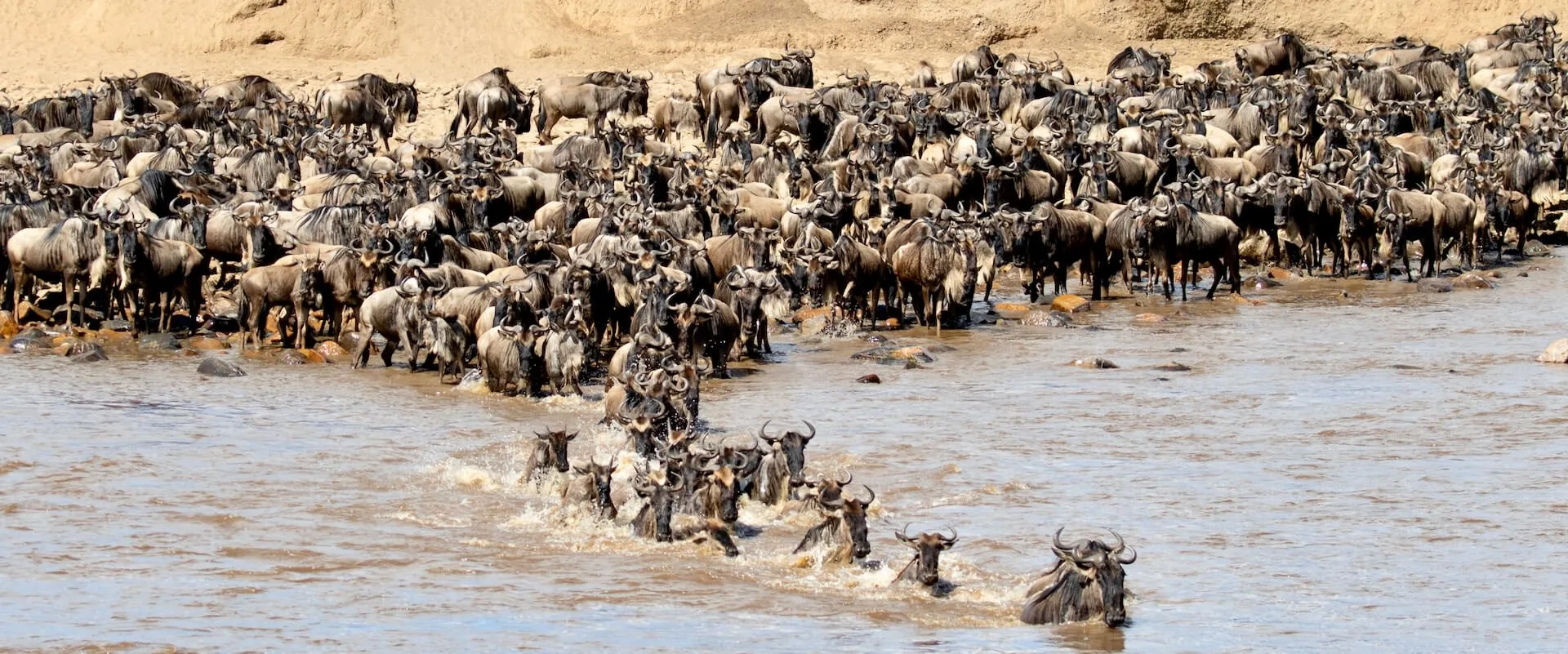
The Great Migration in Africa happens all year because the herds continuously circulate through the Serengeti–Mara ecosystem in…
Read article
Definitive answer: A picnic lunch on safari is a packed or catered midday meal eaten at an approved…
Read article
Definitive answer: A bush dinner is an outdoor evening meal arranged in a safe safari setting away from…
Read articleLet us take you closer to the wildlife, people and places that make Africa extraordinary.
Plan Your Safari Today