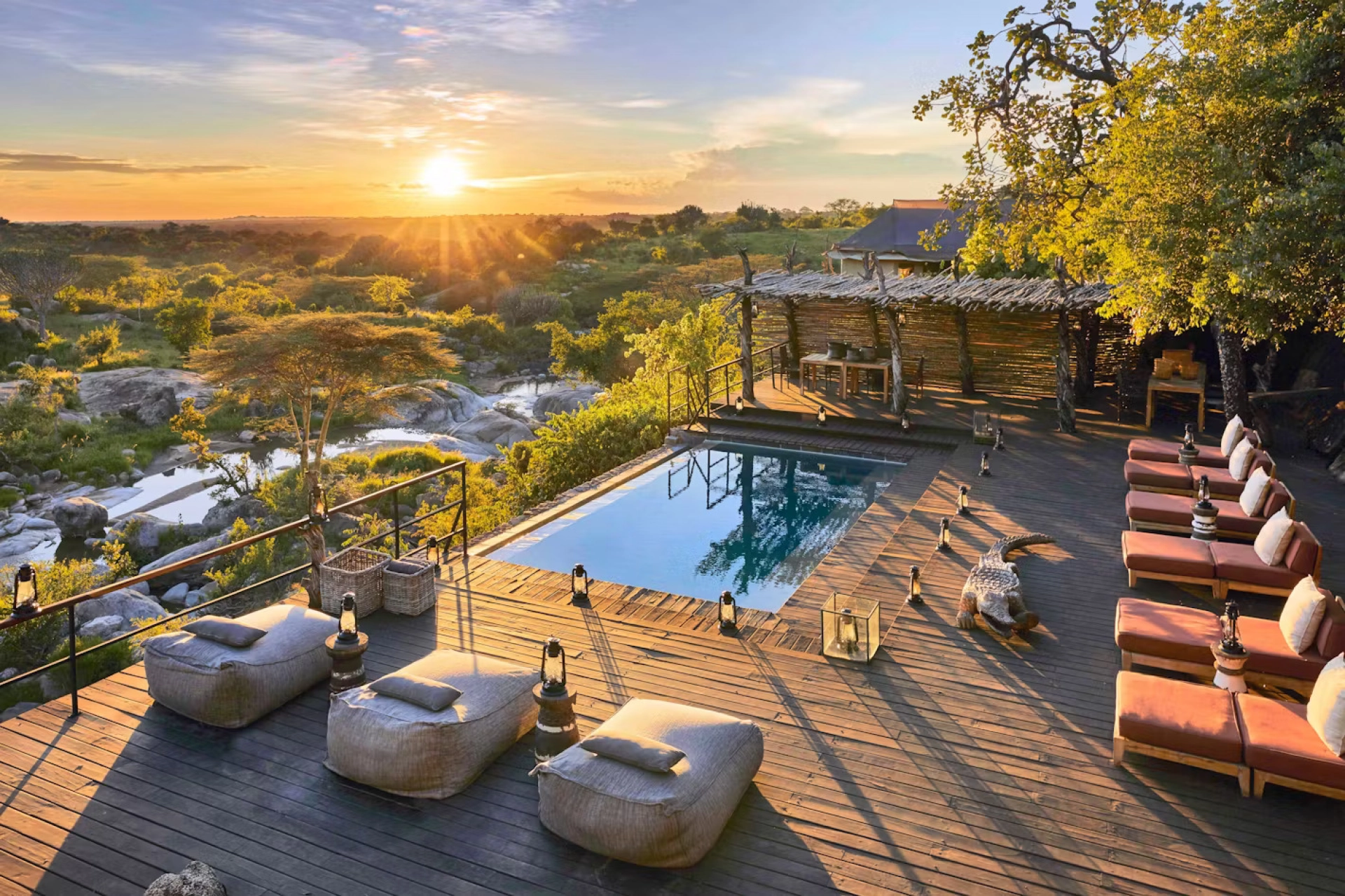
What should I look for when booking a luxury African safari?
When booking a luxury African safari, look beyond the room and compare the quality of guiding, wildlife location,…
Read article

Travel Guide
Few trees are as instantly associated with Africa as the baobab. Its enormous trunk rises from dry earth like a natural monument. Thick branches spread toward the sky with a shape so unusual that generations of…
Few trees are as instantly associated with Africa as the baobab. Its enormous trunk rises from dry earth like a natural monument. Thick branches spread toward the sky with a shape so unusual that generations of storytellers have imagined the tree was planted upside down, with its roots reaching into the heavens. At sunset, a baobab becomes one of the defining silhouettes of the African landscape. Yet the visual drama is only the beginning of its story.
The baobabs of Africa are remarkable examples of adaptation. They survive landscapes defined by long dry seasons, intense heat and highly seasonal rainfall. Their flowers support pollinators. Their fruits provide food. Hollows and branches create habitat for animals. For centuries, baobabs have also been woven into African cultural traditions, serving as landmarks, meeting places and sources of useful products.
For safari travellers, they provide something increasingly valuable: a reason to look beyond Africa’s famous mammals and appreciate the landscapes that make wildlife possible.
A herd of elephants walking beneath baobabs in Tanzania’s Tarangire National Park tells a richer ecological story than either elephants or trees could tell alone. Ancient baobabs standing beside Botswana’s salt pans reveal the extreme age and climatic history of the landscape. Madagascar’s extraordinary baobab species demonstrate what millions of years of evolutionary isolation can produce.
To understand the African baobab tree is therefore to understand something fundamental about Africa itself: survival through adaptation.
Baobabs belong to the genus *Adansonia*, a group of distinctive trees occurring naturally in Africa, Madagascar and Australia.
Several species occur in Madagascar, while the widespread African baobab, *Adansonia digitata*, occurs across large parts of mainland sub-Saharan Africa where environmental conditions are suitable. The trees are immediately recognisable because of their thick trunks. Young baobabs may appear relatively ordinary, but mature specimens develop increasingly massive proportions. Some become extraordinarily broad. During the dry season, when leaves fall, the branching crown becomes particularly striking. The leafless branches resemble a huge root system.
This appearance helped inspire one of the most enduring legends surrounding baobabs: that the tree was somehow pulled from the ground and replanted upside down.
A baobab’s swollen trunk is one of its most important adaptations.
These trees inhabit strongly seasonal environments. Rain may fall heavily during part of the year and then disappear for months. A plant rooted permanently in one location must survive both abundance and scarcity. Baobabs possess water-rich tissues that help them cope with extended dry periods. Their trunks are not simply enormous pieces of conventional hardwood. The structure is adapted to storing moisture and changing environmental conditions. This contributes to the unusual shape and texture of mature trees.
The massive trunk effectively becomes part of the tree’s survival system.
Water storage is only one part of the baobab’s adaptation.
The tree also reduces water loss by shedding its leaves during the dry season. Leaves provide the surface required for photosynthesis, but they also allow moisture to escape through transpiration. When water becomes scarce, dropping leaves reduces this loss. For much of the dry season, baobabs may therefore appear almost dead. Then the rains arrive. New leaves emerge. The crown becomes green. Flowers develop. The entire tree seems to awaken.
For travellers who see baobabs in different seasons, the transformation can be surprising.
Baobabs have a reputation for extraordinary longevity.
Some specimens survive for many centuries, and certain exceptionally old individuals have been the subject of scientific investigation. Estimating the age of baobabs is complicated because their internal structure does not always behave like that of familiar temperate trees with straightforward annual growth rings. Large baobabs can develop complex trunk structures, cavities and fused stems. This makes their architecture scientifically fascinating. Regardless of the exact age assigned to individual specimens, standing beside a truly ancient baobab creates an extraordinary sense of time.
The tree may have existed before nearby roads, towns or modern national borders. Generations of people and wildlife may have passed beneath the same branches.
A mature baobab is more than a tree.
It can function almost like a miniature ecosystem. Birds nest in cavities. Bats may use hollows. Insects feed on flowers and other plant material. Reptiles can shelter within cracks. Mammals consume fallen fruit. Elephants may strip bark or break branches. The baobab is therefore woven into a network of ecological relationships. For safari travellers, watching these interactions can be as interesting as photographing the tree itself. A hornbill perched on a baobab branch, an elephant feeding beside its trunk or bats visiting flowers after dark turns botanical sightseeing into wildlife observation.
Baobab flowers are surprisingly beautiful. Large pale flowers emerge seasonally and are generally short-lived. Pollination involves animals attracted to the flowers and their nectar. In many mainland African baobabs, bats are important pollinators, although other animals can also interact with the flowers. This nocturnal ecological relationship explains why travellers who only see baobabs during daytime may miss one of the tree’s most important biological events. The baobab’s reproductive cycle demonstrates how African ecosystems operate through connections that are not always visible on a standard game drive.
The baobab fruit is another distinctive feature. It develops inside a hard shell and contains seeds surrounded by a naturally dry pulp. Unlike juicy tropical fruits, baobab pulp has a powdery texture. It is used in foods and drinks and has become increasingly marketed internationally. For African communities living within the tree’s natural range, baobab products have much older histories of local use. The fruit illustrates how conservation can potentially connect with livelihoods.
When communities benefit economically from sustainably harvested natural products, living trees gain additional practical value.
One of the most dramatic ecological relationships involving baobabs is with elephants. Elephants can damage trees while feeding on them. They may strip bark and remove portions of the water-rich trunk. To a visitor, the damage can appear catastrophic. Yet baobabs are remarkably resilient. They can survive extensive injuries that would kill many other trees. This relationship becomes particularly visible in elephant-rich environments such as Tarangire National Park in Tanzania.
Seeing elephants beside baobabs is not simply a photographic opportunity. It is a direct observation of two iconic African organisms interacting within the same ecosystem.
The importance of baobabs extends far beyond ecology. Across their range, these trees have accumulated stories, beliefs and practical uses. A large baobab can become a landmark visible from considerable distance. In rural landscapes, distinctive trees may help define routes or gathering areas. Communities have historically used different parts of baobabs for food and practical materials. Folklore surrounding the trees varies enormously. Some stories explain their upside-down appearance. Others connect ancient trees with spirits, ancestors or local history.
This cultural dimension makes the African baobab much more than an unusual plant.
The famous upside-down-tree legend comes from the appearance of baobabs during the leafless dry season. Their thick branches taper toward smaller twigs in patterns resembling roots. Without foliage, the resemblance becomes striking. Different traditions provide different explanations for how the baobab supposedly ended up inverted. The scientific explanation is less dramatic but equally interesting. The tree’s shape reflects adaptation to seasonal environments and its unique growth structure. Yet the legend survives because it captures something everyone notices immediately: baobabs simply do not look like ordinary trees.
If there is one destination that should appear near the top of a dedicated baobab safari, it is Madagascar. The island contains several baobab species, many of which occur nowhere else. This extraordinary diversity is a consequence of Madagascar’s long evolutionary isolation. Madagascar separated from other major landmasses long ago, allowing its plants and animals to evolve independently. The result is famous in animals such as lemurs and chameleons, but the same evolutionary story is visible in plants.
Madagascar’s baobabs are therefore not simply scenic. They are evidence of deep evolutionary history.
The Avenue of the Baobabs near Morondava is one of Africa’s most photographed botanical landscapes. Towering baobabs line a dirt road, creating a natural avenue that becomes particularly dramatic around sunrise and sunset. The scene has become iconic. At sunset, warm light illuminates the trunks while the sky changes colour behind them. Photographers gather along the road searching for reflections, silhouettes and human figures that provide scale. Yet the popularity of the viewpoint should not obscure the wider ecological story.
These baobabs are survivors within a landscape where much of the original surrounding forest has been altered. The trees therefore stand not only as beautiful monuments but also as reminders of habitat loss.
The classic sunset photograph is famous for good reason, but travellers should consider spending more time in the area. Morning light can be excellent. Cloud formations change the atmosphere. People moving along the road create a sense of everyday life. Cattle carts, bicycles and pedestrians demonstrate that this is not simply a photographic installation; it is part of a lived landscape. Photographing baobabs well means showing their relationship with place.
The Avenue of the Baobabs receives enormous attention, but Madagascar’s botanical interest extends far beyond one road. Different baobab species occur in different parts of the island. Some grow tall and relatively slender. Others develop enormous trunks. Travelling between habitats reveals how each species has adapted to local environmental conditions. A longer Madagascar itinerary can combine baobabs with lemur forests, spiny vegetation, coastal ecosystems and other endemic wildlife.
For travellers who want to see baobabs as part of a classic East African safari, Tarangire National Park is one of the best destinations. Located in northern Tanzania, Tarangire is famous for elephants and baobab-dominated scenery. Huge trunks rise above the savannah and woodland, creating landscapes that are immediately recognisable. During appropriate seasons, wildlife concentrations around the Tarangire River can be excellent. Elephants are particularly prominent. The combination of elephants and baobabs in Tarangire creates one of Tanzania’s classic safari scenes.
Serengeti is famous for enormous open horizons. Ngorongoro is famous for its crater. Tarangire has a different visual identity. Baobabs give the park structure. Their huge trunks provide foreground subjects while elephants, giraffes and antelope move through the surrounding landscape. Photographers can create images in which wildlife appears small beside the trees. This communicates something often lost in close wildlife portraits: the scale of the habitat.
Tarangire is easily incorporated into a northern Tanzania safari. A classic itinerary can connect Tarangire with Lake Manyara, Ngorongoro Conservation Area and Serengeti National Park. This creates considerable ecological variety. Tarangire’s baobab woodland contrasts with Serengeti grasslands and the dramatic Ngorongoro Crater. Travellers interested in landscapes as well as wildlife should avoid skipping Tarangire simply to spend more days chasing famous Big Five sightings elsewhere.
Botswana contains some of Africa’s most celebrated ancient baobabs. Baines’ Baobabs stand beside the vast salt-pan landscapes of the Nxai Pan region. They are named after artist and explorer Thomas Baines, who depicted the trees during nineteenth-century travels. What makes the site particularly compelling is the combination of history and landscape. Visitors can compare today’s trees with historical artistic representations, creating an unusual sense of continuity. The baobabs have witnessed enormous changes while remaining rooted within the same landscape.
Botswana’s salt-pan environments create an extraordinary setting. Flat horizons emphasise the scale of individual trees. Dry-season conditions can make the landscape appear almost empty. After rains, the environment changes dramatically. Wildlife movements and vegetation respond to water. The baobabs remain as constant landmarks through these seasonal transformations. For photographers, the contrast between massive organic forms and minimalist salt-pan scenery is exceptional.
Botswana’s famous baobabs have also served as landmarks for travellers crossing difficult landscapes. Large trees could be recognised from considerable distances and became associated with historic routes. Some individual trees became so famous that they entered written travel history. The loss or collapse of an ancient specimen can therefore feel like the disappearance of both a biological organism and a historical monument. This reinforces an important point: very old trees connect natural and human history.
The wider Makgadikgadi Pans region offers another exceptional setting for baobabs. This vast landscape is one of the remnants of an ancient lake system. For much of the dry season, the pans appear stark and almost lunar. During wetter periods, portions transform. Baobabs positioned around these open environments create some of Botswana’s most memorable scenery. A Botswana safari combining Makgadikgadi with Chobe and the Okavango Delta allows travellers to experience dramatically different ecosystems within one country.
Zimbabwe also supports impressive baobab populations, particularly in warmer, lower-altitude regions. Travellers heading toward parts of the Zambezi Valley or southeastern landscapes may encounter these unmistakable trees. The country’s baobabs can be incorporated naturally into a wider wildlife safari including Hwange National Park, Victoria Falls and other protected areas. The trees contribute strongly to the sense of place. Even when they are not the main attraction, they tell visitors that they have entered a particular ecological zone.
Zambia’s dry woodland and valley environments also support baobabs. The country is internationally famous for walking safaris and wilderness experiences, particularly in areas such as South Luangwa. Travelling slowly on foot creates opportunities to appreciate trees that might otherwise be passed quickly in a vehicle. A guide can explain bark, fruit, animal use and local stories. This is one of the great advantages of a walking safari in Africa: vegetation becomes part of the experience rather than merely background scenery.
Baobabs also occur in parts of Kenya, particularly in warmer coastal and lowland environments. Travellers combining safari with the Indian Ocean coast may encounter large specimens around settlements and rural landscapes. Kenya’s coastal baobabs provide a very different visual context from those of Tarangire or Botswana. Palm trees, coastal vegetation, villages and Indian Ocean culture create another side of the baobab story.
South Africa’s northern regions support impressive baobabs. The far north of Limpopo is particularly associated with these trees. Travellers exploring northern Kruger and surrounding regions may encounter baobabs within landscapes very different from the better-known southern sections of the park. This makes the north especially appealing for repeat visitors seeking a quieter and more botanically interesting Kruger National Park safari.
Baobabs are highly adapted to variable environmental conditions, but extraordinary longevity does not make them invulnerable. Long-term changes in rainfall, temperature and extreme weather can affect mature trees. Land-use change adds further pressure. When surrounding habitats are converted, isolated old trees may survive while the ecological communities around them disappear. Protecting a baobab therefore means more than preserving one trunk. Healthy landscapes must also be maintained.
Large baobabs can develop extensive internal cavities. Their unusual growth structure allows trunks to form complex shapes over time. Historically, people have occasionally used large hollow baobabs for various practical purposes. These stories have contributed to the almost mythical reputation of the trees. Yet visitors should remember that ancient specimens are living organisms. Climbing, carving or damaging them for photographs can shorten the life of something that has survived for centuries.
Birdwatchers should pay attention to baobabs. Cavities can provide nesting opportunities. Branches create prominent perches. Flowers and fruit attract animals. Large trees become vertical habitats within otherwise open landscapes. Hornbills, raptors and many other birds may use them. A baobab-focused journey therefore overlaps naturally with African birding safaris.
Few natural subjects respond to light as dramatically as baobabs. At sunrise, low-angle light reveals trunk texture. At sunset, branches become graphic silhouettes. During the middle of the day, the same tree may look comparatively flat. Photographers should therefore plan time rather than simply locations. A beautiful baobab visited at the wrong time may produce an ordinary image. Waiting for changing light can transform the scene.
The branching silhouette of a baobab also makes an exceptional foreground for night photography. Remote African safari areas often have extremely dark skies. Stars become visible in enormous numbers. The Milky Way rising behind an ancient baobab can produce an extraordinary image. Responsible night photography should be organised with guides in wildlife areas. Walking around after dark without professional supervision can be dangerous where large mammals occur.
There is no single route covering all of Africa’s great baobab landscapes. Travellers should instead choose according to broader interests. For baobabs and classic safari wildlife, Tanzania is excellent. For baobabs and dramatic salt-pan scenery, Botswana is outstanding. For the greatest diversity of baobab species and extraordinary endemic wildlife, Madagascar is difficult to beat. For travellers combining baobabs with a broad Southern African road trip, Zimbabwe, Zambia and South Africa provide additional possibilities.
The best baobab journey therefore becomes part botanical safari, part wildlife safari and part cultural exploration.
The baobabs of Africa are among the continent’s greatest natural monuments. They survive drought. They store moisture. They feed animals and people. They provide nesting places. They inspire legends. They become landmarks. And some remain rooted in the same landscapes while generations of people and wildlife pass around them. Yet perhaps their greatest value to travellers is the way they change our perspective on safari. Africa is not only about what moves.
Sometimes the most extraordinary organism in the landscape is the one that has remained in exactly the same place for centuries. Stand beneath an ancient baobab in Botswana and imagine the travellers who passed it generations ago. Watch elephants move beneath baobabs in Tarangire and see the relationship between plant and animal. Photograph Madagascar’s baobabs at sunset and consider the millions of years of isolation that produced them. The African baobab tree is not merely a backdrop for safari photographs.
It is a survivor, an ecosystem, a cultural landmark and one of the most compelling symbols of the African continent.
Get quick answers to the most common questions. If you still have questions, our safari experts are here to help.
Madagascar’s Avenue of the Baobabs, Tanzania’s Tarangire National Park and Botswana’s Baines’ Baobabs are among the continent’s most celebrated destinations.
During the leafless dry season, its branches resemble roots pointing toward the sky, inspiring legends that the tree was planted upside down.
No. Members of the baobab genus also occur naturally outside mainland Africa, including Madagascar and Australia.
Conservation status varies among species. Some baobab species have restricted ranges and face habitat pressures, making protection of their ecosystems important.
Yes. Tarangire National Park in Tanzania is one of the best destinations for photographing elephants within baobab-rich landscapes.
Birds, bats, insects, elephants and various other animals interact with baobabs for food, shelter, nesting or other ecological purposes.
Madagascar supports several baobab species, including species found nowhere else, reflecting the island’s extraordinary evolutionary isolation.
Our safari experts are here to help you plan your safari. Get personalized advice, the latest information and a free, no-obligation quote.
We typically reply within a few hours.

Share This Article
When booking a luxury African safari, look beyond the room and compare the quality of guiding, wildlife location,…
Read article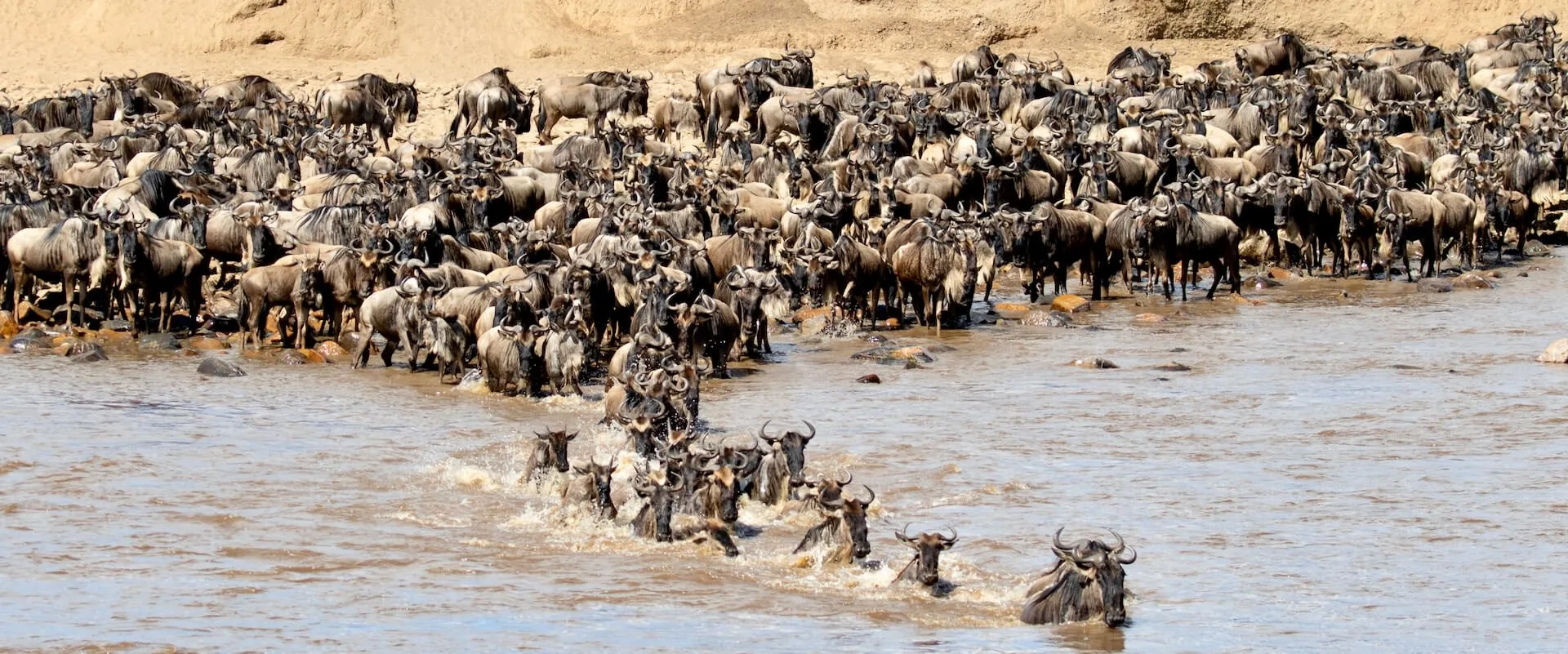
The Great Migration in Africa happens all year because the herds continuously circulate through the Serengeti–Mara ecosystem in…
Read article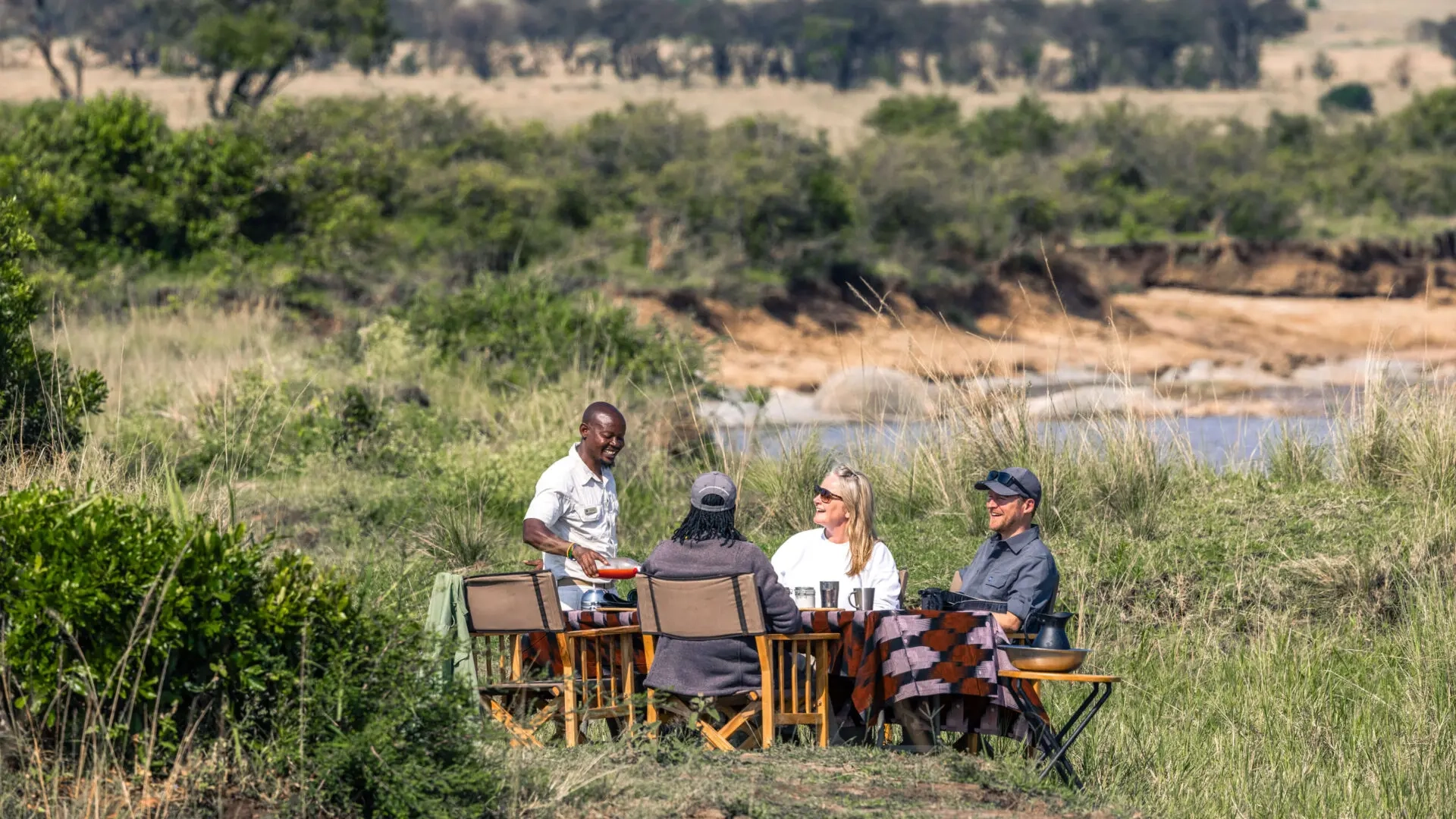
Definitive answer: A picnic lunch on safari is a packed or catered midday meal eaten at an approved…
Read article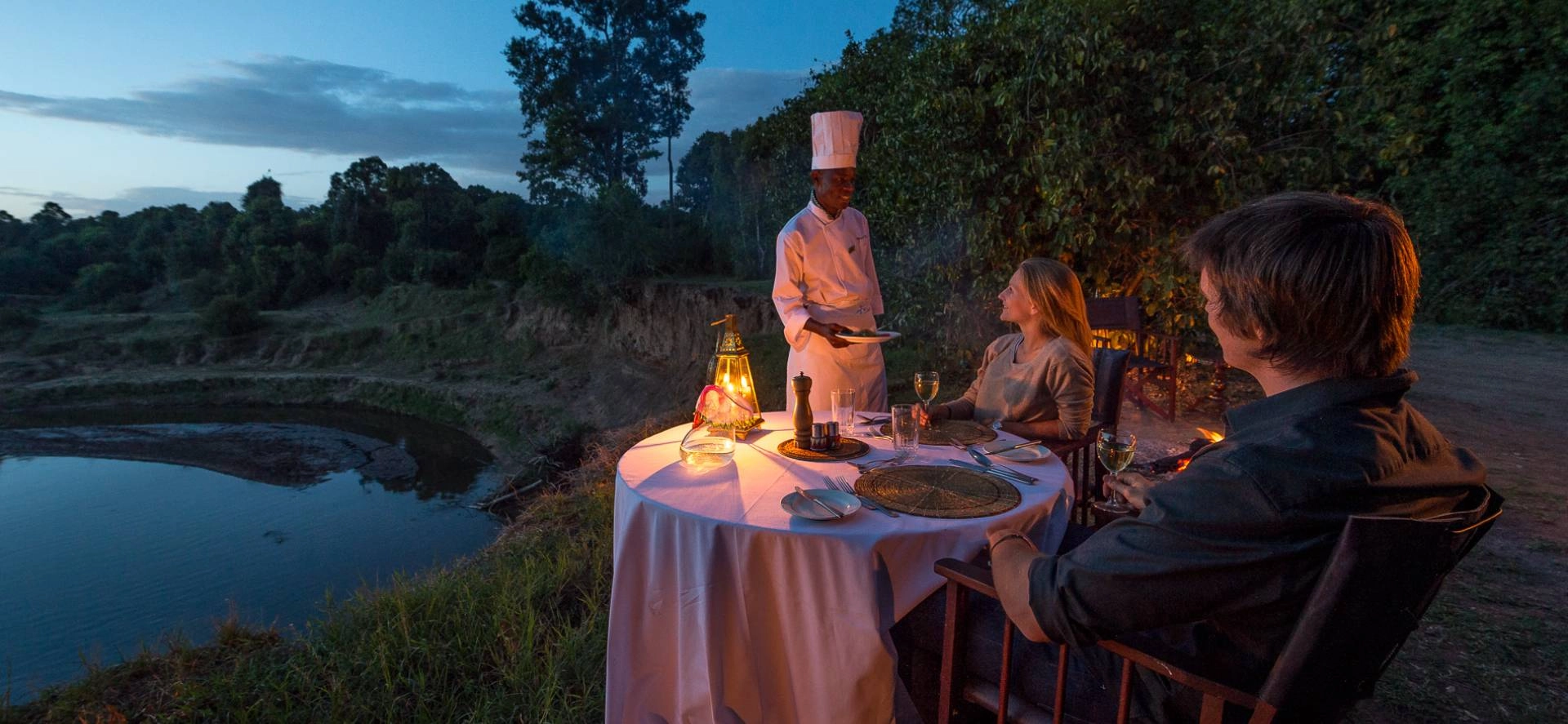
Definitive answer: A bush dinner is an outdoor evening meal arranged in a safe safari setting away from…
Read articleLet us take you closer to the wildlife, people and places that make Africa extraordinary.
Plan Your Safari Today