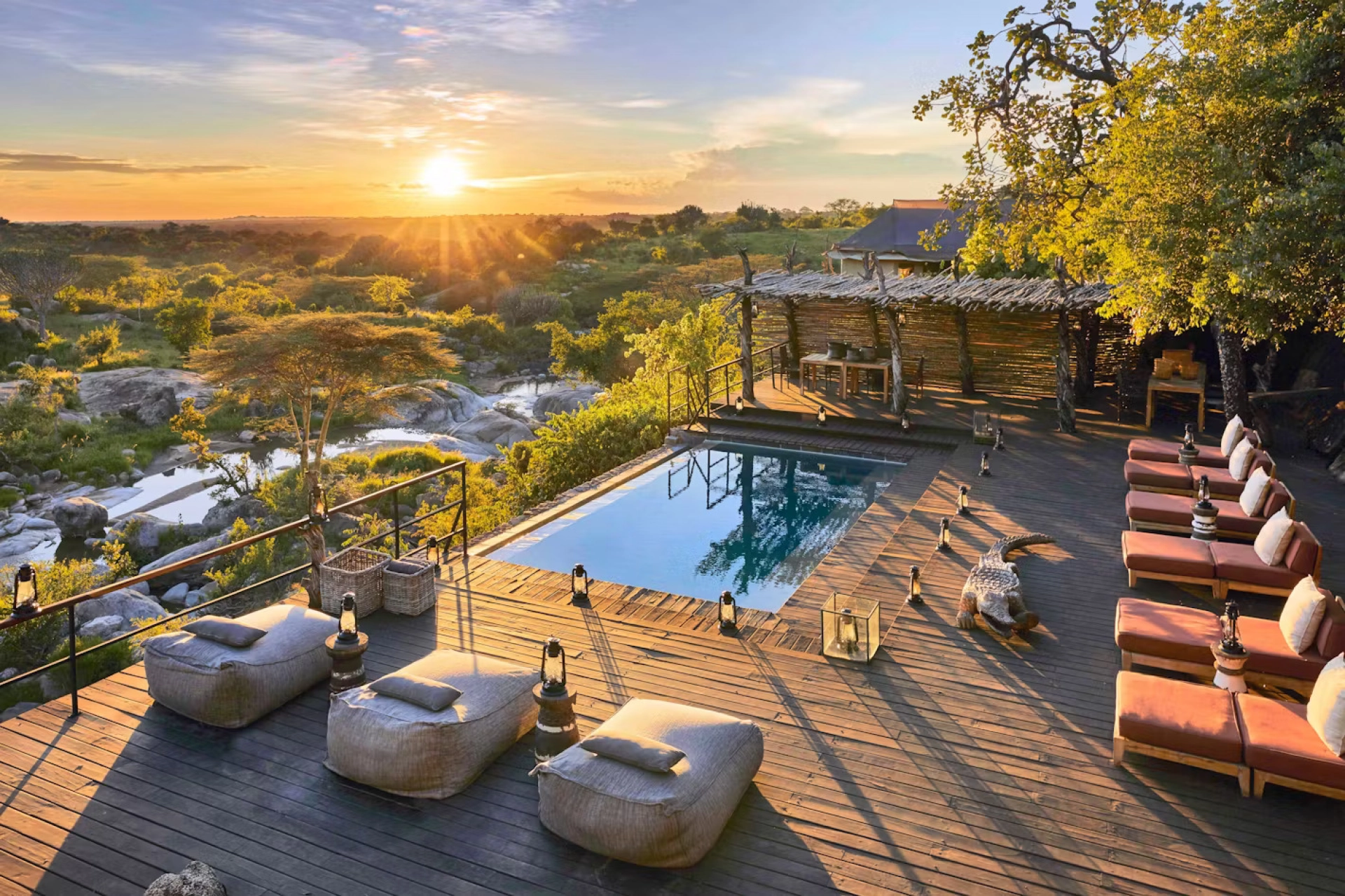
What should I look for when booking a luxury African safari?
When booking a luxury African safari, look beyond the room and compare the quality of guiding, wildlife location,…
Read article

Travel Guide
Few conservation stories illustrate the scale of Africa's wildlife challenges—and the ambition required to address them—as dramatically as the effort to return approximately 2,000 southern white rhinos from a private breeding operation to protected landscapes across…
Few conservation stories illustrate the scale of Africa’s wildlife challenges—and the ambition required to address them—as dramatically as the effort to return approximately 2,000 southern white rhinos from a private breeding operation to protected landscapes across the continent.
In September 2023, conservation organization African Parks announced that it had taken responsibility for the world’s largest private captive rhino breeding operation in South Africa’s North West Province. The property, formerly known as Platinum Rhino, held roughly 2,000 southern white rhinos. African Parks’ stated objective was unusually ambitious: phase out the breeding operation and progressively rewild the rhinos into secure, well-managed protected areas across Africa over approximately ten years.
This was not simply the purchase of a wildlife property. It represented the beginning of one of the largest coordinated rhino translocation and rewilding projects in Africa. The concept is both simple and extraordinarily complicated. Move rhinos from a managed breeding environment. Identify protected landscapes capable of supporting them. Ensure those landscapes have suitable habitat, reliable security and adequate management. Transport huge animals safely. Release them. Monitor them. Allow them to breed naturally and resume their ecological roles within functioning African ecosystems.
The project has become known as Rhino Rewild. For travelers interested in African safari conservation, Big Five wildlife, rhino safaris, Akagera National Park, Greater Kruger, and the future of endangered African wildlife, this story offers a remarkable example of how modern conservation extends far beyond protecting animals inside existing national parks.
The rhinos were part of a large private breeding operation in South Africa.
The project had accumulated approximately 2,000 southern white rhinos, making it an extraordinarily significant concentration of the species. When the operation came under financial pressure, the property was put up for auction in April 2023. No buyer emerged. That created a serious conservation problem. Maintaining thousands of rhinos is enormously expensive. They require land, water, veterinary care, security, fencing, monitoring and staff. Rhinos are also vulnerable to wildlife poaching, making inadequate security particularly dangerous.
African Parks ultimately intervened with the support of the South African government and emergency funding, acquiring the property and taking responsibility for the rhinos. Instead of continuing the operation primarily as a breeding facility, the organization developed a fundamentally different objective: return the rhinos to wild protected landscapes across Africa.
African Parks is a conservation organization that works with African governments and communities to manage protected landscapes.
Its model generally involves long-term partnerships in which the organization assumes substantial operational responsibility for national parks and other protected areas. The organization has worked in numerous countries and has experience with wildlife restoration and translocation. That experience became crucial to the Rhino Rewild project because moving a rhino is not simply a matter of loading an animal onto a truck and opening a gate elsewhere. Large-scale wildlife restoration requires veterinary science, security assessment, genetics, habitat evaluation, logistics, long-term monitoring and cooperation between governments.
Two thousand rhinos represent far more than an impressive number.
Rhino populations have suffered enormous historical declines because of habitat loss and, particularly in recent decades, poaching for horn. Large, reproductively viable populations are extremely valuable. If those animals can be distributed carefully among multiple secure African conservation areas, they can strengthen existing populations and potentially establish new ones. This reduces the danger of having too many animals concentrated in one place. Conservationists sometimes refer to this concept as spreading or reducing risk. If one population experiences severe poaching, disease, drought or another crisis, additional populations elsewhere help protect the species’ overall future.
The animals involved are southern white rhinos.
The white rhino is one of Africa’s two native rhino species. The other is the black rhino. Despite their names, white rhinos and black rhinos are not distinguished primarily by color. Both generally appear grey. One of the most obvious physical differences involves the mouth. The white rhino has a broad, square-shaped mouth suited to grazing. The black rhino has a more pointed, prehensile upper lip adapted to browsing leaves and shrubs. This difference reflects their ecology.
The southern white rhino is the more numerous of Africa’s rhino types, but this should not create complacency.
The population remains exposed to severe conservation pressures. Poaching can reverse decades of recovery remarkably quickly. The Rhino Rewild project therefore aims not merely to move animals, but to strengthen the species at a continental scale.
Rhinos are more than charismatic animals for safari photographs. They influence landscapes. Southern white rhinos are major grazers. By feeding on grasses, moving across landscapes, creating paths and depositing dung, they affect vegetation structure and nutrient cycling. Their presence can influence habitats used by other species. African Parks explicitly describes ecosystem restoration as part of the logic behind establishing viable rhino populations in suitable protected landscapes. This is why rewilding African rhinos is not simply about increasing an animal count. It is about restoring ecological processes.
The word rewilding has become increasingly common in conservation. In this project, it means moving rhinos from a captive-breeding environment into suitable protected landscapes where they can function as wild animals. The transition requires careful management. Rhinos must adapt to new terrain. They must find natural food and water. They encounter predators, other rhinos and unfamiliar environments. Conservation teams monitor released animals to make sure they adjust successfully.
African Parks describes the project through three broad phases: Rescue, Rewild, and Renew. The rescue phase focused on securing the original rhino population, stabilizing care and preparing animals for future translocations. The rewilding phase involves moving suitable rhinos into carefully assessed protected areas. The longer-term renewal phase focuses on establishing healthy populations that contribute to functioning ecosystems.
Moving a rhino is one of the most complicated operations in African wildlife conservation. A mature white rhino can weigh well over a tonne. Veterinarians must immobilize animals safely. Each rhino may undergo health checks. Transport crates and vehicles must be specifically designed. Routes must be planned. Weather and travel time matter. Receiving reserves must prepare release areas. Security teams must coordinate before animals arrive. After release, monitoring continues.
Immobilizing such a large animal carries risk. Veterinary teams monitor breathing, temperature and other physiological factors. The animal must be positioned correctly. Medication doses need to be precisely calculated. Transport duration must be considered. Every stage requires experienced wildlife professionals. That complexity explains why rhino translocation projects require significant funding.
The first major release under Rhino Rewild took place in May 2024 when 40 southern white rhinos were moved to Munywana Conservancy in KwaZulu-Natal, South Africa. This marked the beginning of the continent-wide rewilding phase. The move demonstrated that the project had progressed from aspiration to implementation.
In June 2024, another major milestone followed. One hundred and twenty southern white rhinos were moved to member reserves of the Greater Kruger Environmental Protection Foundation in South Africa. This was particularly significant because the Greater Kruger ecosystem is one of Africa’s most important wildlife landscapes. The region incorporates national, provincial and private conservation areas that together support extensive wildlife populations.
The broader Greater Kruger safari region is globally important for rhino conservation. It has suitable habitat and extensive conservation infrastructure. It also forms one of South Africa’s most famous safari ecosystems. Travelers visiting Kruger National Park or neighboring private reserves therefore enter a landscape where rhino conservation is not an abstract idea. It is an active and extremely expensive undertaking.
In November 2024, Dinokeng Game Reserve in South Africa received southern white rhinos through the program, becoming another destination involved in the rewilding initiative. Expanding rhino populations across different protected landscapes helps distribute conservation risk.
One of the most important milestones for East African safari travelers occurred in 2025. African Parks, working with the Rwanda Development Board, translocated 70 southern white rhinos to Akagera National Park in Rwanda. The animals were moved in two groups of 35. The translocation was designed to strengthen Akagera’s white rhino population and improve its contribution to regional rhino conservation. This was especially significant because it represented the project’s first major movement across the continent.
Akagera National Park has become one of Rwanda’s most important wildlife destinations. Travelers frequently associate Rwanda primarily with mountain gorilla trekking in Volcanoes National Park. Akagera provides the country’s savannah counterpart. The park contains lakes, wetlands, woodland and open grassland. Visitors can encounter elephants, buffaloes, lions, antelopes, hippos, crocodiles and rhinos. This allows travelers to combine Rwanda gorilla trekking with a traditional Big Five safari in Rwanda.
A strong Rwanda itinerary can begin with a Kigali city tour, continue toward Akagera National Park for game drives and then travel west toward Volcanoes National Park for gorilla trekking. Travelers with more time can include Nyungwe National Park, chimpanzee trekking and Lake Kivu. The growth of Akagera’s rhino population strengthens Rwanda’s ability to offer this diverse itinerary.
The Rhino Rewild program has expanded beyond South Africa and Rwanda. In December 2025, African Parks announced the translocation of 24 southern white rhinos to Garamba National Park in the Democratic Republic of Congo as part of the wider rewilding effort. Garamba has deep historical importance for rhino conservation and broader Central African wildlife. The move illustrates the continental ambition behind the project.
African Parks’ current Rhino Rewild information states that more than 300 rhinos have been translocated through the initiative, with animals going to multiple protected landscapes. This demonstrates the enormous logistical scale involved. Yet it also shows how long the project will take. Moving approximately 2,000 animals cannot happen immediately. Destinations must be carefully selected.
A reserve cannot simply request rhinos and automatically receive them. Potential destinations must be evaluated. Important considerations include: habitat suitability, available water, security, management capacity, existing rhino populations, genetic considerations, veterinary infrastructure, community relationships, and long-term financial sustainability. The ultimate question is whether the area can support a viable population for decades.
Poaching remains one of the greatest threats facing African rhinos. A reserve with perfect grassland but inadequate security cannot be considered a suitable release site. Modern anti-poaching programs in Africa may involve ranger patrols, intelligence networks, surveillance technology, canine units, aerial support and cooperation with law-enforcement agencies. The details often remain confidential for obvious reasons.
Rhinos are primarily targeted for their horns. Illegal international demand has driven poaching across southern and eastern Africa. Rhino horn is made primarily of keratin, the same general structural protein found in human hair and fingernails. Despite this, illegal markets have assigned extraordinary monetary value to it. This creates enormous security pressures.
Some conservation areas have used rhino dehorning as one tool within broader anti-poaching strategies. Removing most of the horn can reduce the incentive for poachers, although horn grows again and animals require repeated interventions. Dehorning is not a complete solution. It must be combined with security, intelligence and law enforcement. It also involves veterinary costs and operational risks.
Protecting rhinos requires continuous expenditure. Ranger salaries must be paid. Vehicles need fuel. Aircraft may need to fly. Veterinarians need equipment. Fences require maintenance. Monitoring technology costs money. This financial reality helps explain why responsible safari tourism can contribute to conservation. Tourism revenue gives protected areas an economic reason to maintain wildlife populations.
Tourism alone cannot solve poaching. However, well-managed African wildlife tourism creates jobs, finances parks and gives communities economic incentives connected with conservation. A living rhino seen by safari travelers can contribute to an economy for decades. A poached rhino represents a permanent loss. The strongest tourism models connect wildlife protection with local livelihoods.
Conservation is more durable when surrounding communities benefit. People living near protected areas bear real costs. Wildlife can damage crops. Elephants may threaten livelihoods. Predators can affect livestock. Conservation policies may restrict historical access to resources. If local people see no economic or social benefit from protected areas, resentment can develop. This is why community conservation in Africa matters.
Receiving landscapes must therefore consider more than ecological carrying capacity. Relationships with neighboring communities matter. Employment, tourism revenue and conservation partnerships can all affect the long-term success of reintroduced wildlife. Rhinos cannot be successfully protected in isolation from the people who live around them.
South Africa has historically held a large share of Africa’s remaining rhinos. The country has developed extensive expertise in rhino management, veterinary care and translocation. It has also experienced severe poaching pressure. This combination makes South Africa one of the world’s most important laboratories for modern rhino conservation.
Travelers frequently confuse the two African species.
The white rhino is primarily a grazer. It has a wide, square mouth. It often occupies open grassland and savannah. White rhinos can sometimes occur in small social groups, although adult bulls are territorial.
The black rhino is primarily a browser. Its pointed upper lip helps pull leaves and twigs from shrubs. Black rhinos are generally more solitary. They can also be more difficult to see because they often inhabit thicker vegetation. Both species are exceptional safari sightings.
Look at the mouth. White rhinos have broad, flat lips designed for grazing. Their heads are usually carried relatively low while feeding. They are often encountered on open grassy landscapes. Body size alone is less reliable for inexperienced observers.
The pointed upper lip is the clearest feature. The head tends to be carried higher because the animal feeds from shrubs rather than grazing constantly. Habitat may also provide a clue.
Many travelers dream of completing the African Big Five: lion, leopard, elephant, buffalo, and rhino. But rhinos should not merely become the final tick on a checklist. Seeing a rhino in the wild becomes more powerful when visitors understand the conservation effort required to keep that animal alive. The ranger patrols are invisible. The intelligence networks are invisible. The veterinary interventions are invisible. The political negotiations and community programs are invisible. Yet every wild rhino depends on them.
Several countries provide opportunities for rhino viewing.
South Africa remains one of the world’s most important rhino safari destinations. Kruger National Park, the Greater Kruger region, KwaZulu-Natal reserves and other protected areas contribute to rhino conservation.
Akagera National Park provides a particularly interesting story of wildlife restoration and now plays a growing role in white rhino conservation.
Kenya supports important rhino populations in several protected areas and conservancies, including areas such as Ol Pejeta Conservancy, Lake Nakuru National Park and others.
Namibia is internationally important for black rhino conservation, particularly within desert and community-conservation landscapes.
Zimbabwe has significant rhino conservation programs in several protected areas.
Travelers seeking two of Africa’s most iconic conservation experiences can combine rhino viewing and gorilla trekking. Rwanda provides one particularly convenient example. A journey can include: Akagera National Park safari, Volcanoes National Park gorilla trekking, and potentially Nyungwe chimpanzee trekking. Uganda and Kenya combinations also allow travelers to experience mountain gorillas, savannah wildlife and rhino conservation on a longer East African safari.
The continued presence of rhinos is essential to the concept of the Big Five safari. Without effective conservation, future generations could visit African parks where the Big Five exists only in historical marketing. This makes projects such as Rhino Rewild relevant far beyond one organization or one species. They influence the future character of African safari tourism itself.
Responsible visitors should never pressure guides to approach rhinos too closely. Do not publicly share precise real-time locations of vulnerable animals. Geotagging sensitive sightings can create security risks. Follow reserve rules. Respect ranger instructions. Never purchase products containing wildlife parts. Conservation continues after the photograph is taken.
Conservation translocations are not new. Africa has decades of experience moving wildlife. What makes this project unusual is the scale. Approximately 2,000 rhinos from one breeding population represent an extraordinary conservation opportunity. African Parks initially committed to a ten-year rewilding effort, with a long-term goal of distributing animals among secure protected areas across the continent.
If successful, Rhino Rewild could: strengthen existing white rhino populations, establish additional viable populations, restore rhinos to landscapes where they have disappeared, improve genetic resilience, support ecosystem recovery, and spread conservation risk across multiple countries. The ultimate measure of success will not be how many animals are moved. It will be whether populations survive, breed and become self-sustaining.
Rewilding is difficult. Animals can experience stress during transport. Released rhinos may face disease. Poaching threats remain. Drought can affect habitat. Security costs can rise. Political conditions can change. Community relationships require long-term investment. No serious conservation organization should pretend that moving animals automatically guarantees success.
Released rhinos require monitoring. Conservation teams observe health, movement, feeding behavior and breeding. Some animals may carry tracking devices depending on management strategy. Veterinary intervention may occasionally be required. Monitoring allows managers to respond before small problems become serious.
One of the most powerful signs of successful rewilding is reproduction after release. A population that survives but never produces young is not secure. When translocated rhinos begin breeding naturally in protected landscapes, the conservation project moves toward its long-term objective. The next generation matters more than the original transport statistics.
Rhino Rewild raises an important conservation question: Can animals bred or maintained in highly managed environments become tools for restoring depleted wild populations? If the answer is yes under appropriate conditions, the lessons could influence future conservation projects involving other species. However, preventing wild populations from collapsing remains preferable to rebuilding them later. Rewilding is not an excuse to neglect existing wildlife.
The ultimate solution to wildlife decline is not endless translocation. It is maintaining healthy ecosystems where animals can survive without constant rescue. Rewilding becomes necessary when historic losses have already occurred. Strong protected-area management remains the foundation.
An African wildlife safari becomes much more meaningful when travelers understand the conservation story behind the animals they encounter. A Rwanda safari can combine rhino conservation in Akagera National Park with mountain gorilla trekking, while longer East African itineraries can connect Rwanda with Uganda gorilla safaris, Queen Elizabeth National Park, Bwindi Impenetrable National Park and other destinations. Southern Africa offers another extraordinary range of options through Kruger National Park, Greater Kruger safari reserves, Botswana, Zimbabwe and other wildlife destinations.
At Adventure in the Wild Safaris, the aim is not simply to help travelers photograph wildlife. It is to help them understand why these species still exist and why responsible tourism matters.
The story of these approximately 2,000 southern white rhinos could easily have ended differently. A financially troubled breeding operation containing one of the world’s largest concentrations of rhinos might have been broken apart. Instead, it became the starting point for an ambitious African rhino rewilding project. The first animals have already moved. Rhinos have entered protected landscapes in South Africa, Rwanda and elsewhere on the continent. But the real story will unfold over decades.
Will released populations grow? Will calves survive? Will security remain effective? Will neighboring communities benefit? Will future safari travelers encounter descendants of these rhinos moving freely through landscapes where the species had previously disappeared? If the answer is yes, Rhino Rewild will have achieved something far more important than simply transporting thousands of large animals. It will have transformed a conservation crisis into an opportunity to restore one of Africa’s most iconic species to functioning wild ecosystems.
And perhaps one day, somewhere on a Big Five safari in Africa, a traveler will watch a white rhino and its calf grazing quietly across an open plain without realizing that their presence began with one of the most ambitious wildlife rescue and rewilding efforts ever attempted.
Get quick answers to the most common questions. If you still have questions, our safari experts are here to help.
African Parks took responsibility for the world’s largest private captive rhino breeding operation in 2023, including roughly 2,000 southern white rhinos, with the
They are southern white rhinos.
The breeding property was in South Africa’s North West Province.
The original breeding operation faced financial difficulty, and African Parks intervened with a plan to distribute the animals into secure protected landscapes.
Rhino Rewild is African Parks’ long-term initiative to move approximately 2,000 southern white rhinos into well-managed protected areas across Africa.
Yes. Translocations began in 2024, and rhinos have since moved into multiple protected landscapes. African Parks currently reports more than 300 animals translocated through the initiative.
Yes. Seventy southern white rhinos were translocated to Akagera National Park in 2025.
Yes. A major 2024 translocation moved 120 rhinos to member reserves of the Greater Kruger Environmental Protection Foundation.
White rhinos remain conservation-dependent and heavily affected by poaching pressures. Their future depends on secure, viable populations and effective wildlife protection.
No. Both African rhino species generally appear grey. The name does not describe a dramatic color difference.
White rhinos are primarily grazers with broad square lips. Black rhinos are browsers with pointed prehensile upper lips.
Important safari destinations include South Africa, Kenya, Rwanda, Namibia, Zimbabwe and selected protected areas elsewhere.
Yes. Akagera National Park supports rhinos and can be combined with gorilla trekking in Volcanoes National Park.
Our safari experts are here to help you plan your safari. Get personalized advice, the latest information and a free, no-obligation quote.
We typically reply within a few hours.

Share This Article
When booking a luxury African safari, look beyond the room and compare the quality of guiding, wildlife location,…
Read article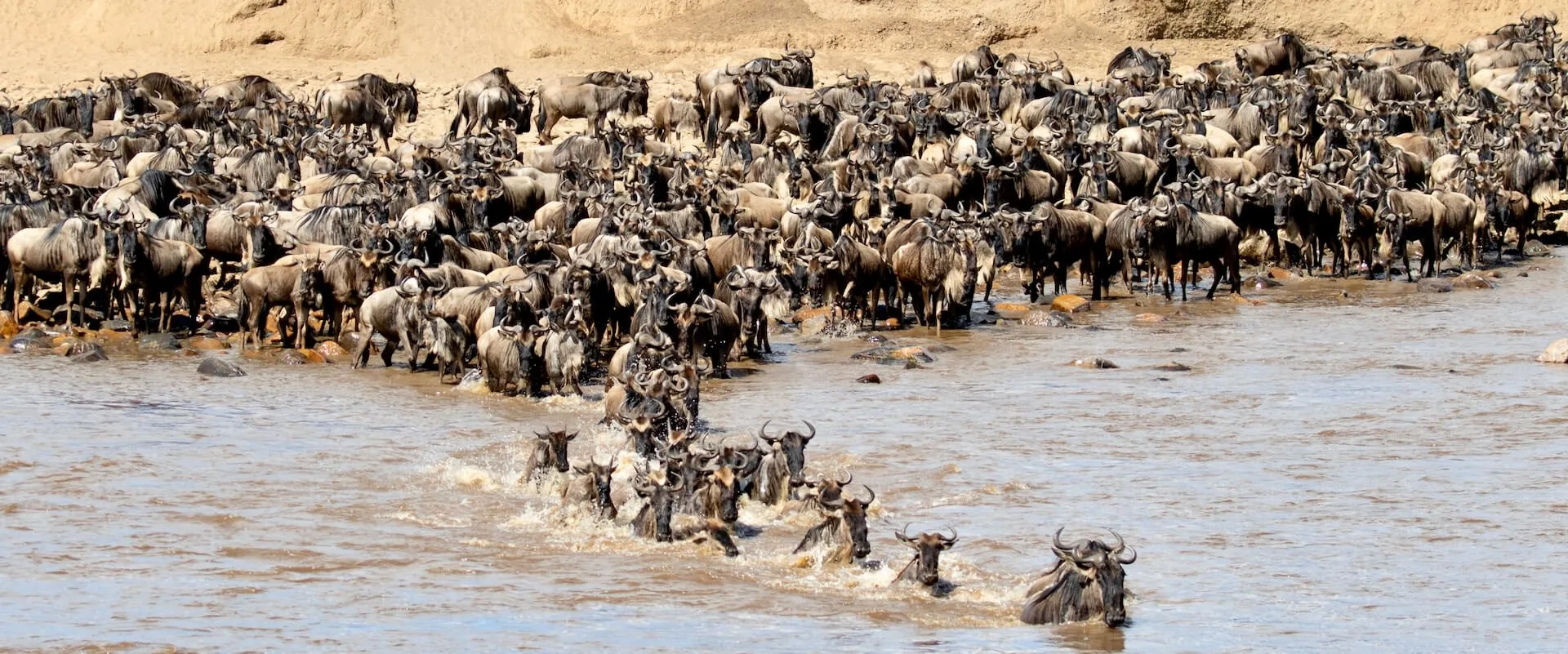
The Great Migration in Africa happens all year because the herds continuously circulate through the Serengeti–Mara ecosystem in…
Read article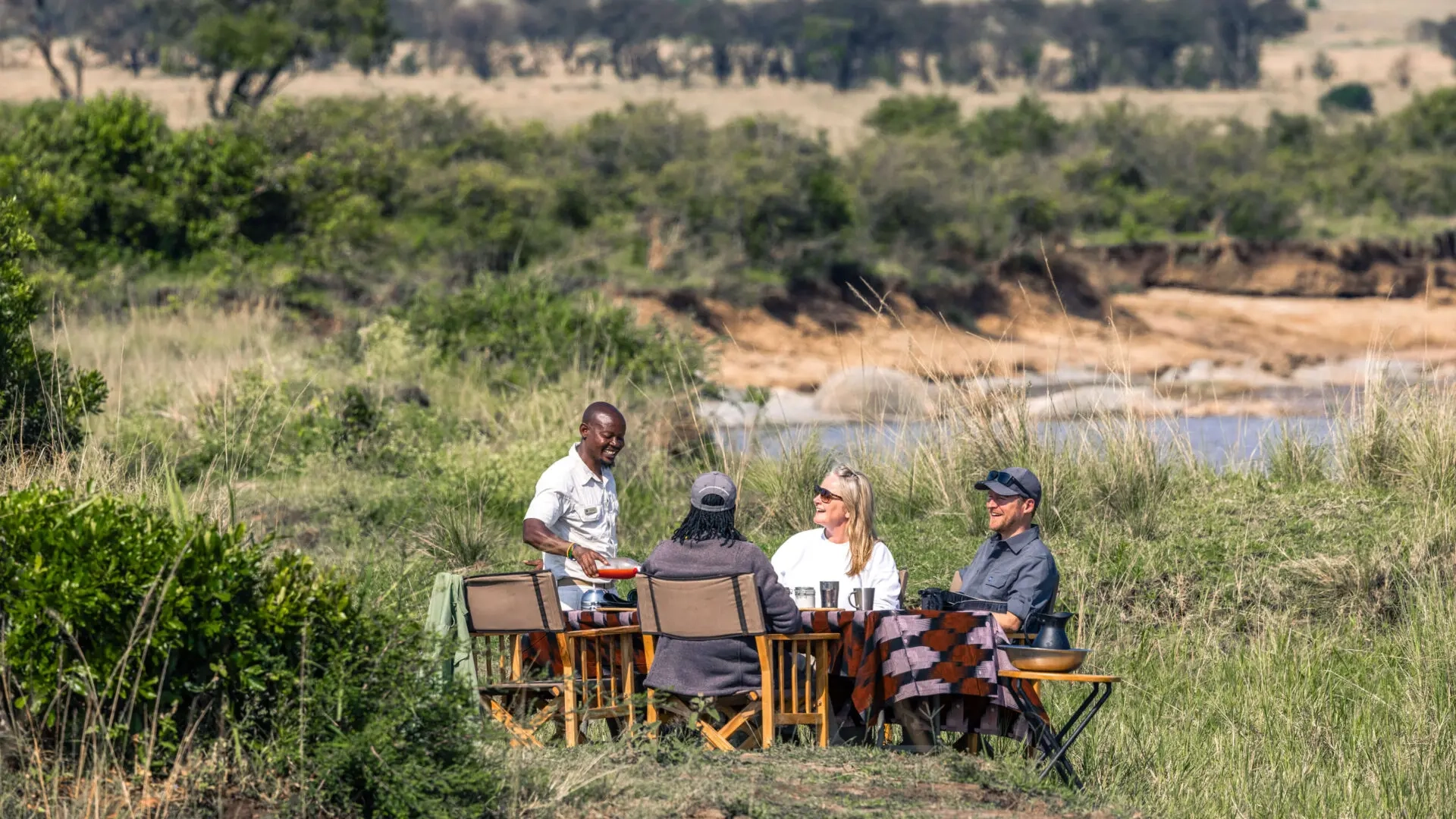
Definitive answer: A picnic lunch on safari is a packed or catered midday meal eaten at an approved…
Read article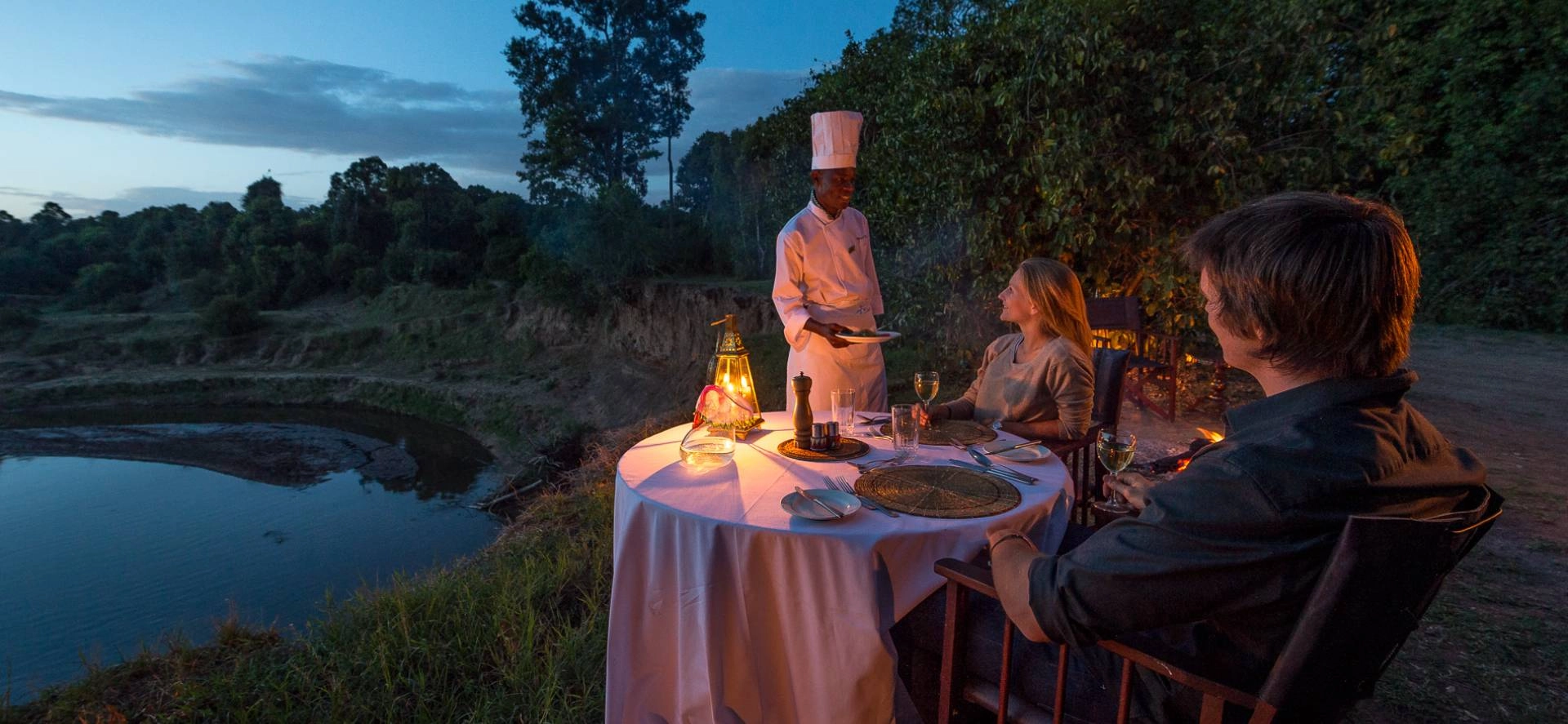
Definitive answer: A bush dinner is an outdoor evening meal arranged in a safe safari setting away from…
Read articleLet us take you closer to the wildlife, people and places that make Africa extraordinary.
Plan Your Safari Today