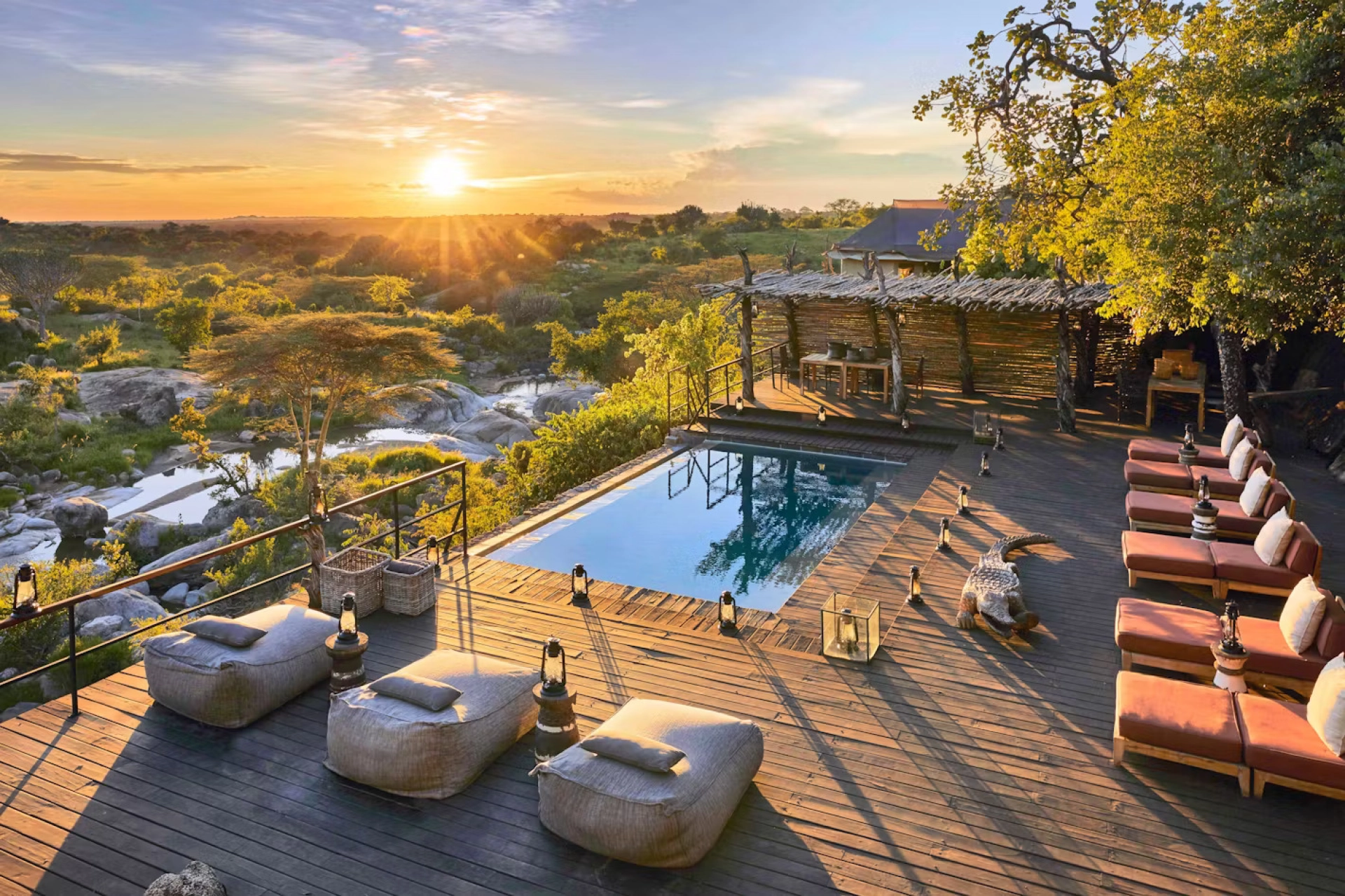
What should I look for when booking a luxury African safari?
When booking a luxury African safari, look beyond the room and compare the quality of guiding, wildlife location,…
Read article

Travel Guide
The park supports elephants, buffalo, giraffes, lions, leopards, zebra, hartebeest, waterbuck, warthogs and numerous other mammals. Wildlife on an African safari Large buffalo herds are among Kidepo's defining wildlife experiences. During dry conditions, animals concentrate around…
The park supports elephants, buffalo, giraffes, lions, leopards, zebra, hartebeest, waterbuck, warthogs and numerous other mammals.
Large buffalo herds are among Kidepo’s defining wildlife experiences. During dry conditions, animals concentrate around dependable water and grazing areas. Lions may rest on rocky outcrops or around riverine habitat. Birdlife is exceptional, and the park’s position near several ecological regions contributes to substantial diversity. For experienced East African safari travellers, Kidepo can feel like discovering an entirely different side of Uganda.
Uganda’s famous tourism corridor generally focuses on Murchison Falls, Kibale, Queen Elizabeth National Park and Bwindi Impenetrable National Park.
Kidepo lies far from this standard route. That distance discourages rushed visitors. Travellers who make the journey generally stay for several nights, allowing the park to be experienced slowly. Sunset across the valley is particularly memorable. Mountain silhouettes darken around vast grasslands while animals move toward water. There may be no nearby traffic, no large settlement and almost no artificial light. At night, stars dominate the sky.
A Kidepo itinerary can also incorporate responsible community experiences in Karamoja.
The Karamojong have strong pastoral traditions, and livestock remain important across the region. Community-led visits can add cultural context to the safari landscape and explain how people have adapted to the same dry environment supporting wildlife.
Kidepo is ideal for travellers who have sufficient time and want an off-the-beaten-track Uganda safari.
It works particularly well for repeat visitors, photographers and travellers combining wildlife with northern Uganda. Those with shorter itineraries may prefer flying to reduce transfer time.
Western Zambia’s Liuwa Plain National Park offers the kind of landscape in which distance becomes difficult to judge.
Grasslands stretch toward enormous horizons. Seasonal floodwater creates pans and wetlands. Wildebeest move across the plains in substantial numbers. Hyenas patrol enormous territories. Cranes and other waterbirds gather where conditions are favourable. Yet compared with Africa’s famous migration landscapes, Liuwa remains exceptionally quiet. The park is associated with one of Africa’s great wildebeest movements and has a long conservation history intertwined with the Lozi people and the Barotse Kingdom. Current park management continues to place strong emphasis on conservation and community participation.
The wildebeest movement is Liuwa’s best-known wildlife spectacle. Seasonal rainfall transforms the floodplain and influences grazing. Animals shift across the ecosystem in response. Unlike migration viewing in heavily visited sections of the Serengeti-Mara ecosystem, the experience can feel remarkably intimate. Instead of dozens of vehicles positioning around a herd, visitors may have enormous sections of plain almost entirely to themselves. Zebra, tsessebe and other herbivores share the landscape. Predators respond to prey movements.
Liuwa has become particularly famous among specialist safari travellers for spotted hyenas. Watching hyenas in an ecosystem where they play a highly visible predatory role challenges the stereotype that they survive primarily by scavenging. Hyenas are intelligent cooperative hunters with complex social systems. Time spent observing clans can become one of Liuwa’s major highlights. Lions, cheetahs and wild dogs can also occur.
The annual flooding creates superb habitat for birds. Cranes, storks, waterfowl and numerous grassland species occur across the ecosystem. For birders, the combination of low visitor density and rich seasonal wetlands is particularly attractive.
Access contributes directly to the park’s remoteness. Travellers generally approach through western Zambia and Kalabo, and overland travel requires suitable vehicles and careful planning. Current visitor guidance specifies high-clearance 4×4 access for self-drive exploration, while seasonal flooding can affect opening periods and accessibility. This is not the place for an improvised road trip in an unsuitable vehicle. But for travellers willing to make the effort, Liuwa delivers one of southern Africa’s great wilderness experiences.
Tanzania contains some of Africa’s most famous safari destinations. The Serengeti receives international attention. Ngorongoro appears on countless safari itineraries. Tarangire and Lake Manyara form part of the established northern circuit. Far away in western Tanzania lies Katavi National Park. This isolation is precisely why serious safari enthusiasts love it. Katavi contains seasonal floodplains, woodland, rivers and broad grasslands supporting large concentrations of wildlife during favourable periods. The park’s remoteness has historically kept visitor numbers remarkably low compared with the northern circuit.
During dry months, shrinking water sources can produce dramatic wildlife concentrations. Hippos crowd remaining pools. Crocodiles gather in restricted channels. Buffalo form substantial herds. Elephants, giraffes and antelope move through surrounding habitat. Predators patrol areas where prey becomes concentrated. The scenes can feel raw. Rather than the polished rhythm of heavily developed safari circuits, Katavi retains a frontier quality.
Some of Katavi’s most memorable dry-season scenes involve hippos competing for increasingly limited water. Ordinarily territorial boundaries can become compressed. Animals are forced close together. Conflict increases. Large crocodiles may gather in muddy waterways. These encounters reveal the ecological intensity of the late dry season. Safari is not always peaceful. Scarcity shapes behaviour.
Geography is the primary reason. Western Tanzania is far from the country’s main tourism corridors. Reaching Katavi efficiently generally requires scheduled or charter flights, while overland access can involve significant travel time. Accommodation is limited compared with Serengeti. This keeps mass tourism away. The result is exactly what wilderness-focused travellers seek.
Ruaha National Park is one of Tanzania’s great safari wildernesses. Its landscapes combine baobab-studded plains, rocky hills, woodland and the Great Ruaha River. The park sits within a broader ecological region linking eastern and southern African wildlife communities. This contributes to excellent biodiversity. Although Ruaha is better known than Katavi, it still receives far fewer visitors than Tanzania’s northern circuit. The park’s size means even when several camps are operating, enormous areas can remain quiet.
Elephants are among Ruaha’s signature animals. Family groups move between woodland and river systems, especially during the dry season. Watching elephants dig for water, feed beneath baobabs or cross sandy riverbeds can produce outstanding photographic opportunities.
Ruaha has a strong reputation for predators. Lions are a major attraction. Leopards occur in suitable habitat. Cheetahs may be encountered in more open areas. African wild dogs are another important possibility. The combination of large predators and comparatively low vehicle densities makes Ruaha attractive to serious wildlife photographers.
The river helps structure wildlife activity. During the dry season, dependable water becomes increasingly important. Animals congregate near remaining pools and channels. Predators know this. Game drives along the river can therefore become especially productive. But Ruaha should not be treated only as a destination for ticking animals from a list. Its scale is part of the experience. Baobabs rise above dry landscapes. Elephants disappear into woodland. Dust glows in late-afternoon light.
The scenery can be as memorable as any individual sighting.
Ruaha can be combined with other southern-circuit destinations rather than Tanzania’s busy northern parks. This creates an excellent itinerary for travellers already familiar with the Serengeti and looking for a less conventional safari. Flying is generally the most efficient way to connect remote southern reserves.
Northern Mozambique contains one of Africa’s largest wilderness landscapes. The wider Niassa ecosystem encompasses enormous tracts of miombo woodland, rivers, rocky inselbergs and remote wildlife habitat. This is not a destination travellers choose because they want guaranteed sightings every ten minutes. They come because the landscape itself feels vast. Niassa represents safari at an ecosystem scale. Elephants, lions, African wild dogs, antelope and numerous other species inhabit the region. Wildlife densities vary, and animals can be widely dispersed.
The reward is a genuine sense of exploration.
Miombo can be challenging wildlife habitat. Dense seasonal woodland reduces visibility. Animals disappear quickly. Road networks are limited. Unlike open Serengeti grasslands, where a giraffe may be visible kilometres away, a large mammal in miombo can vanish only metres from the track. That requires a different style of safari. Guides read tracks. They study water sources. They listen for alarm calls. Patience becomes fundamental.
Large wilderness landscapes are particularly important for wide-ranging carnivores such as African wild dogs. Wild dogs require substantial territories and are vulnerable to habitat fragmentation. Remote ecosystems therefore play an important conservation role even when they receive relatively few tourists. Watching a pack move through woodland is one of Africa’s most exciting predator experiences.
First-time safari visitors often prioritise destinations with consistently high wildlife density. That makes sense. But after visiting the Mara, Serengeti or Kruger, some travellers begin craving wilderness rather than species numbers. Niassa is for those travellers. You may work harder for every sighting. Yet a single lion appearing beside an isolated river can feel more memorable precisely because you spent hours searching.
For travellers searching for one of Africa’s genuinely unusual safari destinations, Zakouma National Park in Chad deserves serious attention. Situated in southeastern Chad between the Sahara to the north and wetter Central African ecosystems farther south, Zakouma occupies a fascinating ecological transition. Seasonal floodplains, savannah, woodland and water systems support remarkable concentrations of wildlife during the dry season. The park has also become one of Africa’s notable conservation recovery stories.
Current management is led by African Parks in partnership with the Government of Chad and local communities, and wildlife populations have shown major recoveries after severe historical poaching pressures.
Elephants are central to the Zakouma story. Historical poaching caused devastating losses. Improved protection allowed the surviving population to stabilise and begin recovering. For travellers, seeing elephants here therefore means more than another wildlife sighting. It represents the possibility of ecological restoration when long-term management and law enforcement succeed.
As dry conditions intensify, water becomes increasingly limited. Buffalo, antelope and numerous other animals concentrate around remaining wetlands. Predators follow. Birdlife can become spectacular. Large numbers of waterbirds gather around productive pans. Zakouma’s current visitor information describes the late dry season as particularly productive for wildlife as animals concentrate around diminishing water.
Zakouma is also critically important for the Kordofan giraffe, one of Africa’s threatened giraffe subspecies. Seeing them within this remote landscape highlights the conservation value of protected areas far outside mainstream safari circuits.
Travelling to Chad requires considerably more planning than booking a conventional Kenya or South Africa safari. Tourist infrastructure is limited. Flights and road logistics need careful coordination. The park’s tourism season is strongly influenced by weather; the wet season makes normal tourist access impossible, while the dry season provides the main safari window. This logistical difficulty keeps numbers low. Visitors who make the journey experience a safari landscape still unfamiliar to most international travellers.
Our final destination changes the meaning of wilderness completely. Instead of dry savannah, open floodplain or miombo woodland, Odzala-Kokoua National Park protects rainforest within the Congo Basin. The experience feels entirely different from conventional safari. Visibility may be only a few metres. Humidity is high. Forest sounds replace wide savannah horizons. Wildlife often needs to be tracked on foot. Western lowland gorillas are among the major attractions. Forest elephants, buffalo, sitatunga and numerous primates also inhabit the broader ecosystem.
Most travellers associate gorilla trekking with mountain gorillas in Uganda and Rwanda. Odzala offers a very different primate experience. Western lowland gorillas occupy lower-altitude tropical rainforest and differ ecologically from mountain gorillas. Tracking can involve walking forest trails while listening for vocalisations and searching for feeding signs. Dense vegetation makes sightings more intimate and unpredictable. For travellers who have already completed Uganda gorilla trekking or a Rwanda gorilla safari, Congo Basin gorilla experiences reveal another dimension of African primate conservation.
One of Central Africa’s most fascinating habitats is the forest bai—an open, often swampy clearing within dense rainforest. Bais can attract wildlife seeking minerals, water or vegetation. Forest elephants may emerge from seemingly impenetrable forest. Buffalo enter the clearing. Birds gather around wet areas. After hours surrounded by dense vegetation, watching a large elephant step into an open bai can feel extraordinary.
Savannah safari trains your eyes to scan distance. Rainforest safari teaches you to listen. Branches break. Monkeys call overhead. Bird sounds reveal changes in habitat. Trackers examine footprints. The forest may conceal a gorilla group only tens of metres away. This creates tension and anticipation very different from searching for lions across open grassland.
Congo Basin forests contain extraordinary biodiversity and store immense quantities of carbon. They also face pressures from logging, hunting, mining and infrastructure expansion. Tourism alone cannot solve these issues, but carefully managed low-volume ecotourism can provide financing, employment and international attention for protected landscapes.
Should a first-time traveller choose Kidepo instead of the Masai Mara? Zakouma instead of Kruger? Katavi instead of Serengeti? Not necessarily. Mainstream parks are popular because they are outstanding. Wildlife densities are often exceptional. Access is easier. There are more lodge choices. Medical and tourism infrastructure is more developed. Remote safari destinations provide a different value. They offer solitude. Adventure. Uncertainty. Landscape. Low vehicle density. And the feeling of travelling beyond standard routes.
For first-time visitors with limited time, combining one famous destination with one remote park can provide an excellent balance.
Imagine two lion encounters. In a famous reserve, a guide receives information over the radio and drives toward a lion pride. Twenty vehicles may already be present. You photograph lions successfully. The sighting is excellent. Now imagine spending three hours following tracks through an isolated wilderness. Your guide notices fresh prints. Vultures circle in the distance. Impala begin alarm calling. Eventually a lioness emerges from grass beside the road. There is no other vehicle.
Biologically, the animal is the same. Emotionally, the experience feels completely different. The search becomes part of the sighting.
Remote safari destinations can be outstanding for photography. Lower vehicle density gives guides more flexibility to position without competing with multiple vehicles. Animals may also behave more naturally when pressure is low. However, remoteness creates photographic challenges. Wildlife may be farther away. Finding subjects can take longer. Charging facilities may be limited. Dust, heat or humidity can be severe. Bring adequate batteries, storage cards and protective equipment. Most importantly, photograph the wilderness itself.
Remote safari is as much about landscape as animals. A tiny elephant crossing a huge plain may communicate the character of a place better than another tight elephant portrait.
Remote does not necessarily mean cheap. In fact, the opposite is often true. Fuel must travel farther. Food and supplies may arrive by aircraft. Camps operate for relatively small numbers of guests. Charter flights increase costs. Staff accommodation and logistics become more complicated. This means some remote safaris cost considerably more than mainstream destinations. However, not every wilderness experience requires luxury accommodation. Places such as Liuwa offer different accommodation styles, including camping options, while Kidepo can be incorporated into broader Uganda road itineraries.
The important factor is matching the destination to your travel style.
Remote safari requires more planning than conventional tourism. Flights should have sensible connections. Travel insurance is essential. Medical evacuation cover can be valuable. Travellers should carry personal medication. Luggage restrictions on small aircraft must be respected. Self-drivers need suitable vehicles, fuel planning and emergency equipment. Some destinations require specialised local arrangements rather than independent travel. Political conditions and entry requirements can also change. Always obtain current destination advice before departure.
Season matters enormously. Some parks become almost inaccessible during heavy rains. Floodplains disappear beneath water. Roads become impassable. Camps close. Elsewhere, green-season access remains possible but wildlife distribution changes dramatically. For example, Zakouma’s tourism season is strongly shaped by its wet and dry cycle, while Liuwa’s annual flooding affects access and seasonal operations. Remote safari planning therefore needs to begin with access conditions, not merely wildlife preferences.
Low visitor numbers do not automatically make tourism sustainable. Remote landscapes can be extremely sensitive. Safari vehicles must respect tracks and off-road regulations. Wildlife should never be chased for photographs. Local communities should benefit economically. Camps should manage waste responsibly. Water use requires special care in arid regions. Tourism has particular potential in remote areas because relatively small visitor numbers can create important employment and conservation revenue. At Liuwa, for example, current tourism programmes are explicitly linked with community participation and conservation financing.
For travellers booking with Adventure in the Wild Safaris, Kidepo deserves particular consideration. Many Uganda itineraries rightly focus on gorilla trekking. Bwindi is extraordinary. Kibale provides superb chimpanzee tracking. Queen Elizabeth offers classic wildlife and the Kazinga Channel. Murchison Falls combines savannah with the Nile. But adding Kidepo changes the journey. It introduces Uganda’s semi-arid northeast and provides a sense of wilderness completely different from the country’s western forests. A longer itinerary can create one of East Africa’s most diverse safaris.
Imagine beginning among Kidepo’s buffalo and lions before travelling south toward Murchison Falls, Kibale chimpanzees, Queen Elizabeth and finally the mountain gorillas of Bwindi. Few African countries can offer that ecological range within one itinerary.
Travellers do not have to choose between iconic and remote Africa. The best journeys can combine both. A Tanzania itinerary might pair the Serengeti with Ruaha. A Zambia journey could combine South Luangwa with Liuwa. A Uganda safari can combine Bwindi and Queen Elizabeth with Kidepo. A Central African expedition could pair gorilla tracking with broader rainforest exploration. The famous destination provides wildlife consistency. The remote destination provides solitude. Together, they create variety.
It depends on the family. Older teenagers who enjoy wildlife, photography and adventure may find remote safaris extraordinary. Young children may struggle with long transfers and limited facilities. Certain camps have age restrictions. Medical access is another consideration. Families should choose destinations based on their children’s travel experience rather than assuming remoteness is automatically better. For first-time safari families, a well-developed park may be easier. For experienced travelling families, remote Africa can become unforgettable.
Yes—particularly for couples who value privacy and adventure over elaborate resort facilities. Imagine watching sunset with no other vehicle in sight. Dining beneath stars in a wilderness camp. Flying over enormous floodplains. Listening to lions outside your tent. Remote destinations naturally create exclusivity because visitor numbers are low. For adventurous honeymooners, this can feel more romantic than a large luxury lodge.
Remote parks become particularly appealing after a traveller has already visited Africa’s famous destinations. Your first safari might be about seeing the Big Five. Your second may focus on gorillas. Eventually priorities change. You begin appreciating ecosystems rather than lists. Birds become interesting. Tracks matter. Landscape becomes central. You no longer need a lion every day. You want to understand why the lion is there. That is when remote destinations become addictive.
Perhaps the greatest luxury in remote Africa is not the lodge. It is silence. No engine noise. No queue of vehicles. No constant mobile-phone signal. Just wind through grass. Bird calls. Insects. A distant hyena. The sound of elephants breaking branches. Modern life rarely gives people genuine silence. Remote wilderness does. And once you experience it, crowded tourism can feel very different.
Africa’s iconic parks will always deserve attention. The Serengeti deserves its reputation. The Masai Mara is extraordinary. Kruger is one of the world’s great wildlife destinations. But they represent only part of Africa’s wilderness. Beyond the famous safari circuit lies another continent. There is Kidepo, hidden between mountains in northeastern Uganda. There is Liuwa, where wildebeest move across enormous Zambian floodplains. There is Katavi, isolated in western Tanzania. There is Ruaha, where elephants move through baobab country.
There are Mozambique’s remote miombo landscapes. There is Zakouma, one of Central Africa’s great conservation stories. And there is Odzala, where gorillas and forest elephants inhabit Congo Basin rainforest. These destinations demand more from travellers. More time. More planning. More patience. Sometimes more money. But they give something extraordinary in return. Wilderness that still feels like wilderness.
Adventure in the Wild Safaris specialises in tailor-made East African wildlife journeys and can incorporate lesser-visited wilderness destinations into longer African itineraries. For travellers particularly interested in Uganda, we can create itineraries combining Kidepo Valley National Park, Murchison Falls, Kibale, Queen Elizabeth National Park and Bwindi gorilla trekking. Multi-country journeys can also combine Uganda with Kenya, Rwanda and Tanzania, giving travellers both iconic wildlife destinations and quieter wilderness experiences.
There is no single definitive answer. Parks such as Katavi, Zakouma, Liuwa Plain, Kidepo and wilderness regions of northern Mozambique all offer genuinely remote experiences.
Ruaha, Zakouma, Kidepo and Katavi can all provide outstanding wildlife. The best choice depends on season and the species you hope to see.
Kidepo Valley National Park is Uganda’s classic remote wilderness safari destination.
Yes, especially for travellers who value scenery, wildlife and low visitor density. Staying several nights makes the journey more worthwhile.
Liuwa Plain in western Zambia hosts an important annual wildebeest movement and receives far fewer visitors than the Serengeti-Mara ecosystem.
Zakouma receives organised tourism, but Chad requires more specialised planning than mainstream safari countries. Travellers should use experienced operators and check current government travel advice before booking.
Ruaha is excellent for travellers wanting strong wildlife with fewer visitors, while Katavi provides an even more remote experience.
They can be because charter flights, limited infrastructure and supply logistics increase operating costs. However, price varies significantly by park and accommodation type.
Yes, but travellers should understand that wildlife may be less predictable and logistics more complicated. Many first-time visitors prefer combining a remote park with a famous wildlife destination.
Pack lightweight safari clothing, a warm layer, binoculars, sun protection, personal medication, charging equipment, suitable camera gear and any destination-specific health requirements. Soft luggage may be necessary for small aircraft.
Yes. A Uganda itinerary combining Kidepo and Bwindi is particularly strong because it brings together remote savannah wilderness and mountain gorilla trekking.

Share This Article
When booking a luxury African safari, look beyond the room and compare the quality of guiding, wildlife location,…
Read article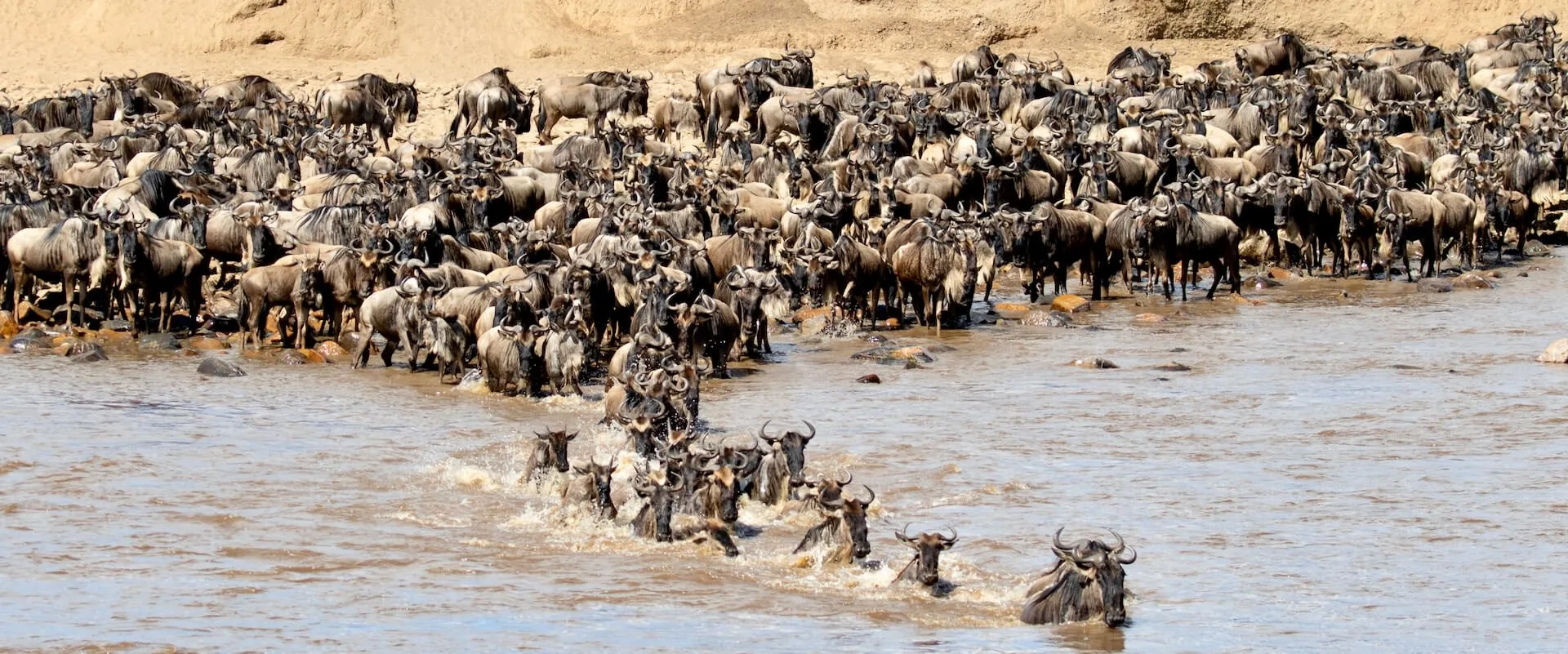
The Great Migration in Africa happens all year because the herds continuously circulate through the Serengeti–Mara ecosystem in…
Read article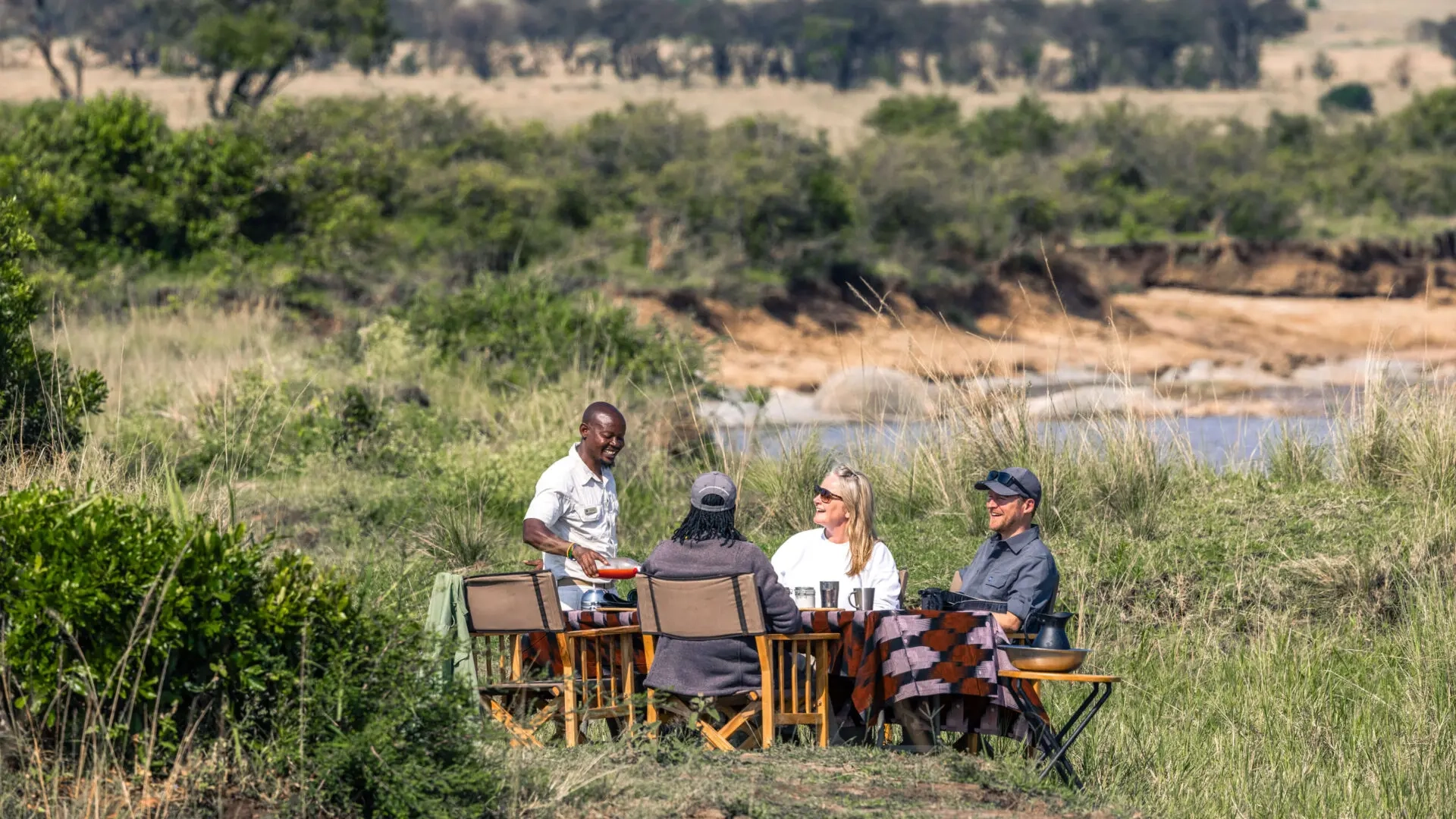
Definitive answer: A picnic lunch on safari is a packed or catered midday meal eaten at an approved…
Read article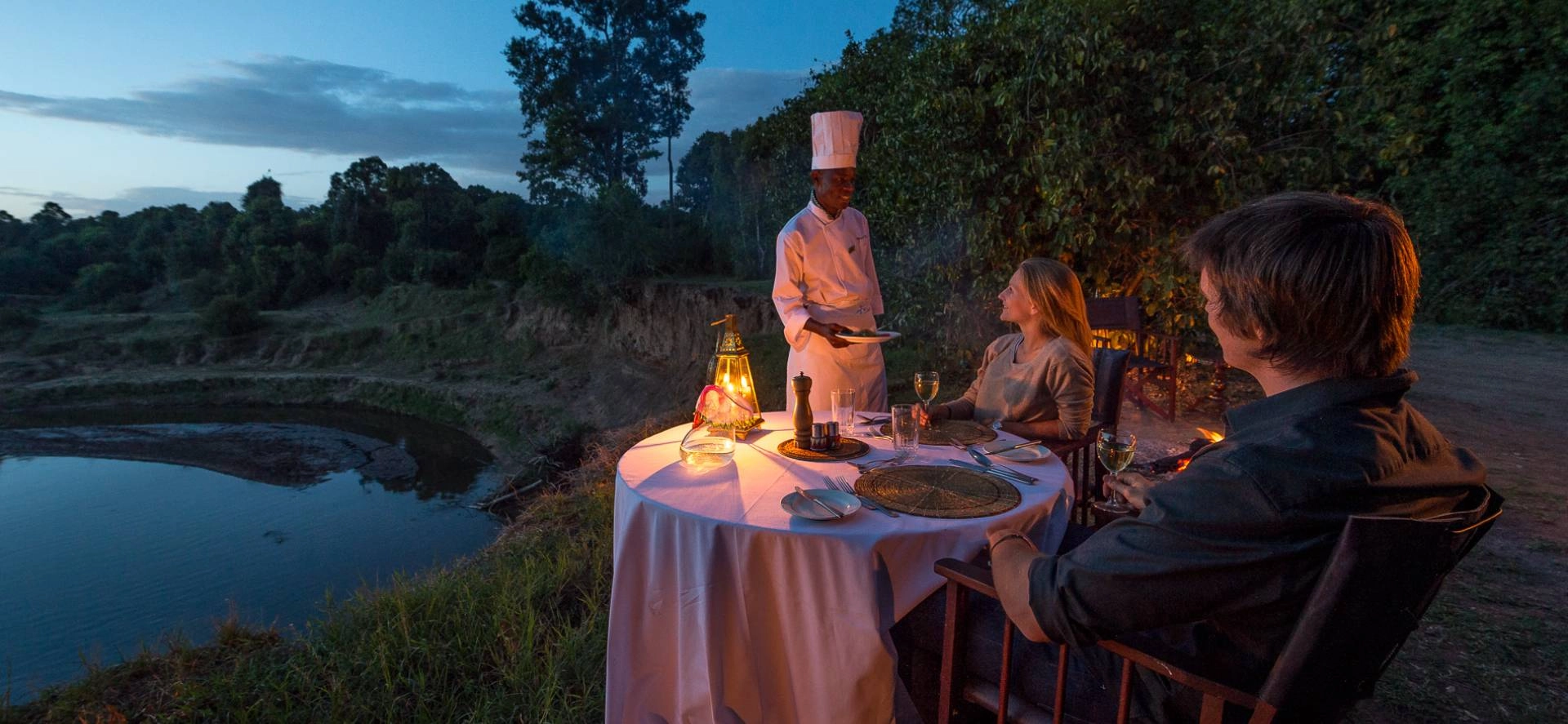
Definitive answer: A bush dinner is an outdoor evening meal arranged in a safe safari setting away from…
Read articleLet us take you closer to the wildlife, people and places that make Africa extraordinary.
Plan Your Safari Today