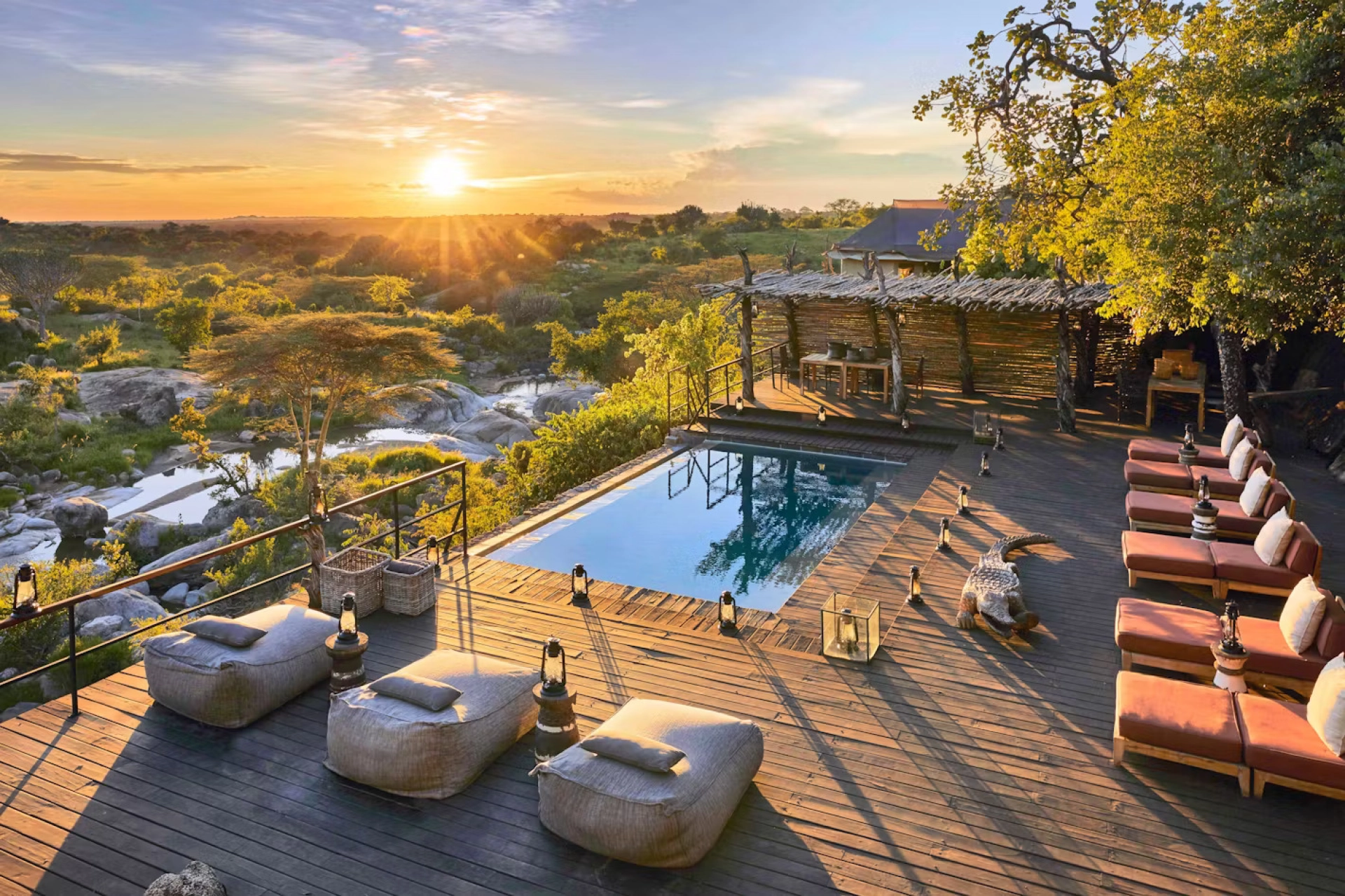
What should I look for when booking a luxury African safari?
When booking a luxury African safari, look beyond the room and compare the quality of guiding, wildlife location,…
Read article

Travel Guide
Volcanoes National Park Rwanda is one of Africa’s most celebrated primate destinations and the centerpiece of Rwanda’s mountain gorilla tourism. Set among the misty Virunga volcanoes in the country’s northwest, the park combines mountain gorillas, golden…
Volcanoes National Park Rwanda is one of Africa’s most celebrated primate destinations and the centerpiece of Rwanda’s mountain gorilla tourism. Set among the misty Virunga volcanoes in the country’s northwest, the park combines mountain gorillas, golden monkeys, dramatic volcanic scenery, montane forest, challenging hikes and a conservation history known around the world.
For many travelers, Volcanoes National Park is where an African safari becomes intensely personal. Instead of observing wildlife from a vehicle across open savannah, visitors enter cool mountain forest on foot with trained guides and trackers. The goal may be a habituated mountain gorilla family, a troop of golden monkeys, a volcanic summit or simply the extraordinary highland landscape around Musanze.
The park is also exceptionally easy to combine with the rest of Rwanda. Kigali is only a few hours away by road under normal conditions, making it possible to connect gorilla trekking with Akagera National Park, Nyungwe Forest National Park, Lake Kivu and cultural experiences. Its position close to Uganda also makes Volcanoes National Park a natural component of a Rwanda-Uganda gorilla safari involving Mgahinga or Bwindi.
This guide explains how to plan Volcanoes National Park in depth, including gorilla trekking, permits, golden monkeys, hiking, accommodation, weather, access, photography, responsible tourism and multi-country safari combinations.
Volcanoes National Park, known in French as Parc National des Volcans, lies in northwestern Rwanda near Musanze. The park protects part of the Virunga Massif, the transboundary volcanic mountain system shared by Rwanda, Uganda and the Democratic Republic of Congo. Its landscape includes the Rwandan slopes of several Virunga volcanoes and a mosaic of bamboo, montane forest and high-altitude vegetation. Musanze is the main urban gateway and accommodation hub.
The park is internationally famous for mountain gorilla trekking. It is also known for golden monkeys, volcano hiking and its association with decades of gorilla research and conservation. For modern safari travelers, the park’s greatest attraction is the opportunity to spend a regulated period observing a habituated gorilla family in the forest. Yet travelers who stay longer discover that gorillas are only one part of the destination.
Mountain gorillas survive naturally only in a restricted part of central-east Africa. The Virunga population ranges through protected areas shared by Rwanda, Uganda and Congo, while another population occurs in Uganda’s Bwindi ecosystem. This limited distribution makes every Rwanda gorilla trekking safari a conservation-sensitive experience. Tourism is highly regulated. Permit revenue contributes to the broader conservation model, while the surrounding tourism economy supports guides, porters, accommodation staff, drivers and community enterprises.
A gorilla trekking day begins early. Travelers reach the designated briefing area, complete formalities and receive instructions about forest behavior and gorilla-viewing rules. Groups are then allocated according to current operational arrangements. With guides, trackers and optional porters, visitors enter the forest. The trek may involve farmland edges, bamboo, forest trails, mud and steep slopes. There is no fixed walking duration because gorillas move freely. Once the assigned habituated family is located, the encounter follows the regulated viewing period and ranger instructions.
Difficulty varies substantially. One day a gorilla family may be relatively close. Another day the same group may have moved deeper or higher into the mountains. Altitude also matters. Travelers arriving directly from low elevation may notice the exertion more strongly. Prepare with regular walking, hill training and comfortable hiking footwear. Hiring a porter is recommended even for fit travelers.
A porter carries your daypack and helps on slippery or steep sections. This improves comfort and allows you to concentrate on the forest. Porter employment also provides direct local economic benefit. Hiring one should not be viewed as a sign of weakness. Even experienced hikers often appreciate assistance when the trail becomes muddy.
A valid Rwanda gorilla permit is required for gorilla trekking. Permit pricing, booking terms and availability are controlled through Rwanda’s official tourism and conservation system and can change. Travelers should verify the current official price before booking. Permits are date-specific and limited. During popular travel periods, early reservation is essential.
If gorilla trekking is the central purpose of your Rwanda trip, secure the permit early. Do not build a complicated non-refundable itinerary and only afterward check whether a permit exists. A safari operator can coordinate the permit with lodge availability, airport arrival and wider routing. This becomes especially important for families or groups requiring several permits on the same date.
Two nights is the practical minimum for one gorilla trek. Arrive the day before, trek the following morning and depart afterward.
Three nights is considerably better because it allows golden monkeys or a cultural activity. Four nights or more suits travelers adding a volcano hike, birding or a second primate experience.
Golden monkey tracking in Volcanoes National Park is one of the best additions to a gorilla safari. Golden monkeys inhabit bamboo-rich areas and are much smaller and more active than gorillas. They may leap between stems, feed rapidly and move as a troop. Photography can be challenging because the monkeys are fast and forest light changes constantly.
The activity provides an excellent contrast to the slower, more intimate gorilla encounter.
Travelers sometimes skip golden monkeys because gorillas are more famous. That can be a mistake. Doing both demonstrates how differently primates use the same mountain ecosystem. The second activity also justifies staying another night in the Musanze region rather than racing back to Kigali immediately after gorilla trekking.
The Virunga volcanoes are among the park’s defining features. Hiking opportunities depend on current park access and operational rules. Some routes are physically demanding full-day adventures. Trekkers should assess fitness realistically, carry adequate water and prepare for rapid weather changes. A volcano hike should be scheduled on a separate day from gorilla trekking.
Mount Bisoke is one of the best-known hiking objectives in the Rwanda Virungas. The climb is demanding because of altitude, mud and gradient. Under suitable conditions, the summit area and crater landscape provide a dramatic reward. Weather can obscure views, so the experience should be valued as a mountain journey rather than a guaranteed panorama.
Mount Karisimbi is one of the highest and most demanding Virunga objectives. It requires significantly more preparation than a casual nature walk and may involve an overnight mountain itinerary according to current operating arrangements. Travelers should verify the present route, permit requirements and equipment recommendations before planning.
The Volcanoes region is strongly associated with the history of mountain gorilla research. Dian Fossey’s work helped bring international attention to gorilla conservation, though the modern conservation story is much broader and includes Rwandan institutions, trackers, scientists, communities and generations of conservation professionals. Visitors interested in this history can explore approved experiences associated with the research legacy and conservation landscape. The story should be understood as continuing, not frozen in one historical figure.
Volcanoes National Park is not a classic Big Five game-drive destination. Its wildlife value lies in montane ecosystems and primates. Besides mountain gorillas and golden monkeys, the broader forest supports other mammals and rich birdlife. Travelers wanting lions, elephants, buffaloes and other savannah species should combine Volcanoes with Akagera National Park.
Birders should not treat Volcanoes merely as a gorilla stop. The highland habitats support a fascinating bird community, including species associated with the Albertine Rift region. A specialist bird guide can transform a forest walk because many species are identified first by call. Combining Volcanoes with Nyungwe Forest creates a much stronger Rwanda birding itinerary.
The park is a year-round destination. Rwanda’s mountain climate means rain is possible in any month. Drier periods are popular because trails can be less muddy, while wetter periods create intensely green scenery and may have different visitor patterns. There is no month when waterproof clothing becomes unnecessary. The best time is the period that aligns with permit availability, wider safari goals and your tolerance for wet trekking conditions.
Relatively drier periods are often preferred for trekking. Trails may provide better footing, although mud remains possible. Demand can be strong, so permits and desirable lodges should be reserved early. Photographers should remember that bright sun is not always ideal inside forest because it creates strong contrast between highlights and shadows.
Rain changes the experience but does not automatically make it worse. Mist, wet leaves and soft forest light can create beautiful photography. The main challenge is trail condition. Good boots, rain protection and a porter become especially useful. Travelers should protect cameras and documents inside waterproof bags.
Volcanoes National Park is cooler than Rwanda’s lower-elevation areas. Morning temperatures can feel chilly, especially before trekking. As you climb, weather can change rapidly. Wear layers. A breathable base layer, long trousers, light insulating layer and waterproof outer shell are more useful than one heavy garment.
Wear long trousers, a long-sleeved shirt, sturdy hiking boots or shoes, rain jacket and practical socks. Gardening-style gloves can protect hands when holding vegetation for balance. Avoid delicate clothing. Mud is part of the experience. Neutral colors are practical, although you do not need to buy an expensive safari wardrobe.
Keep your daypack light. Bring water, packed food supplied or recommended by your lodge, rain protection, camera, spare battery, sunscreen and necessary medication. A porter can carry the bag. Do not carry unnecessary equipment that becomes burdensome on steep trails.
Forest photography requires flexibility. Light can be dim and uneven. A camera with good higher-ISO performance and a reasonably fast lens is valuable. A moderate telephoto or versatile zoom is often more practical than an enormous lens. Flash is not permitted. Photographers should also remember to stop shooting occasionally and simply observe.
Modern phones can produce excellent gorilla images, particularly when animals are in reasonably open positions. Clean the lens before the trek. Avoid using flash. Video can capture subtle behavior and forest sound, but do not spend the entire regulated encounter looking at a screen.
Rules are designed to protect both gorillas and visitors. Follow the ranger’s instructions at all times. Do not touch gorillas. Avoid sudden movement and loud behavior. Do not eat in close proximity to the animals. If you are ill, report it. Because gorillas are closely related to humans, disease transmission is a serious conservation concern. Current health protocols should always be confirmed before travel.
Gorilla trekking is carefully managed. Habituated gorilla groups are accustomed to controlled human observation, but they remain wild animals. Rangers understand gorilla behavior and will instruct visitors how to react. The most important safety rule is simple: listen to your guide.
Remain calm and follow ranger instructions. Do not reach toward the animal or attempt a selfie interaction. Sometimes a gorilla may move closer than the normal viewing distance on its own.
The fact that an animal approaches you does not give permission to touch it.
Begin preparing several weeks before travel if you are not regularly active. Walking, stair climbing and hill training are useful. You do not need elite fitness, but being comfortable with several hours of uneven uphill walking makes the day more enjoyable. Travelers with mobility concerns should discuss them before booking.
The park’s elevation means some travelers feel short of breath more quickly than expected. Arriving in Musanze the day before trekking allows at least some adjustment and avoids combining a long international journey with immediate strenuous exercise. Drink water and pace yourself. Tell your guide if you feel unwell.
The road journey from Kigali to Volcanoes National Park is one of the destination’s major advantages. Under normal conditions, it takes only a few hours. This makes a private road transfer straightforward. Even so, do not plan to leave Kigali on trekking morning unless your operator has explicitly designed and confirmed the timing. Staying near the park the previous night is far more comfortable.
Travelers arriving at Kigali International Airport can transfer directly to Musanze if the flight lands at a practical hour. If arriving late at night, stay in Kigali and travel the next morning. A private driver-guide simplifies luggage, navigation and hotel check-in.
The park can be combined with Mgahinga Gorilla National Park and Bwindi Impenetrable National Park. Cross-border routes require valid passports and appropriate immigration permissions. Processing time should be built into the itinerary. Never place a permit-controlled trek immediately after a tight border crossing.
Volcanoes and Mgahinga occupy neighboring portions of the greater Virunga landscape. A combined itinerary can offer gorilla trekking in one country and golden monkeys or hiking in the other. This is particularly attractive to travelers who want to compare conservation landscapes across the border.
Combining Rwanda gorilla trekking with Bwindi gorilla trekking gives serious primate enthusiasts two different forest experiences. Bwindi is an ancient, dense rainforest rather than a Virunga volcanic park. The contrast in vegetation and landscape is substantial. A second gorilla trek can feel completely different from the first.
For a complete Rwanda wildlife journey, combine Volcanoes with Akagera National Park. Akagera provides savannah, lakes, game drives and large mammals. The transition from open grassland wildlife to mountain gorillas demonstrates how ecologically varied Rwanda is despite its relatively compact size. Allow enough time rather than compressing both parks into an exhausting schedule.
Nyungwe Forest National Park adds chimpanzees, other primates, forest hiking and outstanding birding. A Rwanda primate itinerary can therefore include chimpanzees in Nyungwe, gorillas and golden monkeys in Volcanoes, followed by savannah wildlife in Akagera. This is one of the strongest ways to experience Rwanda beyond a short gorilla stopover.
Lake Kivu is an excellent place to slow down after trekking. Travelers can continue from Musanze toward lakeside destinations for relaxation, scenery and selected water-based activities. This works particularly well for honeymooners and travelers who want recovery time after several early safari mornings.
Accommodation around Volcanoes National Park ranges from guesthouses and midrange properties to some of Africa’s most sophisticated luxury lodges. The best lodge is not automatically the most expensive. Consider distance to the morning briefing, views, meal quality, room warmth, service style and whether the property suits the rest of your itinerary. For early trekking, practical location matters.
Volcanoes National Park is famous for high-end gorilla tourism. Luxury properties may provide dramatic architecture, private villas, exceptional dining, personalized service and views of the Virunga volcanoes. For honeymooners or once-in-a-lifetime travelers, these lodges can become part of the destination rather than merely somewhere to sleep.
Book well in advance during popular periods.
Midrange lodges can provide excellent value. Travelers should prioritize warmth, reliable hot water, good meals, early breakfast and practical access to trekking. A beautiful room is less useful if the morning transfer is unnecessarily complicated. Recent reviews and operator knowledge help distinguish consistently good properties.
Musanze provides more economical guesthouses and hotels. Budget travelers can reduce costs significantly by staying in town and using arranged transport to park activities. Confirm breakfast timing because trekking departures are early. The gorilla permit remains the largest fixed cost, so accommodation is one of the areas where budget travelers can adjust spending.
The combination of luxury lodges, misty mountains and gorilla trekking makes Volcanoes one of Africa’s exceptional honeymoon destinations. A strong honeymoon itinerary avoids rushing. Spend several nights in the region, add Lake Kivu and perhaps combine Rwanda with Uganda, Kenya or Tanzania. The contrast between intimate primate trekking and classic savannah safari is especially memorable.
Families with children old enough for gorilla trekking can enjoy the park together. Current minimum-age rules should be verified before booking permits. For younger children, plan appropriate alternative activities and childcare with the lodge or operator in advance. Golden monkey and hiking activities may also have specific age or fitness considerations.
Age alone does not prevent gorilla trekking. Many older travelers complete successful treks. The important factors are mobility, cardiovascular fitness and preparation. Hire a porter, use walking poles if appropriate and discuss concerns with your safari operator. High-quality accommodation close to the park can reduce unnecessary fatigue.
Solo travel is possible and rewarding. The permit is per person, while private transport can make a solo itinerary more expensive. Joining a longer scheduled safari where available can reduce some costs. Solo travelers often appreciate the social nature of the trekking group and lodge environment.
Gorilla tourism carries a responsibility. Visitors enter habitat belonging to a highly protected wild primate. The objective is not to maximize proximity or collect a perfect selfie. It is to observe respectfully within a conservation system designed to keep gorillas wild while creating economic value for their continued protection. Support local porters, guides and community enterprises. Follow health rules. Respect photography instructions. Leave no litter.
Protected areas cannot succeed in isolation from surrounding communities. Tourism creates employment and business opportunities, but conservation must also address the real costs experienced by people living beside wildlife areas. Responsible travelers should choose operators and lodges that take local employment, sourcing and community relationships seriously. A gorilla permit is part of the conservation economy, but visitor spending outside the park matters too.
The region around Musanze offers cultural and community-based activities. Choose experiences that are locally led and respectful. Good cultural tourism provides context about contemporary life as well as heritage. Avoid expecting communities to perform a simplified version of “traditional Africa” for photographs. Rwanda is a modern society whose culture continues to evolve.
If Volcanoes is your only goal, three days can work.
For a broader Rwanda safari, allow at least a week. A more comprehensive route involving Akagera, Volcanoes, Lake Kivu and Nyungwe deserves longer. The country’s relatively short road distances make multi-park travel easier than in many larger African destinations, but constant movement can still become tiring.
Travel from Kigali, settle into your lodge and prepare trekking equipment.
Attend the morning briefing, trek your assigned gorilla family and return to the lodge to rest.
Travel back to Kigali for an onward flight or city stay. This is efficient but leaves little room for additional activities.
Transfer to the Musanze area.
Complete the main gorilla experience.
Return to the park for a contrasting primate encounter.
Drive back to Kigali. This is a better introduction to the Virunga ecosystem.
A longer itinerary can combine: Kigali → Volcanoes National Park → Mgahinga → Bwindi → Queen Elizabeth National Park → Entebbe, or the reverse. This creates gorillas, golden monkeys, rainforest, volcanic scenery and savannah wildlife. Depending on your priorities, a chimpanzee destination can also be added.
Rwanda is often favored for the relatively short road access from Kigali and its established high-end gorilla tourism. Uganda offers two gorilla destinations—Bwindi and Mgahinga—and can combine gorillas easily with chimpanzees and several savannah parks. Permit pricing, accommodation costs and route logistics differ. The right choice depends on the entire safari rather than one headline comparison.
Both lie within the Virunga system. Volcanoes offers Rwanda’s principal gorilla trekking program and a wide luxury accommodation ecosystem. Mgahinga is smaller and can be excellent for travelers combining Uganda gorillas with golden monkeys and volcano hiking. Cross-border travelers can experience both.
Bwindi has a completely different forest character. It is larger, denser and divided into multiple trekking sectors. Volcanoes is defined visually by the Virunga volcanoes. Travelers who can afford two permits may find the comparison fascinating rather than redundant.
Volcanoes National Park Rwanda is far more than a place to spend one hour with mountain gorillas. It is a highland conservation landscape where volcanic geography, bamboo forest, primate ecology, community livelihoods and decades of research come together. Gorilla trekking is unquestionably the centerpiece, but travelers who stay longer gain a richer experience through golden monkey tracking, volcano hiking, birding, conservation interpretation and the wider Musanze region. The park is also exceptionally well positioned for a broader East African journey. Combine it with Akagera for savannah wildlife, Nyungwe for chimpanzees, Lake Kivu for relaxation, or Uganda’s Mgahinga and Bwindi for additional primate experiences.
Adventure in the Wild Safaris can arrange Rwanda gorilla safaris, Volcanoes National Park tours, Uganda-Rwanda gorilla trekking, golden monkey tracking, Kigali transfers, Bwindi extensions and customized East Africa primate safaris.
Get quick answers to the most common questions. If you still have questions, our safari experts are here to help.
Yes. It is one of Africa’s premier mountain gorilla and golden monkey destinations.
It is generally a few hours by road under normal conditions.
Although geographically possible for some activities, staying near the park the previous night is more comfortable and safer for a permit-controlled early start.
Mountain gorilla trekking.
Yes.
Yes, subject to current routes, permits and park conditions.
At least two for one gorilla trek; three or four is better for additional activities.
It can be cool, particularly early in the morning and at higher elevations.
Rain is possible throughout the year.
Yes. This is one of the region’s strongest primate safari combinations.
Our safari experts are here to help you plan your safari. Get personalized advice, the latest information and a free, no-obligation quote.
We typically reply within a few hours.

Share This Article
When booking a luxury African safari, look beyond the room and compare the quality of guiding, wildlife location,…
Read article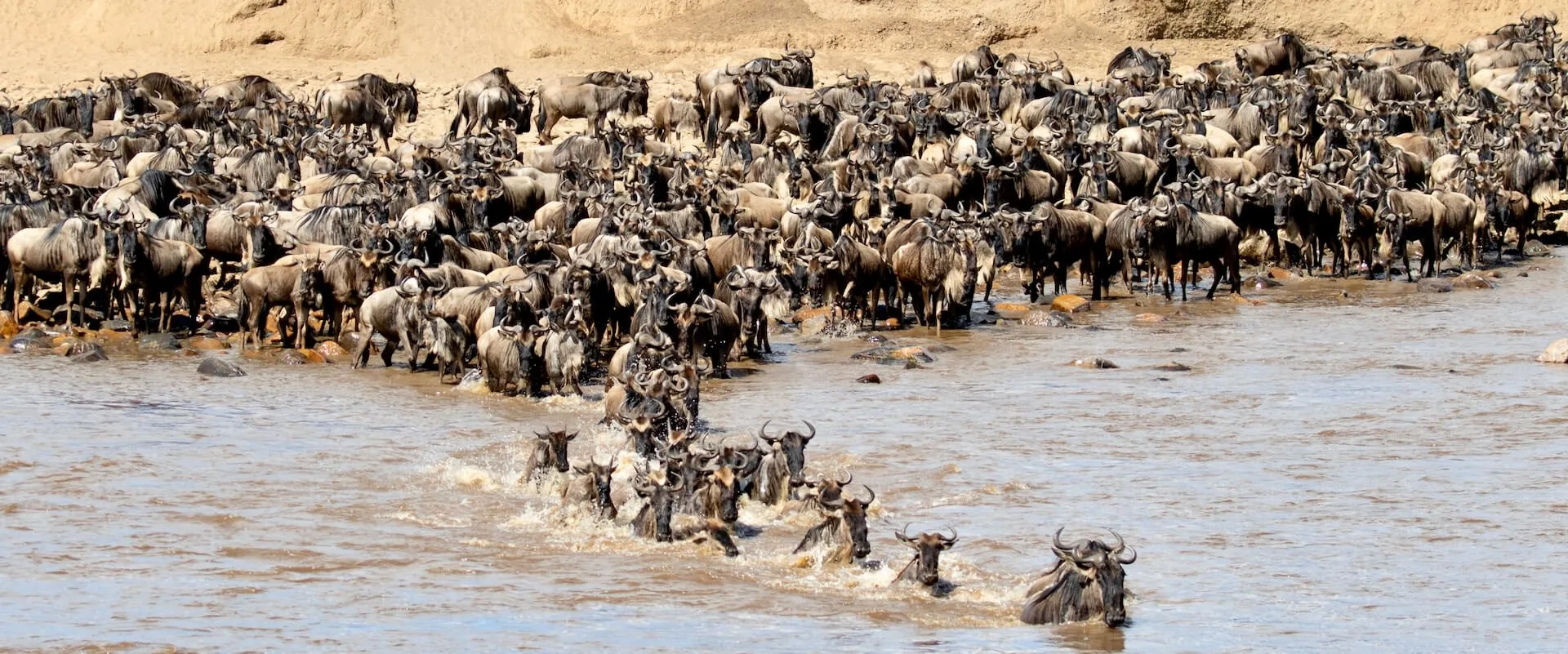
The Great Migration in Africa happens all year because the herds continuously circulate through the Serengeti–Mara ecosystem in…
Read article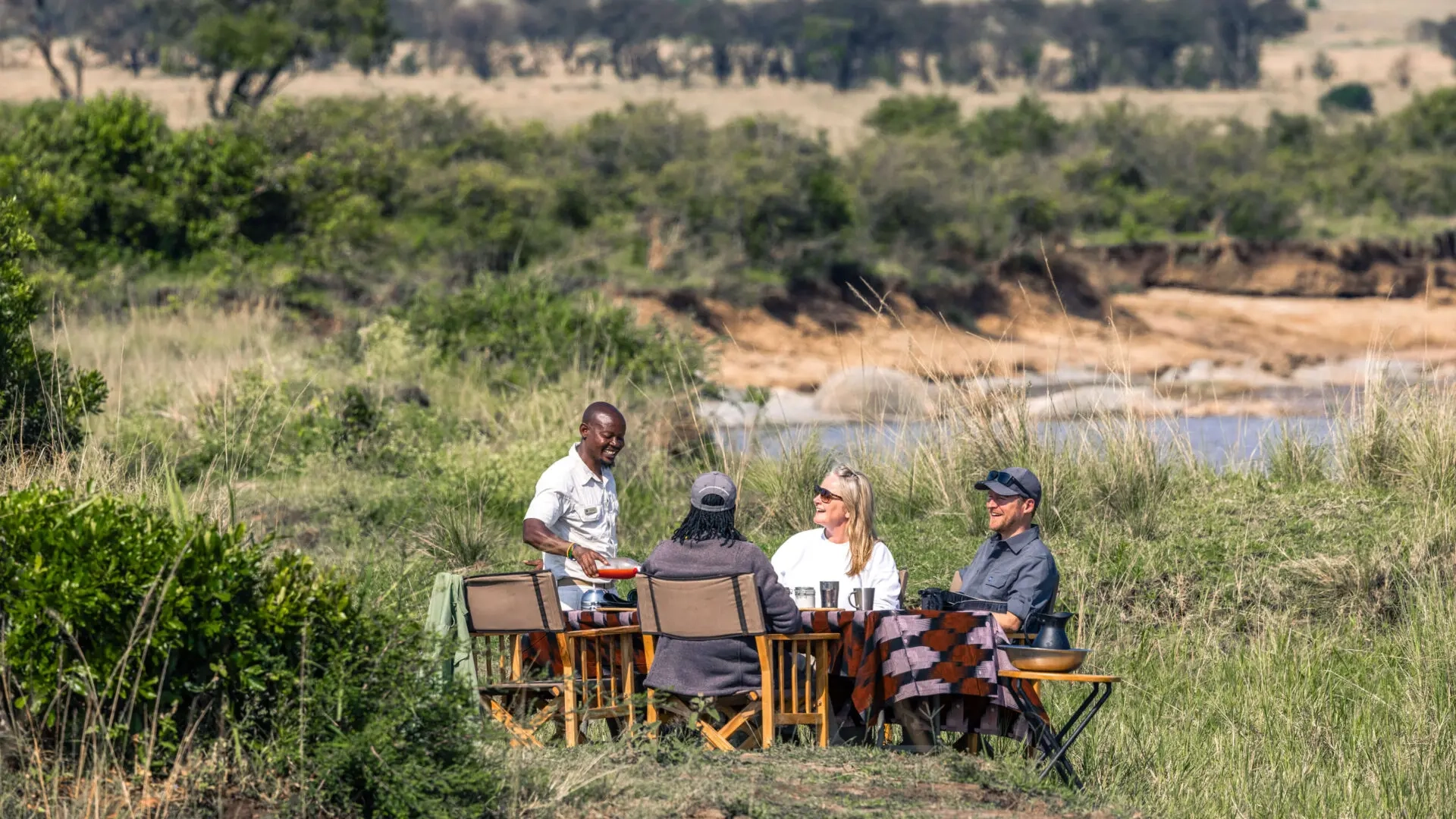
Definitive answer: A picnic lunch on safari is a packed or catered midday meal eaten at an approved…
Read article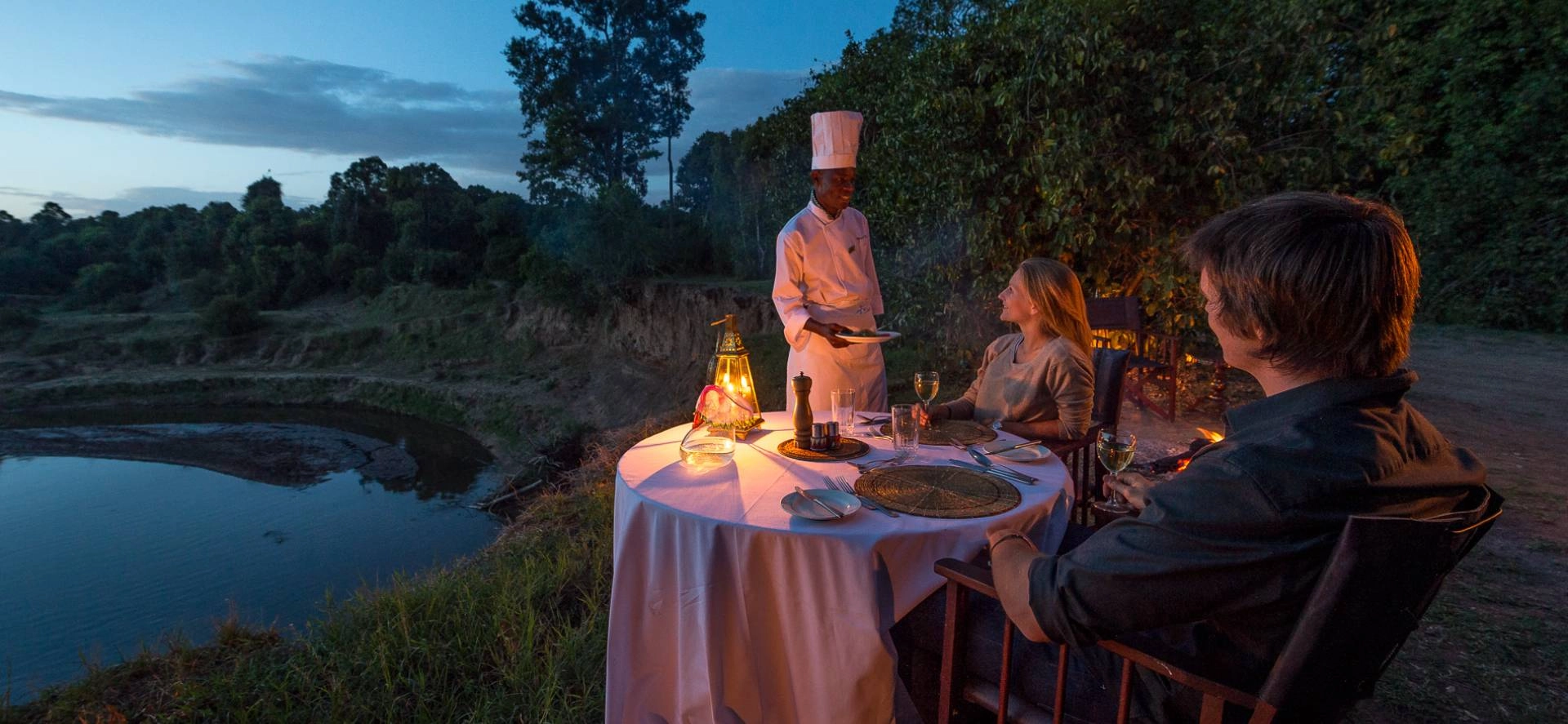
Definitive answer: A bush dinner is an outdoor evening meal arranged in a safe safari setting away from…
Read articleLet us take you closer to the wildlife, people and places that make Africa extraordinary.
Plan Your Safari Today