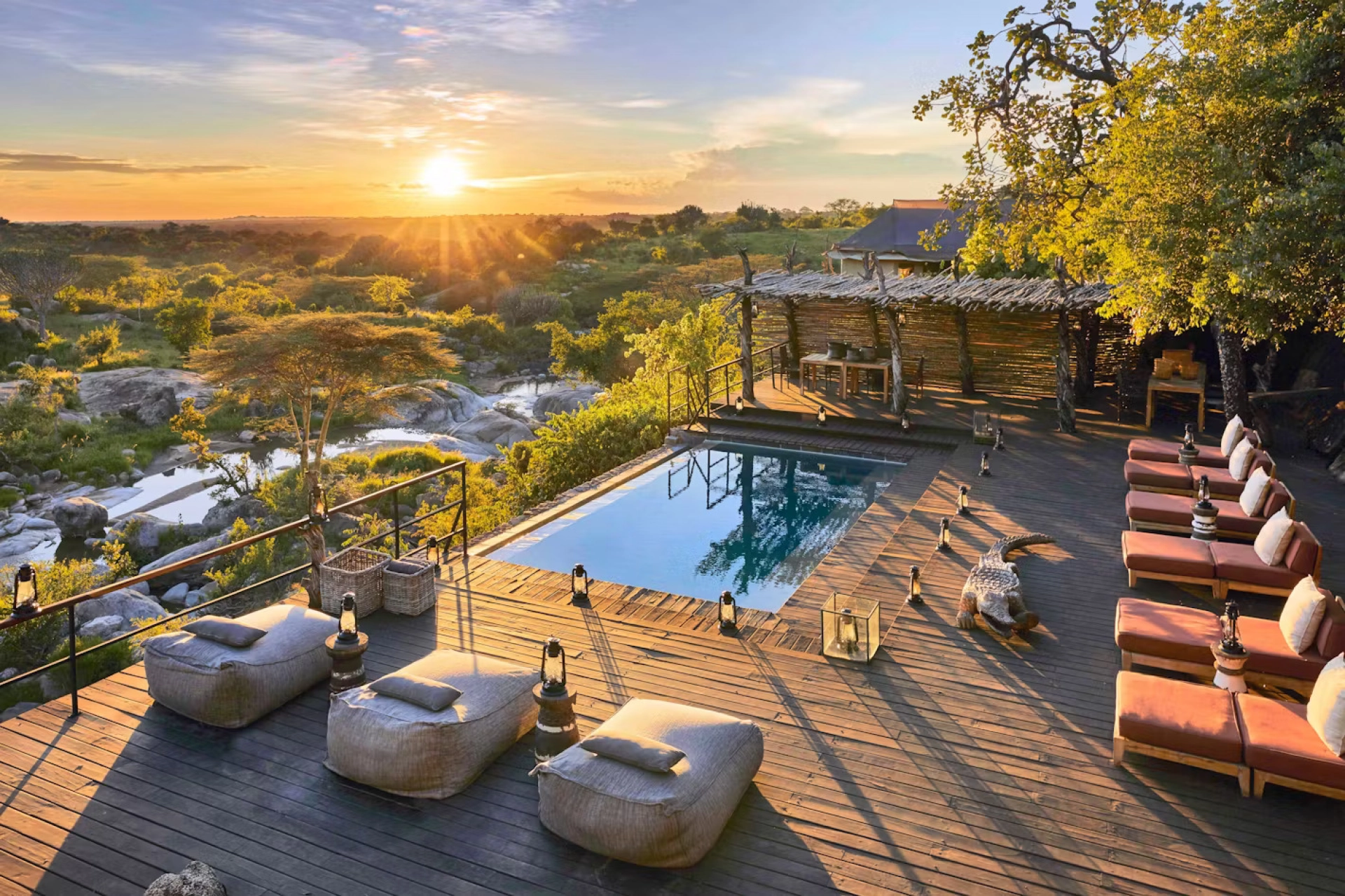
What should I look for when booking a luxury African safari?
When booking a luxury African safari, look beyond the room and compare the quality of guiding, wildlife location,…
Read article

Travel Guide
The Great Migration in Tanzania does not happen on one date. It does not begin on July 1. It does not end on October 31. And it certainly does not follow the perfectly circular month-by-month arrows…
The Great Migration in Tanzania does not happen on one date. It does not begin on July 1. It does not end on October 31. And it certainly does not follow the perfectly circular month-by-month arrows printed in safari brochures with clockwork precision. The Great Migration is a continuous ecological movement involving huge concentrations of wildebeest, zebra and other herbivores traveling through the wider Serengeti-Mara ecosystem in search of fresh grazing and water.
Tanzania Tourism Board describes Serengeti National Park as famous for the annual migration of wildebeest and zebra moving north from the southern breeding grounds toward new pasture, with some animals crossing the Grumeti system and others moving through different northern routes. Tanzania National Parks also describes the migration as one of Serengeti’s defining attractions and emphasizes its enormous scale. The movement is driven by nature. Rainfall changes. Grass changes. Water changes. Herd distribution changes. This means travelers asking when is the Great Migration in Tanzania? need a more useful answer than one month. The migration can be experienced in Tanzania during much of the year.
What changes is where within the Serengeti ecosystem you should stay and which phase of the migration you are hoping to witness. January through March is strongly associated with the southern plains and calving. April and May usually represent greener conditions and gradual movement away from the far south. June often brings movement through central and western regions.
July through October attracts intense interest in the northern Serengeti because of the possibility of Mara River crossings. November and December generally see the herds beginning to move back toward southern grazing areas as short rains influence fresh grass. These are broad ecological patterns. They are not guarantees. The single most important rule for planning a migration safari is this: Book the ecosystem, not the exact event.
The Great Wildebeest Migration is the annual movement of vast numbers of herbivores through Tanzania’s Serengeti ecosystem and Kenya’s Masai Mara. Wildebeest form the largest component. Zebra travel with them. Gazelles and other herbivores contribute to the broader movement.
Predators exploit the opportunities created by these concentrations. Lions, cheetahs, hyenas, leopards and crocodiles all form part of the ecological drama. TANAPA material describes the Serengeti migration as involving more than a million wildebeest together with hundreds of thousands of zebra and large numbers of gazelles and other animals. The newer TANAPA tourism material describes more than two million animals participating in the wider movement.
The exact headline number is less important than the scale experienced on the ground. On productive days, the plains can appear filled with wildebeest far beyond the horizon. The sound can be extraordinary. Thousands of animals call. Dust rises. Predators watch the margins. Calves follow their mothers. Vultures circle. It is not simply a line of animals moving from point A to point B. It is an entire mobile ecosystem.
Food and water are the fundamental drivers. Wildebeest depend on grazing. Rainfall stimulates new grass. As areas dry and grazing quality declines, animals move toward regions where conditions are better. This creates the broad annual cycle around the Serengeti-Mara ecosystem. The pattern repeats, but not identically. Rain can arrive early. It can arrive late. Rainfall may be concentrated in one region. Herds may split. Some animals may move faster than others. This is why no responsible safari operator should claim that “the wildebeest will cross the Mara River at 11:00 a.m. on August 12.”
Nature does not make appointments.
No. The migration spans the wider Serengeti-Mara ecosystem across Tanzania and Kenya. However, Tanzania contains the majority of the Serengeti ecosystem and hosts several distinct migration phases during the year. The southern calving grounds are in Tanzania. The western corridor is in Tanzania. The northern Serengeti river-crossing region is in Tanzania. Kenya’s Masai Mara becomes especially important during periods when migration herds move into its grasslands. For travelers with enough time, combining Serengeti and Masai Mara can provide an exceptional migration-focused safari.
A month-by-month guide should be treated as a probability framework rather than a timetable. The descriptions below explain where safari planners commonly focus during each stage of the year.
January is one of the most exciting months to begin a southern Serengeti migration safari. Herds are generally associated with the southern short-grass plains and the wider Ndutu ecosystem during this period, depending on rainfall. The plains may be green. Wildebeest feed intensively. Pregnant females prepare for calving. Predators are already active around the concentrations. For photographers, the combination of green grass, dramatic skies and enormous herds can be exceptional. January is not usually the month to visit northern Serengeti hoping for Mara River crossings.
The migration focus is much farther south.
Look toward Ndutu, southern Serengeti and the broader short-grass plains rather than selecting a central or northern camp simply because it has a famous brand name. Location is everything on a migration safari. A beautiful camp in the wrong region can produce a weaker migration experience than a simpler seasonal camp positioned near the herds.
February is one of the most remarkable migration months because it is strongly associated with wildebeest calving season. TANAPA material states that hundreds of thousands of calves are born each year, with a very large proportion arriving during a concentrated calving period on the short-grass plains. This creates one of Africa’s most intense predator-prey environments. Newborn calves can stand rapidly.
They must. The ecosystem contains lions, hyenas, cheetahs and other predators. For travelers interested in animal behavior rather than simply river crossings, February can be one of the best times of the entire year.
The drama is continuous. You may watch a wildebeest giving birth. A calf may attempt its first steps. A cheetah may scan the plains. Hyenas may test the edges of a herd. Lions may rest near grazing concentrations. Large groups of zebra add visual contrast. The environment is also often greener than the dusty migration imagery associated with August. This creates beautiful color and atmosphere.
March often continues the southern migration phase. Calves are becoming stronger. Herds continue feeding on short grass. Rainfall can influence exact distribution. The landscape may remain lush. March can be excellent for travelers who want the southern migration experience without concentrating exclusively on the peak February calving weeks. As the month progresses and ecological conditions change, some herds begin gradually shifting. Again, this is not a single synchronized departure.
April commonly coincides with wetter conditions across parts of northern Tanzania. Many travelers avoid the month because of rain. That can create opportunities. Landscapes become green. Visitor numbers may fall. Safari vehicles may be less concentrated. Migration herds continue moving according to food and water. Road conditions can become challenging, particularly after heavy rain. Some seasonal camps may close. A Great Migration safari in April therefore suits flexible travelers who appreciate atmosphere and value rather than those demanding predictable dry-season conditions.
May remains part of the green-season transition. Herds generally begin pushing northward and westward as conditions evolve. The precise distribution varies. This is an important month for understanding why migration maps should not be used rigidly. Some years can place major concentrations in one region earlier than expected. Other years are different. Safari operators should obtain recent field information from guides, camps and park networks when designing itineraries.
June is often one of the transition months between southern-central movement and the increasingly important western and northern migration phases. Herds may move through areas connected with the western corridor. The Grumeti River becomes part of migration conversations. Although Grumeti crossings attract less international marketing than Mara River crossings, they can be dramatic. Tanzania Tourism Board specifically notes that some northward-moving herds cross the crocodile-inhabited Grumeti River. June also tends to bring drier conditions. This can make road travel easier than during the height of green season.
The Grumeti River crossing is different from the famous Mara River spectacle. The geography differs. The behavior differs. The event can be less visually concentrated. Crossings remain unpredictable. Travelers should not book a single western Serengeti night expecting a guaranteed river event. Spend enough time in the relevant migration region.
July marks the beginning of the period when many migration travelers increasingly focus toward the northern Serengeti. Some herds may already be approaching or using the Mara River system. Others can remain farther south. This variability is important. Early July is not the same as late July. Rainfall during preceding months influences progress. A good July itinerary may combine central and northern Serengeti to hedge against uncertain herd distribution.
Yes, it is possible in suitable years and at suitable times. It is not guaranteed. The most damaging migration marketing promise is the suggestion that booking July automatically produces a crossing. Wildebeest decide when to move. Not lodges. Not guides. Not tour operators.
August is one of the most famous months for Mara River crossing safaris. Large herd concentrations can occupy northern Serengeti and the wider cross-border ecosystem. Crossings may occur. They can be spectacular. Thousands of wildebeest may gather near a bank. Animals hesitate. They retreat. They return. One animal enters. Others follow. Within seconds, the scene can become chaotic. Crocodiles wait. Currents create danger. Calves struggle to remain with mothers. Some animals turn around. Others climb steep banks.
It is powerful wildlife theater. But even in August, travelers can spend days without seeing a crossing. That is normal.
Crossing is risky. The river contains crocodiles. Banks can be steep.
Water depth changes. Animals appear to respond to pressure within the herd and conditions at specific crossing points. They may gather for hours and then leave. This unpredictability is one of the reasons tourists should never pressure guides to force wildlife movement. Park regulations exist to protect the animals and the integrity of the event.
September remains an excellent month for northern Serengeti migration travel. Herds can continue moving between Tanzania and Kenya. Some may cross the river multiple times. A common misconception is that each wildebeest crosses once into Kenya and then stays there. Movement is more complex. Herds can shift back and forth according to grazing and local conditions. This means northern Serengeti can remain productive even when many tourism advertisements claim “the migration is in Kenya.” The ecosystem ignores national marketing boundaries.
October can continue to provide migration opportunities around the northern Serengeti and Masai Mara ecosystem. As the month progresses, changing rainfall begins influencing southward movement. Temperatures can be warmer. Herd distribution can become increasingly variable. Travelers booking late October should be particularly cautious about assuming the largest concentrations remain in the exact same northern areas used during August. A mixed-region itinerary can be useful.
November is frequently associated with the return toward central and southern regions as short rains stimulate new grazing. The exact timing varies. Some herds can move quickly when rain creates attractive grass. Others remain distributed more widely. The important travel-planning lesson is that a northern Serengeti camp chosen for August may no longer be the correct migration base in November. Seasonal camps often relocate specifically because wildlife distribution changes.
December often brings increasing migration activity toward the southern Serengeti ecosystem. The annual cycle prepares to begin again. Herds feed on rejuvenated grass. Pregnant females progress toward the next calving period. Travelers visiting around Christmas and New Year can experience excellent wildlife, though holiday demand can make accommodation expensive. The southern migration phase begins strengthening.
There is no single best month because there are different migration experiences. Choose February if calving and predator activity are the highest priority. Choose June if you want a transition period and possible western-corridor migration experiences. Choose July through September if Mara River crossings are the main dream. Choose January, March or December for southern migration conditions with potentially different crowd patterns. Choose green-season months if you prioritize landscapes, birds and potentially better value. The best month is the month aligned with the event you actually want.
This is one of the most useful migration comparisons. Calving season is biologically rich. Births happen across the plains. Predators interact with vulnerable young. The landscapes are green. The action is distributed over a broad area. River-crossing season provides visually explosive moments. Crossings are dramatic and famous. But they can be frustrating because timing is unpredictable. You may wait for hours and see nothing. For wildlife enthusiasts who value continuous animal behavior, calving can be just as impressive as a river crossing. For travelers whose lifelong dream is the iconic river image, northern Serengeti is the correct focus.
Neither experience is objectively better.
The word Ndutu appears constantly in migration planning. The Ndutu region is associated with the broader southern Serengeti-Ngorongoro ecosystem and becomes especially important during the early-year migration and calving period. Seasonal camps position themselves strategically in this region. Because boundaries between conservation units and operating zones can matter for permits and game-drive regulations, travelers should not worry only about a camp’s marketing name.
Ask exactly where it is located. Ask which wildlife areas the vehicle can access. Ask how far typical game drives travel.
The Seronera and Central Serengeti region provides excellent resident wildlife throughout the year. This makes it strategically valuable even when the largest migration concentrations are elsewhere. Lions, leopards, cheetahs, elephants, giraffes and other animals can provide outstanding game viewing. For travelers nervous about “missing” the migration, combining central Serengeti with a seasonal migration region can be an intelligent strategy.
Even if migration movement changes unexpectedly, the safari remains strong.
Western Serengeti becomes especially important during portions of the northward movement. The western corridor adds river systems, woodland and a different landscape character. The Grumeti River is the headline feature for migration travelers. However, the area deserves appreciation beyond one crossing event. Resident wildlife remains part of the safari.
Northern Serengeti is the major Tanzania base for Mara River crossing safaris. The landscape becomes more varied than the stereotype of flat endless plains. River systems, woodland, rolling terrain and open grassland create productive habitats. The region can support excellent resident wildlife even when herds are temporarily concentrated elsewhere. Because it is farther from central Serengeti, travelers should allocate enough nights. Two nights can feel rushed. Three or four nights is much stronger for travelers seriously hoping to witness river activity.
Both can provide migration experiences. Northern Serengeti lies in Tanzania. Masai Mara lies in Kenya. The Mara River passes through the broader ecosystem. Herds can cross international boundaries naturally. Vehicles cannot simply follow them across an arbitrary point. Travelers combining both regions need appropriate transport and border arrangements. This can create an exceptional itinerary but requires more time and expense.
For a dedicated migration journey, seven to ten safari days is an excellent range.
Shorter trips are possible. However, wildlife probabilities increase with time. A seven-day route can combine Ngorongoro, central Serengeti and the seasonally correct migration region. Ten days allows slower game viewing and stronger photographic opportunities. A three-day migration safari may work if flying directly into the correct area, but it leaves far less margin for unpredictable wildlife movement.
River crossings are not performances scheduled for tourists. Imagine arriving at 3 p.m. No crossing occurs. The next morning, animals gather but refuse to enter. You leave at lunchtime. Your safari technically included “northern Serengeti migration.” You simply did not give nature enough time. The solution is not a guarantee. The solution is increasing opportunity. Stay longer.
Road safari is generally more affordable and provides geographical context. The journey through Tarangire, Ngorongoro and Serengeti can be magnificent. However, northern Serengeti is far from Arusha. Driving all the way north and back consumes time. A strategic bush flight can improve short itineraries. For example, travelers might drive through the northern circuit, finish in northern Serengeti and fly back toward Arusha. This avoids unnecessary backtracking.
Migration safaris can be more expensive than general Tanzania safaris because the highest-demand camps become costly during peak seasonal periods. Bush flights add expense. Park and conservation fees are significant. Private vehicles cost more than group departures. Seasonal camps in premium locations may charge higher rates. The smartest budget strategy is not simply choosing the cheapest camp. It is selecting accommodation with an efficient location. A low-cost camp located several hours from the wildlife concentration can waste time and fuel.
Travelers can reduce costs by using road transport, scheduled group departures and simpler tented accommodation. A budget Serengeti migration safari can still produce extraordinary wildlife. You do not need an infinity pool to watch wildebeest. The major non-negotiables should be a reliable vehicle, a knowledgeable guide, appropriate location and enough time.
Mid-range tented camps often provide the best balance. You gain comfortable beds, private bathrooms, good food and strategic locations without the pricing of ultra-luxury camps. Many travelers find this more than sufficient. Spend the saved money on an extra safari night. In wildlife terms, another day in Serengeti often provides more value than a more elaborate bathroom.
Luxury migration safaris can be extraordinary when the luxury creates operational advantages. A strategically positioned seasonal camp can reduce driving. Bush flights save time. Private vehicles provide complete flexibility. Low-density camps improve atmosphere. The strongest luxury experiences therefore sell location, access, guiding and privacy, not simply interior design.
A private vehicle is particularly valuable for photographers. You decide when to leave camp. You choose how long to remain at sightings. You can wait beside a river without negotiating with passengers who want to return for lunch. Families also benefit from flexibility. For groups of four or more, private vehicle pricing can become surprisingly competitive because costs are shared.
Small-group safaris reduce per-person cost. They work particularly well for solo travelers and couples. The compromise is decision-making. One traveler may want birds. Another wants lions. A third wants to wait beside the river. Ask how many passengers share the vehicle. Window access matters greatly.
Photography during migration requires patience. Bring a telephoto lens if wildlife photography is important. Carry spare batteries. Dust protection matters in dry conditions. A beanbag can be useful in safari vehicles. Keep equipment accessible because wildlife behavior changes quickly. Do not spend every moment looking through the viewfinder. The sound and scale of migration are part of the experience.
River crossings attract many safari vehicles. Responsible viewing is essential. Vehicles should follow park regulations and ranger instructions. Guides should not block animal approaches. Do not pressure your guide to move closer illegally. Do not shout at animals. Do not ask drivers to create a crossing. The objective is to observe natural behavior. TANAPA has issued specific visitor-management guidance around Serengeti river-crossing areas, illustrating the importance of controlling vehicle behavior during these sensitive events.
You are still in the Serengeti. This sounds obvious, but travelers can become so focused on one bucket-list event that they overlook everything else. Northern Serengeti can provide lions. Elephants. Giraffes. Cheetahs. Leopards. Hyenas.
Birds. Beautiful landscapes. A safari containing four outstanding wildlife days should not be considered a failure because wildebeest refused to jump into a river while you were watching. Nature’s unpredictability is the reason safari is meaningful.
Predators are not “following one herd” in a simple line. Many are territorial. Lions remain associated with territories. Hyenas occupy clan ranges. Cheetahs use suitable open landscapes. Leopards favor habitat where they can hunt and hide. Migration brings temporary concentrations of prey into predator landscapes. This can create extraordinary interactions. During calving season, young wildebeest become especially vulnerable. During crossings, crocodiles exploit river movements. The migration is therefore an ecological cycle, not simply a movement of herbivores.
A migration safari can include elephants, buffalo, giraffes, hippos, warthogs, topi, gazelles, eland, cheetahs, lions, leopards, hyenas, jackals and a vast variety of birds. Rhinos occur in parts of the broader Serengeti ecosystem but remain rare and conservation-sensitive. Sightings are never guaranteed. This broader wildlife diversity is why Serengeti remains excellent even when the largest migration herds are temporarily outside your immediate area.
The Serengeti and Ngorongoro combination is one of Africa’s greatest safari routes. Ngorongoro provides a concentrated wildlife experience in a volcanic caldera. Serengeti provides enormous scale. During calving-season itineraries, southern migration regions can connect particularly naturally with Ngorongoro-area routing. This makes January through March especially attractive for travelers who want both migration and crater wildlife.
Tarangire adds another important ecological contrast. TANAPA highlights seasonal wildlife movement toward the Tarangire River as surrounding pans dry, contributing to excellent dry-season viewing. For travelers visiting during mid- to late-year migration months, Tarangire can therefore complement Serengeti very well. Serengeti contributes wildebeest movement. Tarangire contributes elephants, baobabs and concentrated dry-season wildlife.
A Tanzania migration safari and Zanzibar holiday is one of Africa’s classic combinations. The first half of the journey is intense. Early mornings. Dust. Long game drives. Predators. River crossings or calving plains. The second half can slow dramatically. Beaches. Snorkeling. Stone Town. Spice farms. Seafood. Five beach nights often creates an excellent recovery period after a seven- to ten-day safari.
For travelers wanting a truly exceptional wildlife journey, combine the migration with Uganda gorilla trekking. The contrast is dramatic. In Tanzania, you watch enormous herds crossing open landscapes. In Uganda, you walk through dense rainforest searching for one gorilla family. One experience is defined by scale. The other by intimacy. A two-country Serengeti and gorilla safari can therefore provide far more wildlife diversity than simply adding another savannah destination.
Rwanda provides another primate combination. Flights can connect Tanzania with Kigali. Travelers can then continue to Volcanoes National Park. Rwanda is especially attractive when time is limited because the principal gorilla-tourism region is relatively accessible from Kigali compared with longer road itineraries elsewhere.
Travelers with approximately two weeks can combine northern Serengeti and Masai Mara. This works particularly well during periods when herds use the cross-border ecosystem. However, routing must be designed correctly. International border procedures and vehicle arrangements mean that animals can move more freely across the ecosystem than tourists can. Do not assume a Serengeti vehicle simply drives into the Masai Mara behind the wildebeest.
The broader migration can be present in an area for days or weeks. But the most dramatic events are not continuous. River crossings may happen without warning. Predator hunts are unpredictable. Calving activity may be widely distributed. You are experiencing an ecosystem rather than attending a show. The longer you stay, the more opportunities you create.
A balloon safari can provide an extraordinary aerial perspective over the Serengeti. Availability and operating regions depend on location and season. The experience can be expensive. It should be considered an enhancement rather than a replacement for ground game drives. From the air, travelers appreciate the scale of the landscape. From the vehicle, they observe detailed animal behavior. The two experiences complement each other.
Use lightweight neutral clothing. Bring warm layers for early morning drives. Sun protection is essential. Dust can be significant during dry-season migration periods. Carry binoculars. Bring enough camera memory. Pack medication in hand luggage. If bush flights are included, confirm baggage restrictions before departure. Soft-sided luggage is often more practical.
Families should consider the age and patience of children. Long periods waiting for river crossings may be difficult for younger travelers.
A private vehicle provides flexibility. Calving-season safaris may provide more continuous visible activity than spending hours waiting near a river. Choose lodge locations carefully to reduce excessive transfers.
Migration combines beautifully with Zanzibar. Couples can use mid-range camps during transit nights and upgrade strategically in the key migration area. Private vehicles provide flexibility. Luxury mobile camps can create a particularly romantic wilderness experience. However, do not overload the honeymoon with lodge changes. Three-night stays feel far more relaxed than moving daily.
Scheduled group departures can dramatically reduce cost. Look for guaranteed or near-guaranteed departures during migration periods. Ask about single supplements. Vehicle occupancy matters. A small-group Tanzania safari can provide companionship while still preserving good wildlife access.
The first mistake is choosing the wrong Serengeti region for the month. The second is spending only one night in the migration area. The third is expecting guaranteed river crossings. The fourth is selecting accommodation based on luxury rather than geography. The fifth is trying to combine too many parks. The sixth is using outdated migration maps as exact forecasts. The seventh is assuming migration is the only wildlife worth seeing. Avoid these mistakes and your safari becomes substantially stronger.
For peak migration periods, book as early as practical once travel dates are sufficiently firm. Northern Serengeti camps have limited capacity. The most strategically positioned mid-range properties can fill before travelers expect. July, August and September are especially competitive. Calving-season camps can also be popular in February. Booking early creates choice. It does not create a migration guarantee.
Yes. Weather is one of the principal reasons the migration cannot be scheduled precisely. Rain creates new grazing. Herds respond. A year with unusual rainfall can produce movement earlier or later than expected. This should not be treated as a problem. It is the natural system working. Safari itineraries should be designed with ecological flexibility.
Recent field information becomes particularly useful shortly before and during travel. Professional operators communicate with guides and camps. This can help adjust daily game-drive focus. However, moving your entire itinerary at the last minute is not always possible because camps, permits and flights may already be fixed. The best strategy is to choose a broad region wisely from the start.
Migration activity occurs in Tanzania through much of the year. The region changes seasonally.
February is strongly associated with peak calving on the southern short-grass plains, although the broader southern migration period extends around it.
July through October is the broad period most associated with northern Serengeti river-crossing opportunities, with August and September especially popular. Crossings are never guaranteed.
Yes. Herds are generally associated with the southern Serengeti-Ndutu ecosystem during the early-year period.
Yes. June often corresponds with northward movement through central and western portions of the ecosystem.
No. Northern Serengeti in Tanzania remains an important migration region during this period, and herds can move between Tanzania and Kenya.
Three or four nights is much stronger than one or two if river crossings are a major priority.
No responsible operator can guarantee a natural river crossing.
Yes. Tanzania can be combined with Uganda or Rwanda through regional flight arrangements.
Absolutely. Resident wildlife makes Serengeti one of Africa’s strongest safari destinations throughout the year.
The most accurate answer to when is the Great Migration in Tanzania? is not a single month. It is a seasonal cycle. In January, February and March, think about the southern Serengeti and Ndutu, especially the remarkable calving season. In April and May, think about green landscapes and transitional movement.
In June, think about continued northward migration and the western corridor. In July, August, September and parts of October, think about northern Serengeti and the possibility of Mara River crossings. In November and December, think about returning movements toward the central and southern plains as fresh grazing develops. But treat every one of those statements as a broad ecological pattern.
Tanzania Tourism Board describes the Serengeti herds moving north from southern breeding grounds in search of fresh pasture, while TANAPA’s own migration material shows how enormous and dynamic the system is. That is the crucial point. The Great Wildebeest Migration is extraordinary because nobody controls it. Not the safari lodge. Not the guide. Not the park authority. Not the tour operator. Rain falls. Grass grows. Animals respond. Predators adapt. Rivers rise and fall. Herds divide and reunite.
And travelers become witnesses to a natural process far larger than any itinerary. For Adventure in the Wild Safaris, the strongest Tanzania migration safari is therefore designed around probability rather than promises. We choose the correct Serengeti region for your broad travel period. We allocate enough nights. We avoid unnecessary transfers. We can combine central Serengeti with a seasonal migration area to strengthen general wildlife viewing. And where desired, the safari can continue to Ngorongoro Crater, Tarangire National Park, Zanzibar, Kenya’s Masai Mara, Uganda gorilla trekking or Rwanda gorilla trekking. Do not plan your migration safari around the question:
“Which day will the wildebeest cross?” Plan it around the better question: “Which ecosystem gives me the strongest opportunity to experience this extraordinary migration during my travel dates?” That is how a genuine Great Migration safari in Tanzania should be designed.

Share This Article
When booking a luxury African safari, look beyond the room and compare the quality of guiding, wildlife location,…
Read article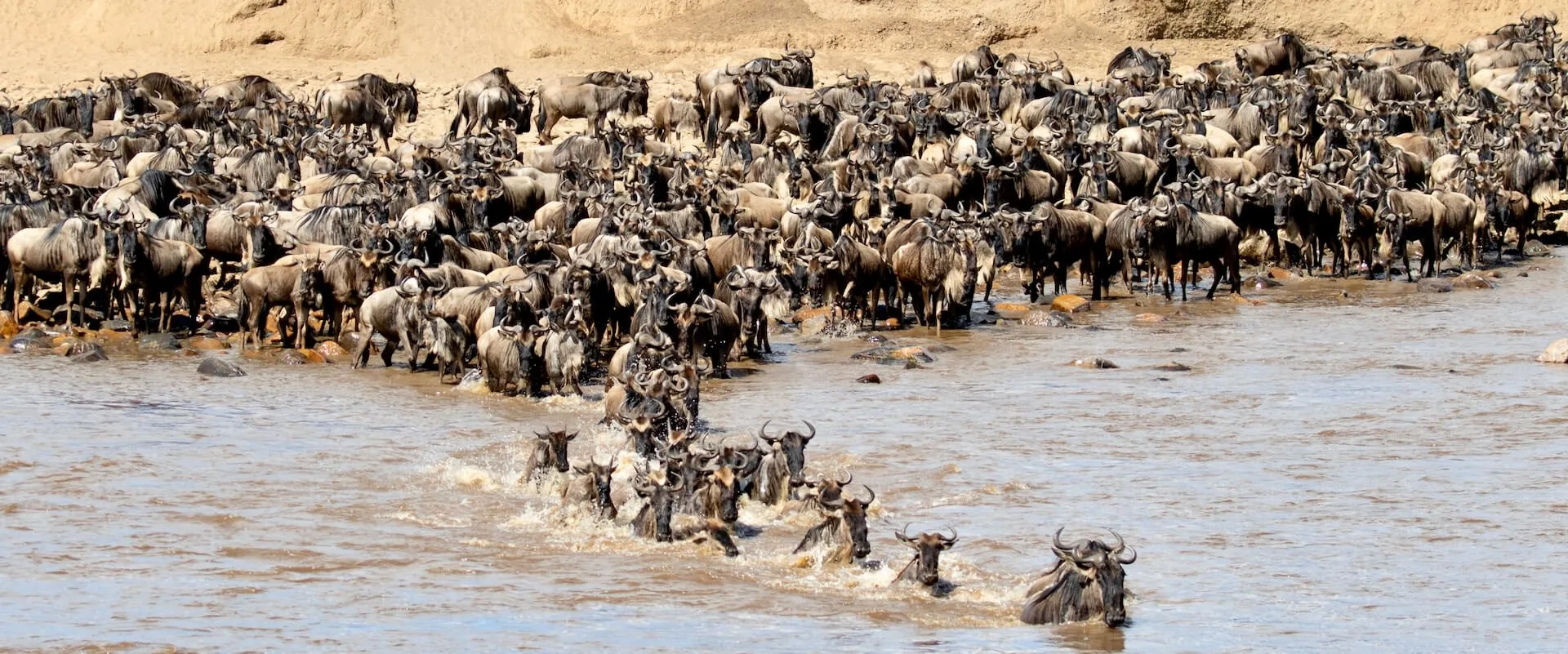
The Great Migration in Africa happens all year because the herds continuously circulate through the Serengeti–Mara ecosystem in…
Read article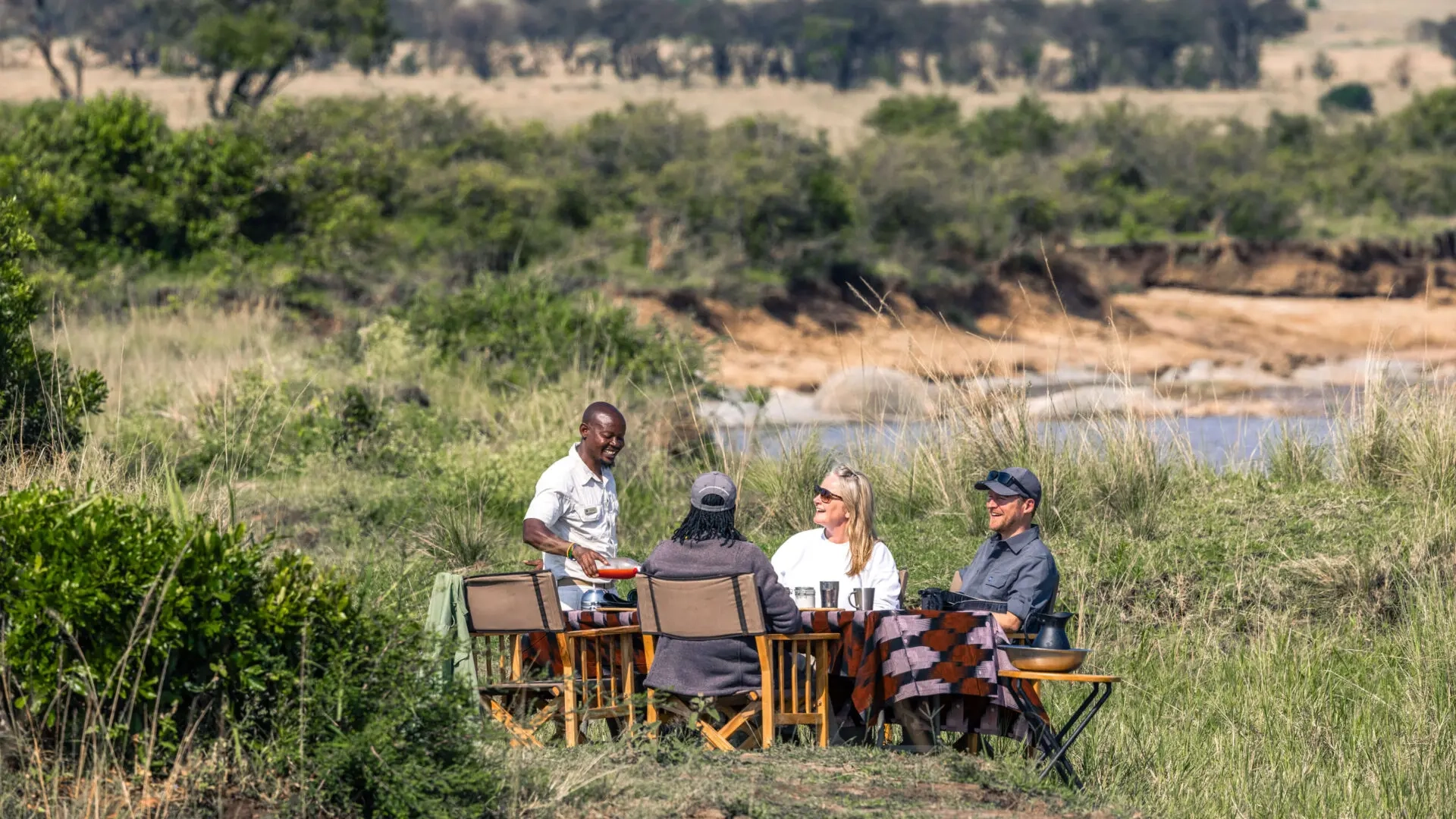
Definitive answer: A picnic lunch on safari is a packed or catered midday meal eaten at an approved…
Read article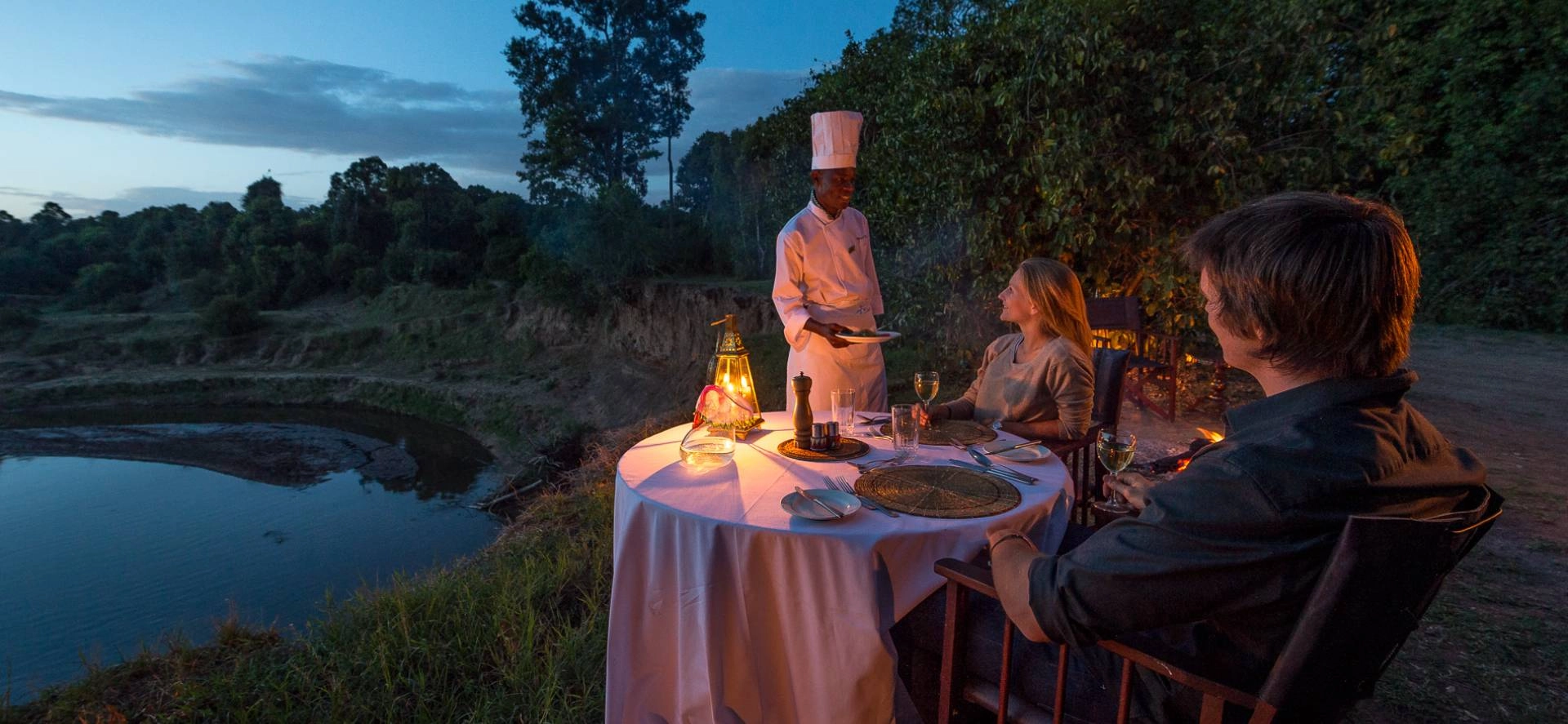
Definitive answer: A bush dinner is an outdoor evening meal arranged in a safe safari setting away from…
Read articleLet us take you closer to the wildlife, people and places that make Africa extraordinary.
Plan Your Safari Today