Skip to content
+256775218880 / +256753750983 info@gorillaugandasafaris.com

Chimpanzee Trekking in Gishwati-Mukura

Chimpanzee trekking in Gishwati-Mukura National Park offers a distinctly different primate experience from Rwanda's better-known wildlife encounters — a quieter, conservation-focused walk through recovering Albertine Rift montane forest in western Rwanda.

  • Location Gishwati-Mukura National Park, Rwanda
  • Duration Half Day (variable)
  • Difficulty Moderate (variable)
  • Minimum Age Confirm current park rules
  • Best For Primates, Conservation & Quiet Forests

Chimpanzee Trekking in Gishwati-Mukura National Park

Chimpanzee trekking in Gishwati-Mukura National Park offers a distinctly different primate experience from Rwanda's better-known wildlife encounters. Hidden among the green hills of western Rwanda, Gishwati-Mukura protects an important montane forest ecosystem where chimpanzees, monkeys, forest birds and other wildlife survive within a landscape that has undergone an extraordinary conservation recovery.

For travelers who have already heard about chimpanzee trekking in Nyungwe National Park, Gishwati-Mukura introduces another side of Rwanda's primate tourism. The park is considerably smaller and receives fewer visitors, giving it a more intimate, exploratory character. A visit is not simply about finding chimpanzees. It is an opportunity to walk through a recovering Albertine Rift forest, learn about conservation and encounter one of Rwanda's lesser-visited protected areas.

The national park combines the Gishwati and Mukura forest areas in western Rwanda. These forests are remnants of a much larger montane forest system that historically extended through this part of the Albertine Rift. Years of pressure dramatically reduced the forest, but conservation, restoration and legal protection have helped secure what remains.

Today, Gishwati-Mukura National Park is particularly important for primate conservation. Chimpanzees occur within the Gishwati section, together with several other primate species. Rwanda Development Board has specifically identified chimpanzee and primate trekking as part of the tourism potential of the protected area.

For safari travelers, this means Gishwati-Mukura can complement rather than simply duplicate Rwanda's more established primate destinations. It can be incorporated into longer Rwanda primate safaris, Lake Kivu journeys, Nyungwe itineraries and comprehensive Rwanda wildlife tours.

Plan Your Gishwati Chimpanzee Safari

Why Go Chimpanzee Trekking in Gishwati-Mukura?

Recovering Montane Forest

This is not a large, heavily visited national park where tourism infrastructure dominates. Gishwati-Mukura remains closely associated with forest restoration, conservation and the surrounding rural landscape — walking into Gishwati feels different from entering many classic African safari destinations.

Intimate Chimpanzee Tracking

Chimpanzees are highly mobile; they may travel considerable distances for fruit and other foods. Tracking requires patience. That uncertainty is an important part of authentic chimpanzee tracking in Rwanda — visitors enter natural habitat rather than viewing wildlife in an enclosure.

Rwanda's Fourth National Park

Gishwati-Mukura became Rwanda's fourth national park after the Gishwati and Mukura forests were brought under national park protection. The park's story is inseparable from conservation and ecological restoration across the Albertine Rift.

Broader Primate Community

Beyond chimpanzees, the forest supports other primates, birds, butterflies, forest plants and small mammals — so the experience is better described as a Gishwati-Mukura primate safari than a single-species excursion.

Western Rwanda Circuit Fit

Position near Lake Kivu makes Gishwati useful as part of a western Rwanda circuit — combining forest trekking with lakeside rest, then continuing toward Nyungwe or Volcanoes.

Quieter Than Classic Destinations

Repeat visitors, conservation-minded travelers and those seeking less conventional itineraries often find Gishwati particularly rewarding — especially when combined with Nyungwe rather than treated as a substitute.

What Is Chimpanzee Trekking & How It Works in Gishwati-Mukura

Chimpanzee trekking is a guided forest activity in which visitors enter natural chimpanzee habitat and search for wild chimpanzees on foot. It differs significantly from a conventional game drive: participants walk through forest habitat, often over uneven ground, rather than remaining inside a safari vehicle.

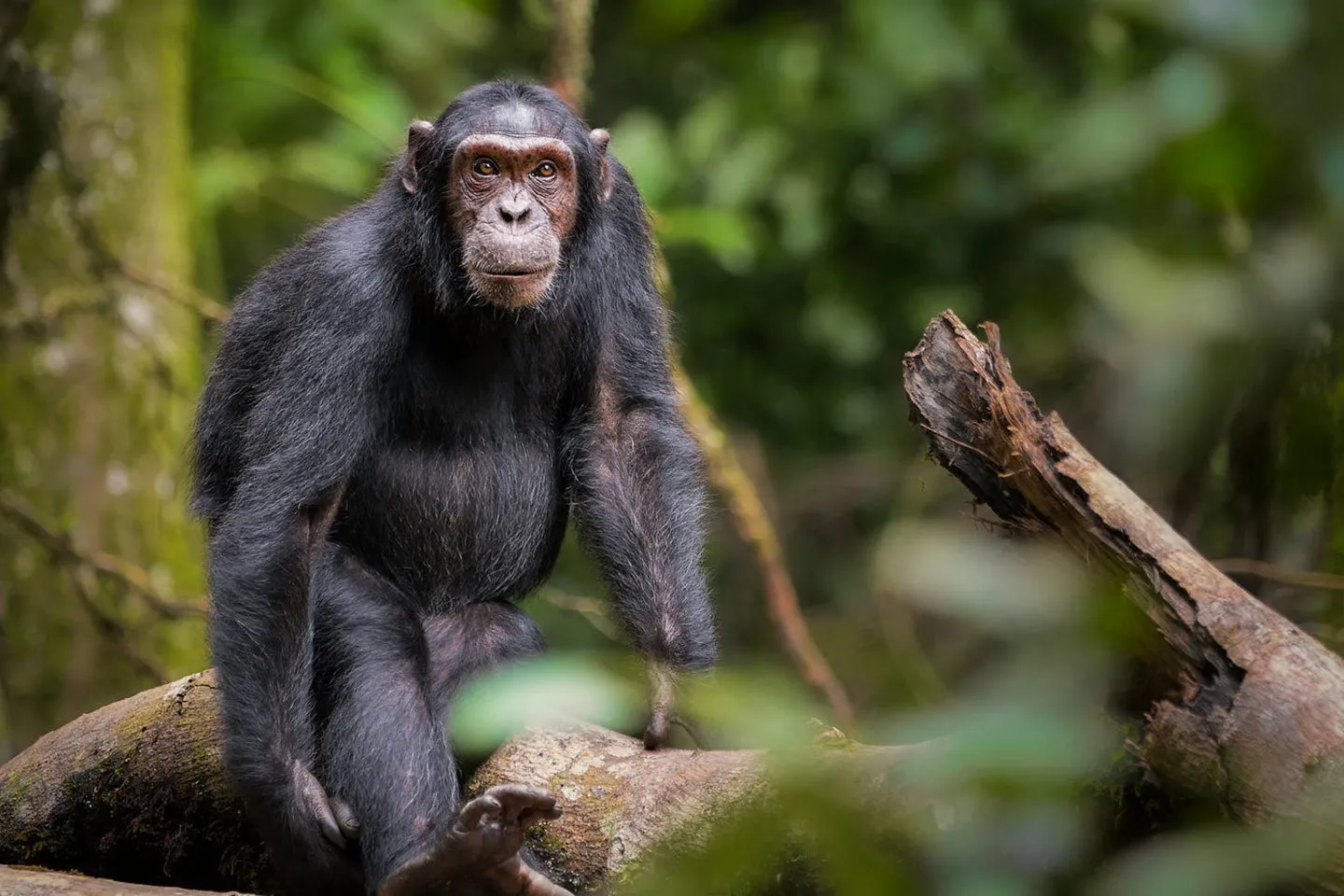
The chimpanzees found here belong to the eastern chimpanzee population, Pan troglodytes schweinfurthii. They live in social communities but follow a fission-fusion pattern — a larger community may separate into smaller parties whose size and composition change with food availability and social relationships. That helps explain why tracking can be unpredictable.

A typical day begins early. Exact reporting times, meeting points and operating arrangements should always be confirmed when booking because park procedures can change. After meeting park staff, visitors receive a briefing covering forest behavior, trekking conditions, conservation rules and appropriate conduct around primates.

You then enter the forest with a guide. Terrain can vary considerably — some sections relatively gentle, others steeper, muddy or thick with vegetation. This is a genuine forest trek rather than a landscaped walking trail. Guides may explain ecosystem features, point out birds or monkeys and interpret signs left by chimpanzees.

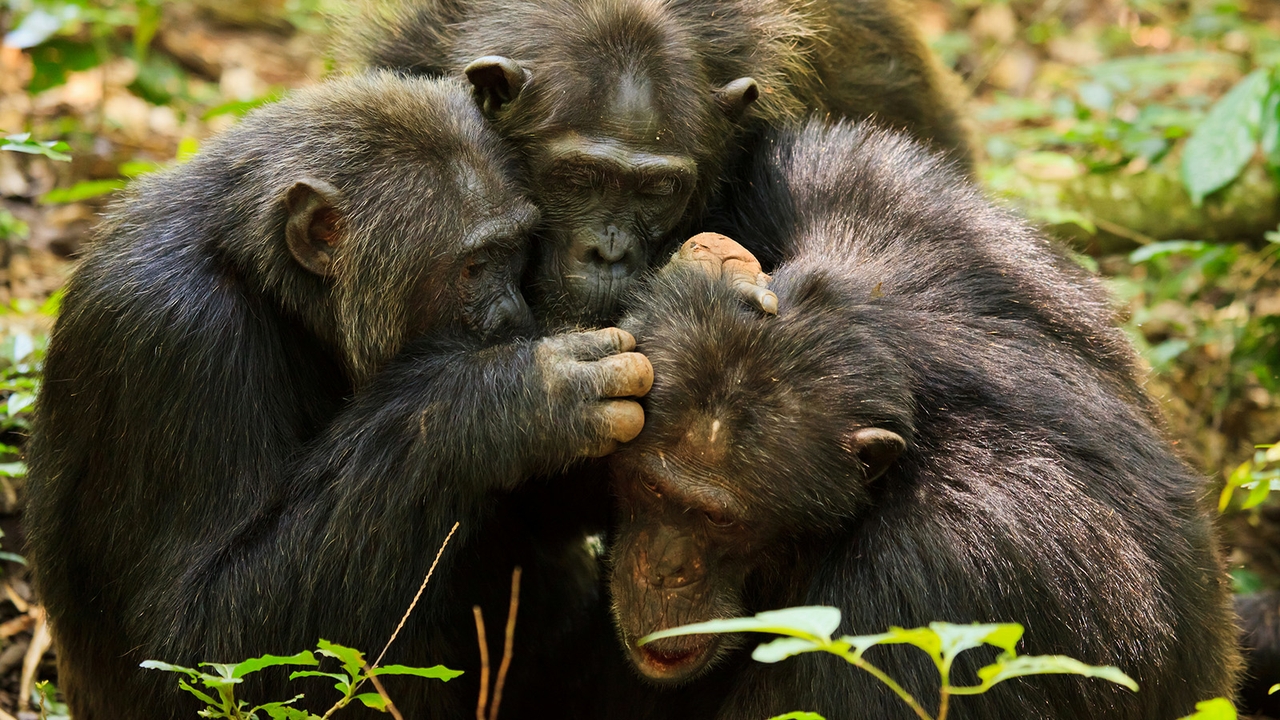
Then the atmosphere can change suddenly. A chimpanzee call can carry through the forest. Branches may move overhead. Trackers may identify fresh signs. When chimpanzees are located, the experience shifts from searching to careful observation — on the ground, in trees or through vegetation. Visitors might see feeding, grooming, resting, climbing or social communication. Every encounter is different because the animals are wild.

No responsible operator should describe a wild chimpanzee sighting as absolutely guaranteed. Gishwati-Mukura should especially be approached with realistic expectations: it is a smaller and less-established chimpanzee tourism destination than some of East Africa's famous tracking forests. That does not make the experience inferior — it makes it different.

What the Experience Offers

  • Guided forest tracking with park staff in the Gishwati section
  • Intimate, quieter alternative to Rwanda's busier primate destinations
  • Strong conservation and forest-restoration context
  • Chance encounters with other primates, birds and forest wildlife
  • Natural pairing with Lake Kivu relaxation
  • Easy combination with Nyungwe chimpanzee trekking for deeper coverage
  • Fit within Volcanoes gorilla itineraries and full Rwanda wildlife circuits
  • Authentic search-based wildlife experience — not a guaranteed performance
Start Planning Your Gishwati Chimp Trek

Gishwati-Mukura Chimpanzee Highlights

Gishwati-Mukura is more than a single trek. Restoration history, chimpanzee ecology, other primates, birding, forest flora, photography and western Rwanda routing all shape the visit.

Gishwati Mukura National Park

Gishwati Forest Chimpanzees

Chimpanzees occur within the Gishwati section of the park. Trackers and guides rely on knowledge of movements, feeding locations, vocalizations and signs such as nests and feeding remains. One morning the animals may be relatively close to an accessible trail; on another they may have moved deeper into the forest.

Setting Montane forest
Where Gishwati section
Timing Primary tracking area
Ask to include this
Gishwati Forest Chimpanzees
Gishwati Mukura National Park

Fission–Fusion Society

Eastern chimpanzees live in communities but do not always move as one compact group. Their fission-fusion society means temporary parties form and dissolve according to food and social relationships — so the number of individuals seen on a Gishwati Forest chimpanzee trek can vary greatly from day to day.

Setting Community ranging area
Where Gishwati forest
Timing Fission–fusion society
Ask to include this
Fission–Fusion Society
Gishwati Mukura National Park

Other Primates

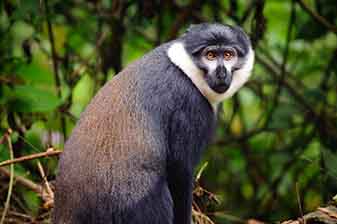
Primates associated with the park include L'Hoest's monkeys, blue monkeys, golden monkeys and black-and-white colobus monkeys, among others. Not every species appears on every trek, but the broader primate community adds variety even when chimpanzees are difficult to locate.

Setting Montane forest mosaic
Where Park-wide
Timing Multi-species primate walks
Ask to include this
Other Primates
Gishwati Mukura National Park

Birdwatching

The Albertine Rift is famous among birdwatchers for specialized and range-restricted species. Even non-birders notice the diversity of forest calls — turacos, sunbirds and mixed parties moving through vegetation. Dedicated birding in Gishwati-Mukura deserves its own excursion because chimp tracking and serious birding require different rhythms.

Setting Forest canopy & understory
Where Gishwati-Mukura
Timing Albertine Rift birdlife
Ask to include this
Birdwatching
Gishwati Mukura National Park

Flora & Forest Ecology

Montane forests store carbon, protect watersheds, reduce erosion and provide wildlife habitat. Gishwati-Mukura is especially interesting because visitors can see a landscape undergoing recovery — some areas with mature forest character, others reflecting restoration and regeneration. Mosses, vines, ferns, mist and filtered light create atmospheric scenes.

Setting Recovering montane forest
Where Gishwati-Mukura landscape
Timing Restoration in progress
Ask to include this
Flora & Forest Ecology
Gishwati Mukura National Park

Conservation Story

Few destinations demonstrate tourism and ecological recovery as clearly. Historical degradation, legal protection and restoration initiatives — including buffer-zone rehabilitation — give a Gishwati-Mukura National Park safari unusual depth for travelers interested in sustainable tourism and forest conservation.

Setting Protected & restored forest
Where Gishwati & Mukura
Timing Fourth national park
Ask to include this
Conservation Story
Gishwati Mukura National Park

Community Engagement

Communities surrounding protected areas are essential to successful conservation. Programs around Gishwati-Mukura have included community engagement, livelihood initiatives and landscape restoration. Appropriately organized community experiences should be respectful and genuinely beneficial — not staged encounters created only for tourists.

Setting Forest & rural landscape
Where Park surroundings
Timing Community conservation
Ask to include this
Community Engagement
Gishwati Mukura National Park

Photography

Photographing chimpanzees in forest is very different from open savannah: low light, obstructing vegetation and fast subjects. A camera that handles higher ISO and a moderate telephoto zoom help; extremely large lenses can become cumbersome. Always follow current photography and primate-viewing rules — and put the camera down for moments that happen too quickly to capture perfectly.

Setting Low-light forest
Where During tracking
Timing Demanding & atmospheric
Ask to include this
Photography
Gishwati Mukura National Park

Versus Nyungwe

Nyungwe is a vast montane rainforest and Rwanda's best-established forest tourism destination, with hiking trails, primate experiences and the canopy walkway. Gishwati-Mukura is much smaller and quieter. The two need not compete — a carefully designed itinerary can include both Albertine Rift forests.

Setting Comparative forest experiences
Where Western Rwanda
Timing Complementary destinations
Ask to include this
Versus Nyungwe
Gishwati Mukura National Park

Chimps Versus Gorillas

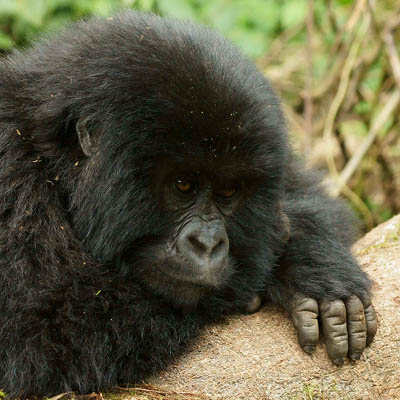
Although both involve tracking great apes, the experiences differ substantially. Chimpanzees are often more energetic — climbing high, calling loudly and interacting dynamically. Gorillas frequently provide a slower observational experience. Doing both provides a far richer appreciation of great-ape behavior than choosing only one.

Setting Forest great-ape habitats
Where Gishwati + Volcanoes
Timing Contrasting ape encounters
Ask to include this
Chimps Versus Gorillas
Ask Us to Shape Your Gishwati Day

Circuits, Combinations & Suggested Itineraries

Build Gishwati into western Rwanda routes with Lake Kivu, Nyungwe, Volcanoes and Akagera — or combine forests for a deeper primate safari.

Gishwati-Mukura Versus Nyungwe

Gishwati-Mukura Versus Nyungwe

When planning a Rwanda chimpanzee safari, Nyungwe suits travelers wanting a mature primate tourism destination with broader established infrastructure. Gishwati-Mukura appeals strongly to repeat visitors, conservation-minded travelers and those seeking somewhere less conventional. Combining both substantially increases the depth of a Rwanda primate safari.

Best for: Choosing or combining forests

Gishwati-Mukura + Lake Kivu

Gishwati-Mukura + Lake Kivu

One of the park's greatest itinerary advantages is its western Rwanda position. Lake Kivu provides striking contrast between forest trekking and lakeside relaxation — around Rubavu or another Kivu destination. After several hours walking through forest, an evening overlooking the lake is particularly enjoyable.

Best for: Pace & scenery balance

Gishwati-Mukura + Nyungwe

Gishwati-Mukura + Nyungwe

For serious primate enthusiasts, combining both parks is one of the most interesting possibilities. Nyungwe adds extensive rainforest habitat, additional primates, birding, forest walks and the canopy walkway; Gishwati adds a smaller, conservation-focused experience. Ideal for travelers who have already done classic savannah safaris elsewhere.

Best for: Deep rainforest primate focus

Chimpanzees + Gorillas in Rwanda

Chimpanzees + Gorillas in Rwanda

A classic primate itinerary can combine Gishwati-Mukura with gorilla trekking in Volcanoes National Park. Mountain gorillas are large-bodied terrestrial apes; chimpanzees are generally more mobile and arboreal. Adding Gishwati encourages travelers to experience more of Rwanda than Volcanoes alone — longer routes may connect Kigali, Volcanoes, Gishwati, Lake Kivu and Nyungwe.

Best for: Great-ape Rwanda circuits

Gishwati-Mukura + Akagera

Gishwati-Mukura + Akagera

Akagera provides the savannah component absent from western forests — game drives, large mammals and open landscapes. A comprehensive itinerary can include Akagera for savannah wildlife, Volcanoes for mountain gorillas, Gishwati-Mukura for chimpanzees and forest conservation, Nyungwe for rainforest primates, and Lake Kivu for scenery.

Best for: Full Rwanda ecological diversity

How Many Days at Gishwati-Mukura?

How Many Days at Gishwati-Mukura?

Avoid unnecessarily rushed designs. Although the trek may occupy part of a day, reaching the park, checking into accommodation and allowing time for additional activities often justifies a longer stay. Two nights is usually more comfortable than arrive-trek-depart. Birders, conservation travelers and photographers may prefer additional time — and slower pacing helps when weather affects activities.

Best for: Pace & flexibility

Fitness Level Required

Fitness Level Required

You do not need to be an elite athlete, but reasonable walking fitness helps. Gishwati's terrain can include hills, uneven surfaces and slippery trails. Trek duration also depends partly on where chimpanzees are located. Regular walking before your safari improves comfort; travelers with mobility concerns should discuss them before booking.

Best for: Physical preparation

Suggested Rwanda Primate Safari

Suggested Rwanda Primate Safari

Begin in Kigali, travel to Volcanoes for mountain gorilla trekking, continue toward Lake Kivu and Gishwati-Mukura for chimpanzee trekking, then south to Nyungwe for another chimpanzee opportunity plus additional primates, hiking, birding and the canopy walkway. With more time, finish with Akagera for savannah wildlife — gorilla trekking, chimpanzee trekking, birdwatching, forest walks, Lake Kivu, canopy walking and Big Five experiences within one country.

Best for: Comprehensive primate itineraries

Who This Experience Suits

First-time Rwanda visitors: Yes, but priorities matter. Someone with only three or four days and a primary goal of seeing mountain gorillas may reasonably prioritize Volcanoes. With a week or more, broader itineraries become possible. Gishwati becomes particularly attractive for primate enthusiasts, birders, conservation travelers, photographers, repeat visitors, travelers seeking quieter parks and anyone interested in forest restoration.

Families: Confirm current age restrictions before booking — minimum ages can apply and may differ between destinations. Even where a child meets the official age, consider whether they are comfortable walking for several hours through forest. Adults can trek while younger children join another suitable supervised activity.

Senior travelers: Fitness and comfort on uneven terrain matter more than age alone. Discuss physical concerns early and build recovery time into the itinerary.

Photographers & birders: Allocate more than one activity period. Forest light is challenging; birding needs a slower rhythm than chimp tracking. Extra nights improve both conservation storytelling and image opportunities.

Conservation-minded travelers: Gishwati-Mukura is especially rewarding when you want tourism that clearly connects to ecological recovery, community engagement and habitat restoration — not only a checklist wildlife sighting.

Age rules for chimpanzee tracking should always be reconfirmed against current park regulations at the time of booking.

Plan a Tailored Gishwati Safari

Best Time for Chimpanzee Trekking in Gishwati-Mukura

Chimpanzee trekking in Gishwati-Mukura National Park can potentially be incorporated into Rwanda itineraries at different times of year, but weather affects trail conditions.

Rwanda experiences alternating wetter and relatively drier periods rather than four temperate seasons.

Regardless of season, proper waterproof equipment is recommended — rain can occur at any time in a tropical montane forest.

  • Drier periods Generally drier periods often make forest trekking more comfortable because trails can be less muddy. Do not assume the forest will remain completely dry during a nominal dry season.
  • Wetter periods Wetter periods bring lush vegetation, atmospheric conditions beautiful for photography and rewarding birding — at the cost of muddier, more demanding trails.
  • Choosing your dates Travelers prioritizing easier walking may favor drier months; birders and photographers may appreciate wetter periods. Match dates to the overall Rwanda itinerary rather than chasing a perfect guarantee.

Chimpanzee Trekking Permits & Booking

Visitors should confirm current chimpanzee trekking permit requirements, availability, prices and booking procedures when planning their safari.

These details can change. This evergreen page intentionally avoids presenting an old USD price as a permanent figure — do not rely on an old blog post or historical tariff when budgeting for a future journey.

When booking through Adventure in the Wild Safaris, we check the applicable arrangements for your travel dates and incorporate the required permits into the safari quotation.

This is particularly important during popular travel periods or when combining several permit-based activities such as chimpanzee trekking and gorilla trekking. There is no separate Rwanda chimpanzee permit product page on this site — use our Rwanda chimpanzee trekking planning guide, browse Rwanda chimpanzee safaris, or contact us for current fees. Gorilla permit details are on the Rwanda gorilla trekking permit page.

We arrange chimpanzee tracking as part of private western Rwanda and full primate safari planning. Check current availability through our planning guide or contact team rather than budgeting from historical blog prices.

Browse Rwanda Chimpanzee Safaris

Health Rules, Great-Ape Protection & Responsible Tourism

Chimpanzees share a high degree of biological similarity with humans, which makes responsible tourism particularly important.

Travelers should speak to an appropriate medical professional before international travel regarding vaccinations, malaria prevention and personal health considerations.

  • Follow instructions provided by guides and park authorities.
  • Maintain prescribed viewing distances and limit disturbance.
  • Avoid food around primates.
  • Follow health-related restrictions — arrive in good general health.
  • Never attempt to touch a chimpanzee.
  • Never imitate threatening behavior.
  • Do not surround an animal or deliberately block its route.
  • If chimpanzees move closer, follow the guide's instructions rather than approaching them.
  • In the forest, watch your footing on wet slopes, drink enough water and inform your guide if you feel unwell or need to slow down.
  • Follow current photography and primate-viewing rules given by park staff.
  • Never leave the group for a better image — wildlife welfare comes first.
  • Respect communities around the park; conservation cannot operate effectively as an isolated island disconnected from people living nearby.

Responsible chimpanzee tourism in Rwanda is designed to create economic value from conserving forests while minimizing negative impacts on wildlife. Protecting chimpanzees means protecting trees, water systems, birds, insects, smaller mammals and countless other organisms — an umbrella effect that benefits a much wider ecosystem.

What to Wear & Pack

Good clothing makes a substantial difference during a forest trek. Wear lightweight but durable long trousers and a long-sleeved shirt for protection from vegetation, insects and mud. Use comfortable hiking boots or sturdy walking shoes with reliable grip — smooth-soled casual shoes are poorly suited to wet forest trails. Gaiters can help in muddy conditions. Carry a lightweight waterproof jacket even when the morning looks clear. Gardening-style gloves can sometimes help where vegetation is dense or the trail is slippery, although trekkers should avoid grabbing plants unnecessarily. Neutral outdoor clothing is usually more practical than bright fashion clothing.

  • Sturdy hiking footwear with good traction
  • Long trousers and long-sleeved shirt
  • Lightweight waterproof jacket
  • Small backpack — avoid unnecessary weight
  • Reusable drinking-water bottle
  • Camera and spare battery
  • Binoculars
  • Insect repellent
  • Sunscreen and hat
  • Personal medication
  • Waterproof protection for electronics
  • Gaiters (useful in muddy conditions)
  • Gardening or trekking gloves (optional)

Chimpanzee trekking can involve several hours of walking, and a heavy backpack becomes increasingly uncomfortable on steep terrain.

Confirm with your guide what snacks or food are permitted inside the forest.

Getting to Gishwati-Mukura National Park

The park is located in western Rwanda and is normally reached by road. Exact journey time depends on the starting point, route and road conditions.

  • Western Rwanda circuit routing Many travelers incorporate Gishwati into a circuit rather than driving from Kigali solely for one activity. Possible routing can connect Kigali with Volcanoes National Park, Lake Kivu, Gishwati-Mukura and Nyungwe.
  • Private 4×4 safari vehicle A private 4x4 safari vehicle in Rwanda is particularly convenient because it allows the itinerary to be adapted around accommodation and activities.
  • Lake Kivu gateway Rubavu and other Lake Kivu bases often serve as practical staging points before or after a Gishwati forest morning.

Adventure in the Wild Safaris arranges private 4×4 transfers and multi-park Rwanda routing around your confirmed tracking morning.

Accommodation Near Gishwati-Mukura

Accommodation options around Gishwati-Mukura are more limited than around Rwanda's most established tourism destinations — an important planning point.

What to Combine With Gishwati-Mukura Chimpanzee Trekking

Gishwati anchors quieter western Rwanda itineraries — from lakeside rest to Nyungwe rainforest and Volcanoes gorilla trekking.

Frequently Asked Questions About Gishwati-Mukura Chimpanzee Trekking

Can you see chimpanzees in Gishwati-Mukura National Park?

Yes. Chimpanzees occur in Gishwati-Mukura, particularly in the Gishwati forest ecosystem, and chimpanzee/primate trekking has been developed as part of the park's tourism offering.

Is Gishwati-Mukura better than Nyungwe for chimpanzees?

They provide different experiences. Nyungwe is the larger and more established primate tourism destination, while Gishwati-Mukura offers a smaller and quieter forest experience associated strongly with conservation and restoration.

Are chimpanzee sightings guaranteed?

No. Chimpanzees are wild animals moving freely through natural forest, so sightings should never be represented as absolutely guaranteed.

What else can I see?

The park protects several primate species, forest birds, small mammals and diverse vegetation. The forest ecosystem and conservation landscape are important parts of the experience.

Can I combine Gishwati with gorilla trekking?

Yes. Gishwati-Mukura can be incorporated into a Rwanda itinerary that includes gorilla trekking in Volcanoes National Park.

Can I combine Gishwati with Nyungwe?

Yes. Combining the two is particularly suitable for travelers interested in Rwanda chimpanzee trekking, primates, birding and rainforest ecology.

Is chimpanzee trekking difficult?

Difficulty varies according to trail conditions, weather and the location of the chimpanzees. Participants should be comfortable walking over uneven and sometimes steep forest terrain.

What footwear should I bring?

Sturdy hiking boots or walking shoes with good traction are strongly recommended.

When should I book?

Booking well ahead is sensible, particularly when your itinerary also requires gorilla permits or specific accommodation. Confirm current chimpanzee activity fees at booking — do not rely on outdated published prices.

Is Gishwati suitable for first-time Rwanda visitors?

Yes, depending on priorities and available days. Short gorilla-focused trips may prioritize Volcanoes; with a week or more, Gishwati fits naturally into broader primate and western Rwanda circuits.

How many nights should I spend?

Two nights often provide a more comfortable framework than attempting to arrive, trek and depart immediately. Birders, photographers and conservation travelers may prefer longer.

What is the difference between chimpanzee and gorilla trekking?

Chimpanzees are often more energetic, vocal and arboreal; gorillas frequently provide a slower observational experience. Doing both gives a richer appreciation of great-ape behavior.

Ready for Rwanda's Quiet Forest Chimpanzee Trek?

Plan Your Gishwati-Mukura Chimpanzee Safari

Chimpanzee trekking in Gishwati-Mukura National Park is ideal for travelers who want to explore Rwanda beyond its most famous attractions. It combines the excitement of searching for wild chimpanzees with a deeper story of forest restoration, biodiversity conservation and sustainable tourism. Rather than treating Gishwati as a substitute for Nyungwe or Volcanoes, consider it another piece of Rwanda's remarkable primate landscape. A carefully planned itinerary can combine Gishwati-Mukura chimpanzee trekking, Nyungwe chimpanzee trekking, Volcanoes National Park gorilla trekking, Lake Kivu, birdwatching and an Akagera wildlife safari. Adventure in the Wild Safaris can tailor the route according to available days, accommodation preference, fitness level and other Rwanda experiences you want to include. Always reconfirm current permits, prices, reporting points and age requirements at booking.

  • Trusted Local Experts
  • Tailor-Made Itineraries
  • Memorable & Responsible Travel
Back To Top
Request Quote WhatsApp