Shoebill Meets Community Life
Search for Africa's most sought-after wetland bird while understanding fishermen, boat operators, bird guides and traders who make the landing site a living workplace.


A cultural safari in Mabamba Wetland combines Uganda's celebrated shoebill birding with fishing communities, canoe transport and village life on the shores of Lake Victoria — minutes from Entebbe.
A cultural safari in Mabamba Wetland combines one of Uganda's most celebrated shoebill birding experiences with an opportunity to discover the communities whose lives are closely connected to the wetlands and shores of Lake Victoria. Located west of Entebbe on the northern side of Lake Victoria, Mabamba is internationally known among birdwatchers as one of Uganda's most reliable destinations for searching for the extraordinary shoebill stork. However, concentrating only on this famous bird overlooks another fascinating part of the destination: the people who live, fish, farm, trade and work around the wetland.
A thoughtfully organized Mabamba cultural safari can introduce travelers to lakeside village life, traditional fishing livelihoods, local boat transport, agriculture, food, community conservation and the important role tourism increasingly plays in the local economy. Cultural experiences can be incorporated before or after a shoebill excursion, creating a half-day or full-day experience that combines nature, birds and meaningful interaction with local communities.
Mabamba is particularly convenient because of its proximity to Entebbe, Uganda's principal international arrival and departure gateway. This makes the wetland an excellent first activity after arriving in Uganda or a rewarding final excursion before an evening flight from Entebbe International Airport.
For travelers interested in Uganda cultural safaris, birding safaris in Uganda and responsible community tourism, Mabamba offers a memorable introduction to the close relationship between people and wetland environments.
Mabamba Wetland is an extensive papyrus and marsh ecosystem associated with the Lake Victoria basin. Its channels, open water, floating vegetation and papyrus stands provide habitat for an impressive variety of birds and other wetland wildlife. For local residents, however, Mabamba is not simply a wildlife attraction — it forms part of a broader living landscape of fishing, farming, transport, small-scale trade and increasingly tourism.
Plan Your Cultural Safari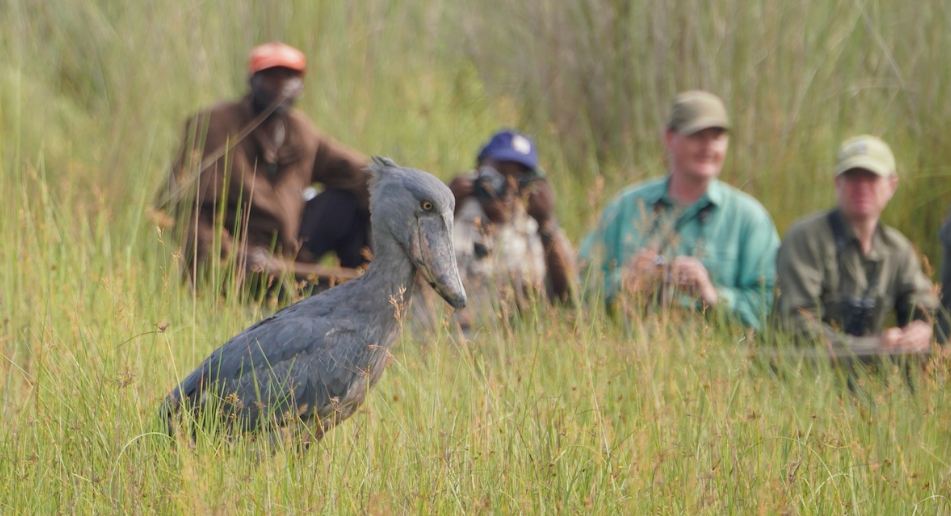
Visitors arriving for a Mabamba shoebill tour often begin from a lakeside landing area where fishermen, boat operators, bird guides and traders may all be active. Taking time to understand these activities transforms the excursion from a simple bird search into a broader experience of rural life around Lake Victoria.
A typical Mabamba shoebill excursion travels wetland channels in a small boat or canoe with an experienced local guide. Guides know where shoebills are frequently encountered and scan papyrus-lined waterways quietly. When a bird is located, boats should approach carefully and maintain appropriate viewing distances.
One of Mabamba's greatest tourism assets is the knowledge of local birding guides — years of experience reading water levels, vegetation and bird behaviour. Employing community guides keeps tourism income in the area while improving the visitor experience.
During a cultural experience, visitors may observe fishermen preparing boats, organizing nets or returning from the water. Guides explain common fishing methods and the role fish plays in household income and food security — and how changes in fish populations or water quality affect livelihoods.
Travelers with additional time can combine wetland birding with a guided Mabamba village walk past homes, farms, small shops and community facilities. Conversational walks about schooling, farming, fishing, transport and tourism help travelers see Mabamba as a living community rather than a birding checklist location.
Food can be incorporated naturally — fish where available with matooke, cassava, rice, potatoes or vegetables. Markets and roadside stalls demonstrate how rural communities obtain goods and sell surplus produce. Papyrus and other wetland plants have ecological and traditional significance that guides can explain.
A Mabamba cultural safari can include several complementary experiences. Exact programmes vary by community partner — responsible arrangements emphasise genuine interaction, fair boat fees and conservation-minded shoebill viewing.
An extensive papyrus and marsh ecosystem in the Lake Victoria basin — channels, open water, floating vegetation and papyrus stands support birds and wetland wildlife. For residents it is a living landscape of fishing, farming, transport, trade and tourism. Understanding landing-site activity transforms a bird search into a broader rural experience.

Communities have long depended on lake and wetland resources. Fishing is highly visible, but agriculture and small businesses matter too. Homes connect by roads, footpaths and waterways. Tourism creates income for boat operators, bird guides, accommodation and food vendors — linking wetland conservation to community livelihoods.
The shoebill places Mabamba on the international tourism map — enormous bill, prehistoric appearance and unusual hunting behaviour draw birdwatchers worldwide. When local businesses earn income from visitors seeking shoebills, maintaining healthy wetland becomes economically valuable. The bird is both a highlight and part of a larger community-based conservation story in Uganda.

Travel quietly through papyrus-lined waterways while guides scan for still-hunting shoebills. Approach carefully and keep distance. Local guides recognise subtle changes in water, vegetation and behaviour from years of experience — expertise that improves sightings and keeps tourism income local. Do not end the trip the moment a shoebill appears; broader Mabamba birding is richly rewarding.
Observe fishermen preparing boats, nets or catches while guides explain methods and food security. Wetlands provide breeding and feeding habitat; unsustainable fishing or habitat loss affects wildlife and people. Conservation must consider livelihoods — community involvement is essential because residents know the wetland and live with decisions about its use.
Small boats and canoes remain essential for fishing, transportation and tourism. A canoe safari has both cultural and ecological dimensions — visitors travel the same aquatic environment residents navigate daily. Boat operators know channels, vegetation and safe routes; tourism lets traditional water skills support community tourism experiences.
Guided walks beyond the landing site pass homes, farms, shops and community facilities. Conversations about schooling, farming, fishing and tourism reveal a living community. Farming supports households with bananas, cassava, maize, beans and vegetables — shaped by rainfall, soils and proximity to wetlands.
Community meals may feature fish with matooke, cassava, rice, potatoes or vegetables — linking fishing, farming and household life. Roadside stalls and small markets sell produce and household goods; fair purchases support small businesses. Papyrus dominates visually; guides explain its ecological role and traditional environmental knowledge of plants, water levels, fish and birds.
Early mornings favour soft light and bird activity. Protect cameras from water; longer lenses help maintain distance. Ask before photographing fishermen, boat operators, traders or villagers. Never surround or chase shoebills for closer shots — if a bird changes behaviour, give more space. Choose guides who prioritize conservation over getting excessively close.
Mabamba works especially well as a first- or last-day Uganda experience near Entebbe, and as the opening chapter of a longer birding and wildlife circuit.
Early canoe birding for shoebills and wetland species, then a conversational village walk, farm visit or local meal — half-day or full-day without long road transfers.
Best for: Birders & short Entebbe stays
Pair Mabamba with Entebbe rest near Lake Victoria, or a Kampala cultural safari exploring Buganda heritage, markets and cuisine — an excellent central Uganda introduction before national parks.
Best for: Arrivals & city-plus-wetland days
Begin with Mabamba, continue to Murchison Falls and Ziwa rhinos, Kibale chimpanzees, Queen Elizabeth, Bwindi gorillas and Lake Mburo — wetlands, forests, savannahs and culture in one journey.
Best for: Comprehensive Uganda itineraries
A Mabamba Wetland safari can work well for families, particularly children interested in birds and nature. The boat journey adds an adventurous element without requiring strenuous hiking. Parents should ensure that children use appropriate life jackets and follow boat operators' instructions. A shorter wetland excursion can be combined with a village or food experience — an accessible introduction before larger national parks.
For dedicated birders, Mabamba is often considered essential. The opportunity to see a shoebill relatively close to Entebbe makes it convenient early in a Uganda birding tour before Murchison, Kibale, Bwindi and Queen Elizabeth — each offering different habitats and bird communities.
Wildlife photographers can dedicate more time with private boat arrangements for positioning and waiting. Communicate objectives with guides before departure; patience produces natural behaviours and stronger images than continually moving closer. Landscape photography of papyrus channels and fishing boats can also be rewarding in morning light.
Ask your safari planner for family-friendly boat operators, life jackets and clear photography guidelines.
Plan a Family Cultural Safari
Mabamba can be visited throughout the year. Shoebills are resident rather than seasonal migrants, although sightings can never be absolutely guaranteed in a natural environment.
Early morning excursions are generally popular because conditions can be comfortable and bird activity favorable. Rain can occur during any month in the Lake Victoria region — carry lightweight waterproof clothing and protect cameras. Weather conditions can change rapidly around the lake.
Mabamba works as a half-day or full-day experience. A shoebill canoe excursion alone can fill a morning; adding a village walk, farm visit or meal creates a fuller cultural day.
Mabamba's proximity to Entebbe is one of its greatest advantages. Routes may combine road and boat travel depending on itinerary and departure point. Allow sufficient time rather than scheduling too close to an international flight — road and boat conditions can affect journey times.
Travelers arriving with an early flight can sometimes begin their holiday with Mabamba, depending on arrival time and energy. After the excursion, overnight in Entebbe or continue toward Kampala. For birdwatchers, a first-day shoebill can be an extraordinary start.
Mabamba is equally useful as a final activity after gorilla trekking, chimpanzee trekking or wildlife safaris when flight schedules allow — always with a generous buffer before the international flight.
A two-night Entebbe stay can allow recovery from international travel, a Mabamba day and preparation for the main safari — particularly suitable for older travelers, families and guests who prefer not to begin with a long drive immediately after landing. Combine with Kampala cultural tours, then continue to Murchison, Kibale, Queen Elizabeth or Bwindi.
Adventure in the Wild Safaris can arrange transfers, local guides and community partners so tourism income stays with Mabamba residents.
Browse Uganda Safaris

The increasing popularity of shoebill tours in Uganda makes responsible viewing particularly important. The same principles of consent and fair benefit apply when visiting communities.
Respectful interaction is more valuable than staged encounters — and protects both birds and community welcome.
Lightweight clothing suits most Mabamba excursions; sections of the boat trip may have little shade.
Dress comfortably and respectfully while allowing local people to present their culture on their own terms.
Mabamba's proximity to Entebbe is one of its greatest advantages — an easy first or final Uganda safari experience without a long national-park transfer.
Tell us your flight times and preferred cultural depth when you enquire so we can recommend the right timing and partners.
Entebbe offers accommodation across budgets near Lake Victoria and the international airport — ideal for pairing rest with a Mabamba cultural and birding day.
Mabamba combines easily with Entebbe, Kampala cultural tours, Murchison Falls, Ziwa Rhino Sanctuary, Kibale chimpanzee trekking, Queen Elizabeth National Park, Bwindi gorilla trekking and Lake Mburo. The contrast between open wetland channels and rainforest gorilla trekking could hardly be greater — adding culture at both ends creates a more complete journey.
Pair your cultural safari with birding, photography or family experiences in the same area.
 Bird Watching
A Mabamba Wetland birding safari is one of Uganda's most rewarding bird-watching experiences and one of the best…
Learn More
Cultural Experiences
An Entebbe cultural safari provides a relaxed introduction to Uganda’s people, history and everyday life before or after…
Learn More
Cultural Experiences
A cultural safari in Kampala is one of the best ways to understand Uganda beyond its national parks…
Learn More
Cultural Experiences
A Ziwa Rhino Sanctuary cultural safari combines one of Uganda's most important wildlife conservation experiences with communities, rural…
Learn MoreProgrammes may include a shoebill canoe excursion with local guides, landing-site conversations, fishing livelihood discussions, village walks, farm visits, local food or markets, and extended birding beyond the first shoebill sighting. Exact activities depend on partners and timing.
A focused shoebill excursion often fills a morning; adding village, farm or food experiences creates a fuller half-day or full-day. Allow generous buffers around international flights.
Yes. It is an excellent first or final day near Entebbe and combines well with Kampala, Murchison, Kibale, Queen Elizabeth, Bwindi and Lake Mburo.
Yes, especially for children interested in birds and boats. Use life jackets, follow operator instructions, and consider shorter wetland time plus a village or food experience.
Ask before photographing people. For shoebills, use longer lenses, keep distance, avoid chasing birds, and protect cameras from water spray.
Year-round. Shoebills are resident; early mornings are popular for comfort and bird activity. Pack rain protection for Lake Victoria weather.
Hire local guides, pay fair boat fees, keep respectful shoebill distances, ask before photos, avoid gifts of sweets or cash to children, and support recognized community initiatives.
Ready for a Richer Lake Victoria Day?
Tell us your dates, flight times and travel style — Adventure in the Wild Safaris will build shoebill canoeing, community visits and your wider Uganda circuit into one seamless trip.