More Than a Transit Stop
Kabale reveals how communities have shaped and adapted to one of Uganda’s most dramatic landscapes — not merely a break between wildlife destinations.


A cultural safari in Kabale introduces travelers to the people, traditions and spectacular highland landscapes of southwestern Uganda — the historic Kigezi region of terraced hills, intensive farming and communities adapted to a mountainous environment.
A cultural safari in Kabale introduces travelers to the people, traditions and spectacular highland landscapes of southwestern Uganda. Known for its rolling terraced hills, cool climate and proximity to Lake Bunyonyi and the mountain gorilla parks, Kabale is often used as a transit point toward Bwindi or Mgahinga — yet the district deserves attention as a cultural destination in its own right.
Kabale lies within the historic Kigezi region, an area famous for steep cultivated hillsides, intensive farming and communities that have adapted their livelihoods to a mountainous environment. Cultural experiences reveal how local traditions, agriculture, family life, food and contemporary development are interconnected.
The first impression many visitors have of Kabale is its dramatic landscape. Hills rise in almost every direction, their slopes divided into small cultivated plots. Generations of farmers have transformed these hillsides into productive agricultural landscapes — the relationship between people and land is one of the most important themes of a cultural safari.
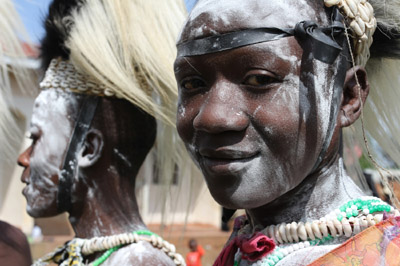
Kabale is strongly associated with the Bakiga people, traditionally known for farming and strong social organization adapted to the densely populated hills of Kigezi. Cultural guides may explain traditional family structures, marriage customs, clan relationships, naming traditions and historical patterns of settlement. Traditional Bakiga dances are particularly energetic.
Rather than simply passing through the town, travelers can explore markets, visit surrounding villages, meet farmers and artisans, learn about traditional lifestyles and experience hospitality among some of Uganda’s most beautiful highland scenery — including easy links to communities around Lake Bunyonyi.
Plan Your Cultural Safari
A guided village walk is one of the best ways to experience Kabale beyond its urban center. Routes may pass cultivated hillsides, family compounds, farmers and viewpoints overlooking valleys and distant mountains.
Guides explain how households obtain water, grow food, raise livestock and access schools, markets and health services. What initially appears to be beautiful scenery becomes a working environment shaped by generations of human effort.
Farm visits focus on potatoes strongly associated with the Kigezi highlands, plus beans, sorghum, maize and vegetables. Some programs allow brief participation in agricultural activities as learning rather than staged entertainment. Coffee experiences may also be available.
A community cooking experience can demonstrate dishes from potatoes, beans, vegetables, matooke, millet or sorghum. Combining a market visit with cooking first shows where ingredients are purchased, then how they are prepared.
Kabale town markets offer a vivid introduction to regional agriculture — potatoes, bananas, beans, vegetables and fabrics. Explore with a guide for translation and respectful trader interactions.
Responsible operators arrange visits with community organizations where craft purchases and guiding fees support residents directly.
A Kabale cultural safari can include village walks, farm visits, markets, cooking, crafts and Lake Bunyonyi community experiences.
Family structures, clan relationships, naming traditions and energetic Bakiga dances with cultural exchange at the centre.
Walk cultivated hillsides and compounds while learning how steep-slope farming, terracing and daily livelihoods shape the landscape.

Potatoes, beans, sorghum and vegetables; optional coffee from plant to cup where community programs exist.
Kabale market walks, community cooking and basket or textile workshops — buy directly from producers.
Combine highland farming culture with lakeside settlements, island stories and canoe or boat excursions.
Schedule before or after Bwindi or Mgahinga to understand how conservation landscapes sit alongside densely populated agricultural communities.

Kabale pairs highland culture with Lake Bunyonyi, gorilla trekking and circuits through Queen Elizabeth or Kibale.
Highland farming culture and lakeside communities within a compact area — village walks, markets and boat excursions.
Best for: Relaxed highland stays

Introduce southwestern Uganda before Bwindi or Mgahinga, or unwind with culture after a demanding trek.
Best for: Gorilla itineraries
Continue to Queen Elizabeth for game drives or Kibale for chimpanzees — culture fits without major detours.
Best for: Multi-park safaris
Kabale can provide excellent educational experiences for families, students and special-interest groups. Agricultural visits teach children about where food comes from; craft demonstrations are interactive.
Older students may explore sustainable agriculture, population pressure, rural development, conservation and community tourism.
Programs can be adjusted according to age, fitness and educational interests.
Ask your safari planner for family-friendly highland walks with clear photography and gift guidelines.
Plan a Family Cultural Safari
Kabale can be visited throughout the year. High elevation brings a cooler climate — carry a light sweater even in generally warm periods.
Drier periods make walking easier; rainy seasons create exceptionally green scenery. Farming activities vary seasonally, so there is no single required window for culture.
Even a half-day village and market program adds depth to a transit stop. An overnight or two nights with Lake Bunyonyi allows slower cultural immersion.
Kabale fits naturally into southwestern Uganda itineraries toward Bwindi, Mgahinga, Queen Elizabeth, Kibale or cross-border routes via Rwanda.
Tell your safari planner whether you want Bakiga farming focus, Bunyonyi communities, crafts or a combination.
Adventure in the Wild Safaris can weave Kabale culture into gorilla and highland itineraries without rushing.
Browse Uganda Safaris
Responsible cultural tourism requires sensitivity and respect. Approach conversations with curiosity rather than judgment.
Travelers who want to contribute should use established channels rather than ad-hoc handouts.
Comfortable walking shoes are important because Kabale’s terrain is hilly and paths may be uneven.
Dress for cooler highland mornings and evenings even when days feel mild.
Kabale sits on classic southwestern Uganda routes toward Bwindi, Mgahinga and Lake Bunyonyi.
Tell us your gorilla sector and Bunyonyi plans when you enquire.
Town hotels and Lake Bunyonyi lodges each offer different cultural access.
Kabale combines naturally with Lake Bunyonyi, Bwindi, Mgahinga, Queen Elizabeth and Kibale.
Pair Kabale culture with Bunyonyi and gorilla-sector experiences.
Cultural Experiences
A cultural safari in Lake Bunyonyi offers one of the most relaxing and meaningful ways to explore the…
Learn More
Cultural Experiences
A Bwindi cultural safari takes travelers beyond mountain gorilla trekking to discover the people, traditions and community landscapes…
Learn More
Cultural Experiences
A cultural safari in Kisoro offers an immersive introduction to Uganda’s southwestern highlands — volcanic mountains, cultivated hills…
Learn More
Cultural Experiences
A Mgahinga Gorilla National Park cultural safari pairs Virunga volcano scenery and primate encounters with Batwa heritage, highland…
Learn MoreActivities may include village walks, Bakiga heritage, farm visits, markets, cooking, crafts and optional Lake Bunyonyi community experiences. Exact programmes depend on partners and time.
A half day adds depth to a transit stop; one or two nights with Bunyonyi allow fuller immersion.
Yes. Culture works well before or after Bwindi or Mgahinga as a relaxed introduction or extension.
Year-round. Expect cooler highland mornings; farming activities vary seasonally.
Always ask first. Landscapes are freely photographed; people and markets require permission.
Use community guides, buy crafts directly, avoid gifts to children, and donate through established initiatives.
Yes — farms, markets and crafts are educational and can be adjusted for age and fitness.
Ready for a Richer Highland Journey?
Tell us your gorilla sector, Bunyonyi plans and how deeply you want to engage with Bakiga communities — Adventure in the Wild Safaris will weave highland culture into your southwestern Uganda trip.


