Meet Bakonzo Mountain Life
Learn how Bakonzo history, farming, marriage customs and social life are shaped by steep valleys and changing elevation — with guides who connect tradition to contemporary mountain life.


A Rwenzori Mountains cultural safari introduces travelers to the people, traditions and agricultural landscapes surrounding one of Africa's most spectacular mountain ranges — the legendary Mountains of the Moon.
A Rwenzori Mountains cultural safari introduces travelers to the people, traditions and agricultural landscapes surrounding one of Africa's most spectacular mountain ranges. The Rwenzori Mountains National Park, often associated with the legendary Mountains of the Moon, is famous for high-altitude trekking, glaciers, giant lobelias, dramatic valleys and some of the continent's most unusual alpine scenery. Yet the communities living around the lower slopes are an equally important part of the Rwenzori story.
The Bakonzo are among the communities most closely associated with the Rwenzori region. Generations of families have cultivated the fertile mountain slopes, developed distinctive traditions and adapted their livelihoods to a landscape characterized by steep valleys, rivers and rapidly changing elevation.
Visitors undertaking a Rwenzori Mountains safari can complement hiking with village walks, coffee experiences, traditional food, craft demonstrations, music and conversations about mountain life.
These activities are particularly valuable because they create opportunities for tourism income to reach communities beyond trekking companies and accommodation providers.
The Rwenzori range rises dramatically along Uganda's western border with the Democratic Republic of Congo. Its highest peaks reach above 5,000 meters, creating an extraordinary progression of ecosystems from cultivated foothills to montane forest, bamboo, heath, bogs and alpine vegetation. For local communities, however, the mountains are more than a trekking destination — the lower slopes provide land for agriculture, water for households and farms, and a physical landscape around which generations of history and cultural identity have developed.
Plan Your Cultural Safari
A guided Rwenzori village walk is one of the easiest cultural activities to include before or after a mountain trek. Routes may pass cultivated fields, homes, local markets, rivers and community enterprises.
Because the foothills are steep, routes can include significant elevation changes. Wear good walking shoes and carry water. Local guides explain crops, medicinal plants and household activities along the route, with time for spontaneous conversations with residents.
The experience can be adapted to different fitness levels, making it suitable even for visitors who are not undertaking a full Rwenzori climb.
Coffee experiences may begin on a smallholder farm — learning cultivation, cherry selection, pulping, drying, roasting and grinding — then tasting coffee prepared near where it grew.
Community groups may produce baskets, mats and other handmade items. Music and dance, when arranged, are most meaningful when guides explain what songs and movements represent, and when performers are fairly compensated.
Photography of terraced farms and ridges can be spectacular, but always request permission before photographing people, children, schools or private homes.
A Rwenzori Mountains cultural safari can include several complementary experiences. Exact programmes vary by community partner — responsible arrangements emphasise genuine interaction and fair income for mountain households.
The range rises along Uganda's border with the DRC, with peaks above 5,000 m and ecosystems from cultivated foothills to alpine vegetation. For communities, lower slopes mean farmland, water and cultural identity — not only trekking scenery. A cultural tour shows this relationship by walking villages rather than only climbing toward high peaks.
The Bakonzo are closely associated with the Ugandan Rwenzoris. Agriculture, social structures, marriage customs and mountain livelihoods shape daily life. Guides explain how education, tourism and urbanization are changing the region. Avoid presenting traditions as static — the best experiences combine historical interpretation with conversations about contemporary mountain life.
Guided walks pass fields, homes, markets, rivers and community enterprises. Steep foothills mean elevation gain — wear sturdy shoes and carry water. Guides explain crops, medicinal plants and household activities. Routes adapt to fitness, so non-climbers can still enjoy meaningful mountain culture.
A Rwenzori coffee tour may visit a smallholder farm to learn cultivation and cherry development. During harvest, guests may see ripe cherries selected, then pulping, drying, husking, roasting and grinding. Traditional preparation follows the journey from plant to cup and adds income for farming households.

Lower slopes are intensely cultivated — coffee, bananas, beans, cassava, maize and vegetables depending on altitude. Farm visits explain how mountain agriculture differs from flatter terrain: erosion risk, produce transport challenges, abundant water and fertile soils. Understanding farms deepens what you see driving toward the national park.
Food experiences connect directly with mountain agriculture. Visitors may see ingredients growing before observing or joining preparation. Meals vary by household, but locally grown crops are central. Sharing food with hosts opens natural conversations about farming, family life and customs — interactive rather than purely observational.
Community groups produce baskets, mats and handmade items. Demonstrations show the skill and time involved. Buy directly from artisans — women's groups are often active — and avoid excessive bargaining so tourism income supports household expenses, education and savings.
Organized performances may reflect celebration, work, storytelling or local history. Meaning grows when guides explain songs and movements. Occasional invitations to participate create relaxed exchange when done respectfully. Ensure performers are compensated.
Generations of plant knowledge support medicine, food and household uses. Cultural walks may explain species along the route. Collecting plants inside Rwenzori Mountains National Park is controlled by conservation regulations — interpretation preserves knowledge without encouraging harvesting from protected areas.
Unlike volcanic East African peaks, the Rwenzoris are a complex range of deep valleys, multiple peaks and extraordinary vegetation. Trekking ranges from short foothill walks to demanding multi-day expeditions. Margherita Peak on Mount Stanley (~5,109 m) requires preparation, equipment and experienced guides; weather and terrain can change quickly.
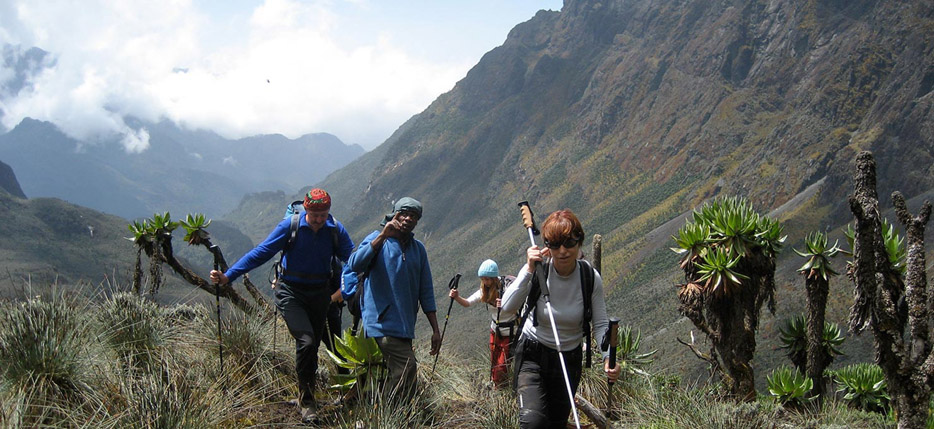
Margherita Peak trekking normally takes several days through tropical forest, bamboo, giant heathers, boggy valleys and surreal alpine plants. Glacial sections near the highest peaks need technical discussion with qualified operators. A cultural day beforehand introduces communities that supply many porters, guides and mountain staff.
You do not need Margherita Peak to enjoy the mountains. Short hikes introduce lower forests, rivers, waterfalls and viewpoints — ideal with limited time or moderate fitness. Pair a short hike with a village walk or coffee experience for a full nature-and-culture day.
Mountain tourism employs guides, porters, cooks, lodge staff and drivers. Crafts, village walks and farm visits broaden benefits to households not on expeditions. Visible local income strengthens support for protected areas. A responsible Rwenzori safari considers both environmental and community impacts.
The Rwenzoris sit conveniently near Queen Elizabeth and Kibale, making culture-plus-adventure easy to weave into a wider western Uganda safari.
Trek or explore foothills culturally, then continue for Kasenyi game drives, elephants, buffaloes, lions, leopards and the Kazinga Channel boat cruise — mountain adventure paired with classic savannah wildlife.
Best for: Western Uganda circuits
Combine chimpanzees in Kibale with Rwenzori culture and hiking, Queen Elizabeth wildlife and optionally Bwindi gorillas — one of the most diverse western Uganda routes.
Best for: Primate + mountain itineraries
Continue south for mountain gorillas in dense rainforest. Cultural activities at both destinations show how western Uganda communities differ between alpine foothills and gorilla forests.
Best for: Mountains + gorillas
Village walks, coffee tours, farm visits and food experiences can be adapted for families and travelers who prefer moderate activity over multi-day mountaineering.
Short foothill hikes combine well with community time for active teenagers and couples who want scenery without a summit objective.
Serious Margherita Peak expeditions need fitness, time and specialized packing — discuss age and experience honestly with your planner before booking high-altitude routes.
Ask your safari planner for community partners and clear guidance on which activities suit your group's fitness.
Plan a Family Cultural Safari
Community activities can be enjoyed throughout the year. For serious mountain trekking, weather is a major consideration.
The relatively drier periods around December to February and June to August are commonly preferred for longer climbs. The Rwenzoris are famously wet and weather remains unpredictable — expect rain even in traditionally drier months.
For lower-level cultural walks, rainfall is less restrictive, although trails can become slippery. Carry rain protection year-round.
A short cultural experience can be incorporated into a two- or three-day visit. A short itinerary might include arrival in the foothills, a community and coffee experience, then a day hike.
Travelers planning serious trekking require substantially longer — a week or more depending on route and summit objective. Adding one cultural day before or after a long trek is highly recommended so you meet communities that supply many guides and porters.
Tell your planner whether culture, hiking or mountaineering is the main priority: a short village walk and coffee tour, several days on lower trails, or a full high-peak expedition.
Mountain operators should provide detailed packing lists for multi-day expeditions. Park fees, guide arrangements and porter logistics differ from a simple community day — confirm what is included.
Combining with Queen Elizabeth, Kibale or Bwindi needs realistic transfer times; foothill culture fits well between western Uganda destinations when one extra night is available.
Adventure in the Wild Safaris can match you with community partners where fees and craft purchases support mountain households directly.
Browse Uganda Safaris
A responsible Rwenzori Mountains cultural safari should support locally managed activities while protecting fragile mountain ecosystems.
Respect for privacy and park rules is as important as paying agreed activity fees — hosts and porters are neighbours and colleagues, not exhibits.
Clothing requirements depend on the activity — village walks need less gear than high-altitude expeditions.
Dress comfortably and respectfully while allowing local people to present mountain culture on their own terms.
The mountains sit in western Uganda and combine naturally with Queen Elizabeth, Kibale and wider Albertine Rift itineraries.
Tell us whether you want foothill culture only, short hikes or a full expedition when you enquire.
Foothill lodges and guesthouses often work with neighbouring Bakonzo communities. Choosing the right base improves walks, coffee visits and trek logistics.
Combining culture with Rwenzori trekking, Queen Elizabeth wildlife, Kibale chimpanzees or Bwindi gorillas creates one of the most diverse itineraries available in Uganda.
Pair your cultural safari with hiking, wildlife, photography or family experiences in the same region.
Cultural Experiences
A Queen Elizabeth National Park cultural safari introduces the communities, traditions and everyday livelihoods surrounding one of Uganda's…
Learn More
Cultural Experiences
A cultural safari in Kibale National Park discovers the communities, traditions and rural landscapes surrounding Uganda’s most famous…
Learn More
Cultural Experiences
A Semuliki National Park cultural safari takes travelers into one of Uganda's most distinctive landscapes, where Central African…
Learn MoreProgrammes may include Bakonzo village walks, coffee tours, farm visits, traditional food, crafts, music and dance, medicinal plant talks and short foothill hikes. Exact activities depend on community partners.
Two or three days can cover culture plus a day hike. Serious trekking toward high peaks needs a week or more; add a cultural day before or after the climb.
No. Short hikes, village walks and coffee experiences work well for visitors with limited time or moderate fitness.
Yes. The mountains combine naturally with Queen Elizabeth wildlife, Kibale chimpanzees and optionally Bwindi gorilla trekking.
Culture is year-round. Longer climbs often prefer Dec–Feb and Jun–Aug, but expect rain anytime and pack waterproofs.
Ask first for portraits and private homes. A community tour fee does not automatically grant unrestricted photography rights.
Use community guides, buy crafts fairly, avoid random gifts, follow park rules and never collect plants from protected areas.
Ready for a Richer Mountain Journey?
Tell us your dates, fitness and how deeply you want to engage with Bakonzo communities — Adventure in the Wild Safaris will build village walks, coffee tours and mountain trekking into one seamless trip.