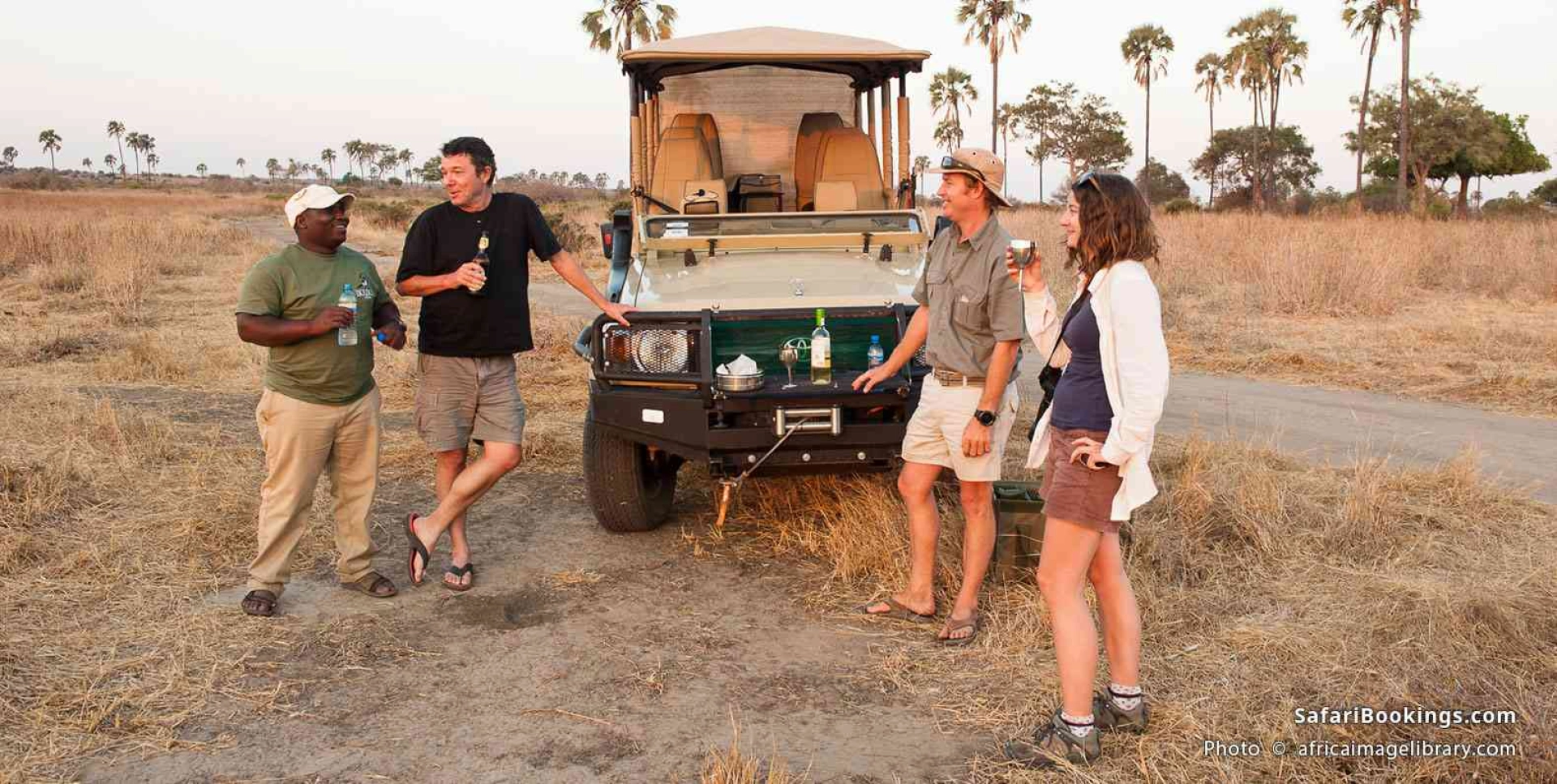
Tipping in Zambia: Complete Safari, Walking Safari & Travel Tipping Guide
Understanding tipping in Zambia is particularly useful for safari travellers because Zambia is famous for highly personalised wilderness…
Read article

Africa Travel Guide
Imagine walking quietly through a mist-covered African rainforest after several hours of trekking. Your boots are muddy, giant leaves brush against your clothing, and every sound from the vegetation makes you wonder whether the gorillas are…
Imagine walking quietly through a mist-covered African rainforest after several hours of trekking. Your boots are muddy, giant leaves brush against your clothing, and every sound from the vegetation makes you wonder whether the gorillas are close. Then the trackers stop. At first, you hear leaves moving. A branch bends somewhere beyond the vegetation. Then comes a quieter and far more surprising sound: a low series of hums and soft vocal notes coming from a gorilla feeding nearby.
The animal appears remarkably content. It gathers vegetation, pulls leaves toward its mouth and continues feeding while producing gentle vocalisations that sound almost like someone humming while enjoying a favourite meal. This fascinating behaviour is sometimes described informally as gorilla singing while eating, gorilla food songs, gorilla humming, or even gorilla snacking songs. It provides a remarkable insight into the emotional and social lives of gorillas and is one of the many subtle behaviours travellers may encounter during a carefully observed gorilla trekking safari in Uganda or Rwanda.
The famous image of a gorilla often focuses on strength. People imagine a huge silverback beating his chest or staring intensely through the forest. Those behaviours certainly exist, but they represent only a small part of gorilla life. Spend enough time observing a habituated gorilla family and another picture emerges. Gorillas rest. They groom. Infants play. Youngsters climb vegetation. Mothers care for babies. Adults communicate through posture, facial expressions and numerous vocalisations. And sometimes, particularly while feeding, gorillas produce soft humming and singing-like sounds. These quiet vocalisations reveal something fundamental about mountain gorilla behaviour: gorillas are deeply social animals whose communication extends far beyond dramatic displays.
The word “sing” should be understood carefully. Gorillas do not compose songs in the human sense, and researchers are not suggesting that a gorilla sits down to perform a melody for entertainment. Instead, researchers studying gorilla vocal behaviour have documented feeding-associated calls that can include humming and more complex sequences of vocal notes. To human ears, some of these sounds can resemble singing.
The fascinating part is that these calls are associated with feeding and appear to carry information within the social group. A gorilla may therefore be doing much more than simply making a random sound while chewing. The vocalisation can be connected to food, social coordination and the individual’s immediate behavioural state. For travellers, this is an important reminder that a gorilla trekking experience is about far more than seeing a mountain gorilla.
The deeper reward comes from observing what the animals actually do.
Gorilla humming can be subtle. Visitors expecting a loud performance may miss it entirely. The sound may consist of low-frequency, relatively quiet vocalisations produced while the gorilla continues feeding. Sometimes the notes seem almost continuous.
Other vocal sequences can be more varied. Because rainforest environments contain constant natural sound—birds, insects, moving leaves, breaking branches and the vocalisations of other gorillas—it helps to remain quiet and listen carefully. A knowledgeable guide can often help identify behaviours visitors would otherwise overlook. This is one reason guided gorilla trekking is such an interpretive experience.
The guide is not simply taking you to a gorilla family. They are helping you understand what you are witnessing.
Food occupies a major part of a gorilla’s daily life. Mountain gorillas consume substantial quantities of plant material and spend considerable time feeding. A feeding group must remain socially coordinated even when individuals are spread through vegetation. Soft vocal communication can help maintain contact and convey information without requiring dramatic movement or loud alarm calls.
Feeding vocalisations may therefore serve several interconnected purposes. They can reflect a positive state associated with food. They may help communicate that an individual is feeding. They can contribute to group coordination. They may also vary according to the quality or type of food. The important point is that gorilla feeding behaviour is not purely mechanical. Eating takes place within a social environment.
Research into gorilla feeding calls has suggested that vocal behaviour can vary according to food context. That is particularly interesting because it hints that gorillas may communicate differently depending on what they are eating. Humans do something similar without thinking about it. A person tasting an exceptional meal might say “mmm,” while ordinary food produces no vocal reaction.
The comparison should not be pushed too far, because gorilla communication has its own evolutionary and social context. Nevertheless, the basic idea is compelling. Food quality matters. Individual preference matters. Social context matters. And gorillas sometimes vocalise while feeding in ways that appear connected to those factors.
Mountain gorillas are predominantly herbivorous, with diets centred heavily on leaves, stems, shoots and other plant material available within their montane forest habitats. They may also consume fruit when available, although the abundance of fruit differs between gorilla habitats and seasons. Bamboo shoots can become important in appropriate areas and seasons. Gorillas may also consume small quantities of invertebrates.
Their exact diet changes according to habitat, elevation, seasonal plant availability and individual preference. This is another reason gorilla behaviour should never be reduced to simplistic statements such as “gorillas eat leaves.” They select among numerous plant species and plant parts.
Feeding occupies a substantial proportion of a gorilla’s active day. Their plant-based diet requires significant consumption. Unlike a predator that may eat a large meal and then spend long periods resting, gorillas repeatedly move through vegetation, selecting edible material.
A family may feed together across a slope. Individuals can become partially hidden by vegetation. After feeding, the group may rest. Later, feeding begins again. Understanding this daily rhythm helps travellers appreciate why many gorilla trekking encounters in Bwindi involve gorillas eating. That is not an unfortunate moment to find them. It is one of the central behaviours of their lives.
Bwindi Impenetrable National Park contains exceptionally diverse montane and lowland forest vegetation across varying elevations. For mountain gorillas, this creates a complex feeding environment. During a trek, visitors may see a gorilla carefully selecting leaves, stripping vegetation or pulling stems within reach. A silverback can consume vegetation with astonishing efficiency. The hands that appear capable of immense power are equally capable of careful manipulation. This contrast is one of the most memorable aspects of observing gorillas at close range. A gorilla can break substantial vegetation and then delicately select a particular plant part.
Uganda’s Mgahinga Gorilla National Park lies within the Virunga volcanic landscape. Its vegetation differs in important ways from sections of Bwindi. Bamboo habitat is particularly significant within the wider Virunga ecosystem. Seasonal food availability influences primate movements and feeding patterns. Travellers combining Mgahinga gorilla trekking with golden monkey tracking can experience two very different primate feeding strategies within the same broad landscape.
Rwanda’s Volcanoes National Park protects part of the Virunga mountain ecosystem. Mountain gorillas move through vegetation according to daily feeding requirements and social decisions. The volcanic slopes create a spectacular setting for observing gorilla ecology. Visitors often focus initially on the animals themselves. But once the excitement settles, the surrounding vegetation becomes part of the story. Why is the gorilla sitting in that particular patch? What is it eating? Why has the family moved?
Why are several animals feeding while another rests? These questions turn a wildlife sighting into ecological observation.
Adult males can produce feeding-associated vocalisations. This is particularly fascinating because the silverback gorilla is usually portrayed through his most dramatic behaviours. The dominant silverback plays a crucial role in group protection and decision-making. He may intervene in conflicts. He monitors the group. He can display enormous physical power. Yet he also spends large amounts of time feeding and resting. Hearing a huge silverback produce a quiet food-related vocalisation provides a completely different perspective on the animal.
Strength and gentleness are not opposites in gorilla behaviour. They coexist.
Feeding vocalisations are not exclusively male behaviour. Females also communicate while feeding. However, individual differences occur. Not every gorilla vocalises with the same frequency. Age, sex, social context, food and individual behavioural tendencies can influence what researchers and visitors observe. This individual variation is important. Gorillas are not interchangeable representatives of a species. Regular researchers, trackers and guides learn to recognise individual personalities and behavioural tendencies.
Young gorillas develop within an intensely social environment. They observe adults, interact with siblings and other group members, play, explore food and gradually become more independent. Juvenile vocal behaviour forms part of this development. For safari visitors, infants and juveniles are often the most immediately entertaining members of a gorilla family. They climb. They tumble. They investigate vegetation. They sometimes provoke reactions from older gorillas. But their behaviour is also scientifically important because play and social interaction contribute to development.
The gorilla communication system includes a broad range of vocal and non-vocal signals. Gorillas can grunt. They can bark. They can roar or scream in high-intensity situations. They use body posture. Facial expression matters. Physical contact matters. Chest beating is another communication signal. The context determines meaning. A quiet feeding vocalisation belongs to a completely different behavioural category from an alarm or aggressive display. Visitors should therefore avoid interpreting every gorilla sound as either friendliness or aggression. Communication is nuanced.
Chest beating is probably the world’s most recognisable gorilla behaviour. It is particularly associated with adult males, although other gorillas can perform related displays. The sound can travel through forest habitat and communicate information without requiring immediate physical conflict. A silverback does not beat his chest simply because tourists have arrived.
The behaviour occurs within gorilla social communication. It can be associated with display, competition and signalling. If you witness chest beating during a trek, remain calm and follow your guide’s instructions.
Not necessarily. A display and an attack are different things. Visitors unfamiliar with gorillas may interpret any dramatic movement as imminent aggression. Professional trackers understand behavioural context much better. This is precisely why trekkers must obey instructions rather than react instinctively. Running, shouting or making sudden movements would be inappropriate. Remain calm. The guides are trained to interpret the situation.
Mountain gorillas are powerful wild animals, but habituated groups generally tolerate carefully managed human observation under established rules. They should never be described as tame. A silverback possesses extraordinary physical strength. Females protect offspring. Individuals have personal space and social relationships. Responsible trekking works because human behaviour is controlled. Visitors remain together. Observation time is regulated. Approach distances and health rules exist. Guides interpret the animals’ behaviour.
Gorilla habituation is the gradual process through which a wild gorilla group becomes accustomed to the controlled presence of researchers, trackers and eventually tourists without losing its wild nature. This process takes time. It involves repeated, carefully managed contact. Habituation is not domestication. The gorillas continue living in the forest. They find their own food. They choose their movements. They reproduce naturally. They interact with other gorillas. Human visitors adapt to gorilla rules, not the reverse.
Silence is not absolute during a gorilla encounter, but unnecessary noise should be avoided. Quiet behaviour reduces disturbance. It also improves observation. When travellers stop talking, the forest becomes more audible. You hear leaves being torn. You hear gorillas chewing. You hear low grunts between individuals. You may hear the subtle humming that inspired descriptions such as gorilla snacking songs. Many of the finest wildlife moments are quiet ones.
The day generally begins with a briefing at the relevant park or trekking sector. Visitors are allocated to gorilla groups according to the day’s operational arrangements. Guides and trackers lead the trek into the forest. The hiking duration cannot be predicted precisely because the gorillas move. Trackers use knowledge of previous locations, signs and current information to locate the family. When the gorillas are found, the experience changes immediately. Backpacks may be left at an appropriate point with porters. Visitors approach under guide direction.
Then observation begins. The first seconds can be overwhelming. But after the initial excitement, the best approach is to slow down. Watch individual animals. Notice relationships. Observe feeding. Listen. This is where behaviours such as gorilla humming while eating become meaningful.
Photography is an important part of trekking for many visitors. But a camera can easily consume the entire experience. A gorilla may be only metres away. If every second is viewed through a viewfinder, the emotional reality can be lost. Take photographs. Then lower the camera. Watch the gorilla use its hands. Listen to the vegetation. Notice an infant watching its mother. Observe the silverback’s awareness of the entire group. Those memories cannot be recreated later from a memory card.
Rainforest photography is challenging. Light can be limited. Bright patches of sky contrast with dark vegetation. Gorillas have dark coats that can lose detail if exposure is poorly managed. Fast-moving juveniles require different settings from a resting silverback.
A camera capable of handling higher ISO values can help. A moderate telephoto zoom provides flexibility. But enormous wildlife lenses are often unnecessary because encounters can occur relatively close under controlled conditions. Flash photography should not be used.
Gorilla faces become increasingly expressive the longer you watch them. Small movements of the mouth, eyes and brow accompany social situations. Human observers naturally attempt to interpret these expressions emotionally. Some similarities are compelling because gorillas and humans share deep evolutionary history. However, visitors should avoid assuming that every expression has the exact same meaning as a human facial expression. Scientific interpretation depends on context.
Gorillas are great apes and close evolutionary relatives of humans. Their anatomy, social behaviour, development and communication reveal numerous similarities. This relationship is part of what makes gorilla trekking in Africa so emotionally powerful. A gorilla’s hand can look startlingly familiar. A mother holding an infant creates an immediately recognisable scene. Young gorillas play in ways that can appear almost childlike. Yet respecting gorillas requires recognising their difference as much as their similarity. They are not people in gorilla bodies.
They are extraordinary animals with their own evolutionary history.
Mountain gorillas live in social groups. A group can contain a dominant silverback, adult females, younger males, juveniles and infants, although group composition varies. Some groups contain multiple silverbacks. Relationships are dynamic. Individuals join or leave groups. Young males may eventually become solitary or form new social arrangements. Females may transfer between groups. Births and deaths alter the group’s structure. The gorilla family you visit is therefore not static. It has a history.
The dominant silverback is central to group stability. He helps protect members from threats and rival males. He influences movement. His presence can affect social interactions. But daily life is not constant conflict. Much of his time involves ordinary gorilla behaviour—feeding, resting, moving and interacting. Watching a silverback peacefully eating can be just as informative as witnessing a display.
The relationship between a mother and infant is one of the most compelling parts of mountain gorilla trekking. Young infants remain closely dependent. As they develop, they become more adventurous. They climb away. They play. They return to the mother. Older siblings and juveniles may interact with them. The mother’s tolerance and attentiveness can be remarkable to observe.
Play develops physical and social skills. Juveniles chase, wrestle and climb. These behaviours help them learn coordination and social boundaries. For tourists, play is entertaining. For scientists, it provides insight into development. This distinction reflects an important principle of responsible wildlife tourism: the behaviours we enjoy watching also have biological functions.
Great apes can produce vocalisations associated with play that humans sometimes compare with laughter. Again, the comparison should be made carefully. The evolutionary connections between ape and human vocal behaviour are scientifically fascinating. Observing juvenile gorillas during play can reveal expressive sounds and movements very different from the stereotypical silent, intimidating gorilla of popular culture.
Gorillas experience stress, social attachment and loss, but human emotional terminology should be applied cautiously. Researchers observe behavioural responses to social events rather than assuming direct equivalence with human emotional expression. The important lesson is that gorilla social lives are complex. Relationships matter.
Habituated gorillas experience repeated contact with trackers and researchers. They can distinguish aspects of their environment and individuals around them. However, tourists should never interpret habituation as an invitation to develop personal relationships with wild gorillas. The purpose of habituation is controlled observation and conservation, not interaction.
Physical contact is inappropriate for several reasons. Gorillas are wild animals. Human diseases can pose risks to great apes. Touching also disrupts controlled observation and violates the principle that tourists should minimise interference. If a gorilla approaches unexpectedly, follow the guide’s instructions. Do not reach toward it.
One of the most important realities of gorilla conservation is our biological similarity. Diseases affecting humans can potentially threaten great apes. This is why trekking regulations may include health restrictions and behavioural protocols. Travellers should take these rules seriously.
Missing a trek because of illness would be disappointing. Introducing disease into a vulnerable wildlife population would be far worse.
Regulated gorilla tourism creates economic value around living gorillas and protected forests. Permit revenue contributes to conservation systems. Tourism creates employment for guides, trackers, porters, accommodation staff, drivers and other workers. Communities surrounding protected areas can benefit through tourism-related economic activity and conservation initiatives. This does not mean tourism has no environmental impact. It means carefully managed tourism can become part of a broader conservation strategy.
Trackers possess extraordinary practical knowledge. They understand forest terrain. They recognise signs left by gorillas. They know group histories. Their work extends beyond the tourist encounter. Visitors often see only the final stage of an enormous conservation and monitoring effort. A gorilla trek should therefore be understood as participation in a highly organised conservation tourism system rather than simply an adventure hike.
Porters help carry daypacks and assist trekkers through difficult terrain. Their contribution can transform the physical experience, particularly on muddy or steep slopes. Hiring a porter also creates direct local employment. Some travellers initially decline because they believe they are fit enough to carry their own bag. That misses part of the point. You can be physically capable and still choose to support local employment.
Bwindi has multiple trekking sectors. The correct sector matters because the park is large and road connections between different areas can take significant time. Accommodation should therefore be selected according to the confirmed trekking arrangements. A common planning mistake is booking a lodge simply because it says “Bwindi” without checking whether it is geographically practical for the assigned trekking sector.
Professional Uganda gorilla safari planning should coordinate permit location and accommodation from the beginning.
A short gorilla-focused trip can be organised over several days depending on starting and ending points. However, travellers with more time should consider extending the safari. Bwindi combines naturally with Queen Elizabeth National Park, Kibale National Park, Lake Mburo National Park, Mgahinga and Rwanda. A longer itinerary allows the traveller to understand Uganda beyond one famous primate.
Kigali can be a useful gateway for certain Uganda and Rwanda gorilla itineraries because of regional geography. A cross-border route can reduce some driving depending on the complete itinerary. However, immigration procedures and current entry requirements must be considered. The best arrival airport should be selected according to the full safari, not merely the gorilla trekking day.
Entebbe is the principal international gateway for many Uganda safaris. A road journey toward southwestern Uganda can be incorporated into a broader itinerary. Domestic flights can also reduce driving time on selected routes. Road travel provides landscape and cultural context, while flying preserves time. The choice depends on budget and itinerary length.
Gorilla trekking operates throughout the year subject to park conditions and regulations. Drier periods can make trails easier, but rainforest environments can receive rain at any time. Wetter periods may create muddier conditions. The forest does not follow a perfectly predictable tourism calendar. Travellers should pack for rain regardless of month.
Good walking footwear is important. Long trousers protect the legs. Long sleeves help with vegetation and insects. A lightweight waterproof jacket is useful. Gloves can provide protection when holding vegetation. Water is essential. A small packed lunch may be provided depending on the safari arrangement. Camera protection is valuable in rain. The best packing strategy is practical rather than fashionable.
No, but reasonable fitness helps. Regular walking before the safari can improve comfort considerably. If you live in a flat area, use stairs or incline training. The challenge is not simply distance. Steep terrain, altitude, mud and vegetation can make relatively short distances tiring. Tell your safari planner about mobility concerns before permits and accommodation are finalised.
Absolutely. This is one of Uganda’s greatest advantages. After gorilla trekking, travellers can search for lions, elephants, buffaloes and other wildlife in Queen Elizabeth National Park. They can track chimpanzees in Kibale. They can take a Kazinga Channel boat safari. They can walk or take game drives in Lake Mburo. Longer trips can reach Murchison Falls. This produces a complete Uganda wildlife and primate safari.
For travellers planning a major East African journey, mountain gorillas can be combined with the Masai Mara in Kenya or Serengeti National Park in Tanzania. This is one of Africa’s most extraordinary wildlife combinations. The plains provide big cats and huge herbivore populations. The forests provide gorillas and chimpanzees. The contrast makes the journey far richer than simply adding more savannah parks.
A Rwanda or Uganda-Rwanda itinerary can combine mountain gorillas with golden monkey trekking. Golden monkeys are active and colourful. They frequently occupy bamboo habitat. Their movement and feeding style contrast sharply with the slower, heavier gorillas. Primate enthusiasts should consider both.
The scientific significance of feeding vocalisations extends beyond the novelty of saying that gorillas “sing.” They provide another window into the evolution of communication. Human speech did not emerge from nowhere. Studying vocal behaviour in other great apes helps researchers explore the biological foundations from which increasingly complex communication systems may have evolved. Gorilla humming therefore matters not because it proves gorillas speak like humans—they do not—but because it reveals flexibility, context and social information within great-ape vocal behaviour.
For the traveller, the lesson is simpler but equally powerful. Watch more carefully. Safari tourism often rewards the dramatic. A lion hunt receives attention. A river crossing attracts hundreds of cameras. A silverback chest beat becomes a viral video. But wildlife biology is built mostly from ordinary behaviour. Eating. Resting. Moving. Caring for offspring. Communicating quietly. A gorilla humming over food may not appear dramatic from a distance. Yet it can reveal more about the animal’s social world than a few seconds of display.
Gorillas produce a range of vocalisations, including feeding-associated humming and song-like vocal sequences. Calling this “singing” is a useful popular description, although the behaviour should not be interpreted as identical to human music.
Feeding vocalisations appear to be connected with food context and social communication. They may help communicate aspects of feeding and group coordination.
Not every individual vocalises identically. Behaviour can vary according to individual, age, sex, food and social context.
Possibly. It is a natural behaviour rather than a scheduled performance. Remaining quiet and listening carefully improves your chances of noticing subtle vocalisations.
Mountain gorillas consume predominantly plant material, including leaves, stems, shoots and other vegetation, with diet varying by habitat and season.
Mountain gorilla diets are overwhelmingly plant-based, although small invertebrates may be consumed. They are not predators hunting large animals.
Adult males can produce feeding-related vocalisations. A large silverback quietly humming while feeding provides a striking contrast with the dramatic image often associated with male gorillas.
“Friendly” is not the best description for a wild animal. Habituated mountain gorillas tolerate controlled human observation, but they remain wild and should always be treated with respect.
No. Feeding gorillas would alter natural behaviour and create health and conservation risks.
No. Physical contact should not be initiated. Follow the guides if a gorilla approaches unexpectedly.
A gorilla trekking safari in Uganda or Rwanda becomes far more rewarding when it is designed around more than simply obtaining a photograph of a silverback. Allow enough time. Choose accommodation near the correct trekking sector. Prepare physically. Use a porter. Listen to the guides. And once you find the gorillas, watch the details. Perhaps the silverback will be resting. Perhaps an infant will be climbing over its mother. Perhaps juveniles will be wrestling. Perhaps the family will be moving.
Or perhaps you will hear something much quieter—a gorilla feeding contentedly while producing the low humming notes that inspired the idea of gorilla snacking songs in the jungle. Adventure in the Wild Safaris can arrange Bwindi gorilla trekking safaris, Mgahinga gorilla tours, Rwanda gorilla trekking, Uganda-Rwanda primate safaris, chimpanzee trekking in Kibale, golden monkey trekking and multi-country East African wildlife safaris. The purpose is not merely to reach the gorillas. It is to create enough time and context to understand why meeting them is so extraordinary.
A mountain gorilla does not need to beat its chest to be fascinating. Sometimes the most revealing behaviour is barely audible. A gorilla sitting among rainforest vegetation, selecting food and quietly humming challenges the stereotype of these animals as creatures defined primarily by physical power. It reminds us that gorillas communicate. They make choices. They maintain relationships. They raise offspring. They respond to food. They coordinate with one another. They possess individual behavioural differences. And their daily lives contain countless subtle moments that a hurried observer can easily miss. That is why gorilla trekking in Uganda and Rwanda should never be approached only as a bucket-list photograph.
Enter the forest prepared to observe. Watch the hands. Watch the eyes. Notice which individuals stay close together. Notice the infant learning to climb. Watch how the silverback monitors his family. Listen to the branches. Listen to the grunts. And when the forest becomes quiet enough, listen for the remarkable possibility of a gorilla humming over its meal. The jungle has many songs. Some of the most fascinating are sung very softly.
“Gorilla trekking is more than a safari — it’s a powerful reminder of our shared humanity and the importance of protecting our natural world.”
— Adventure in the wild Safaris

Share This Article
Understanding tipping in Zambia is particularly useful for safari travellers because Zambia is famous for highly personalised wilderness…
Read article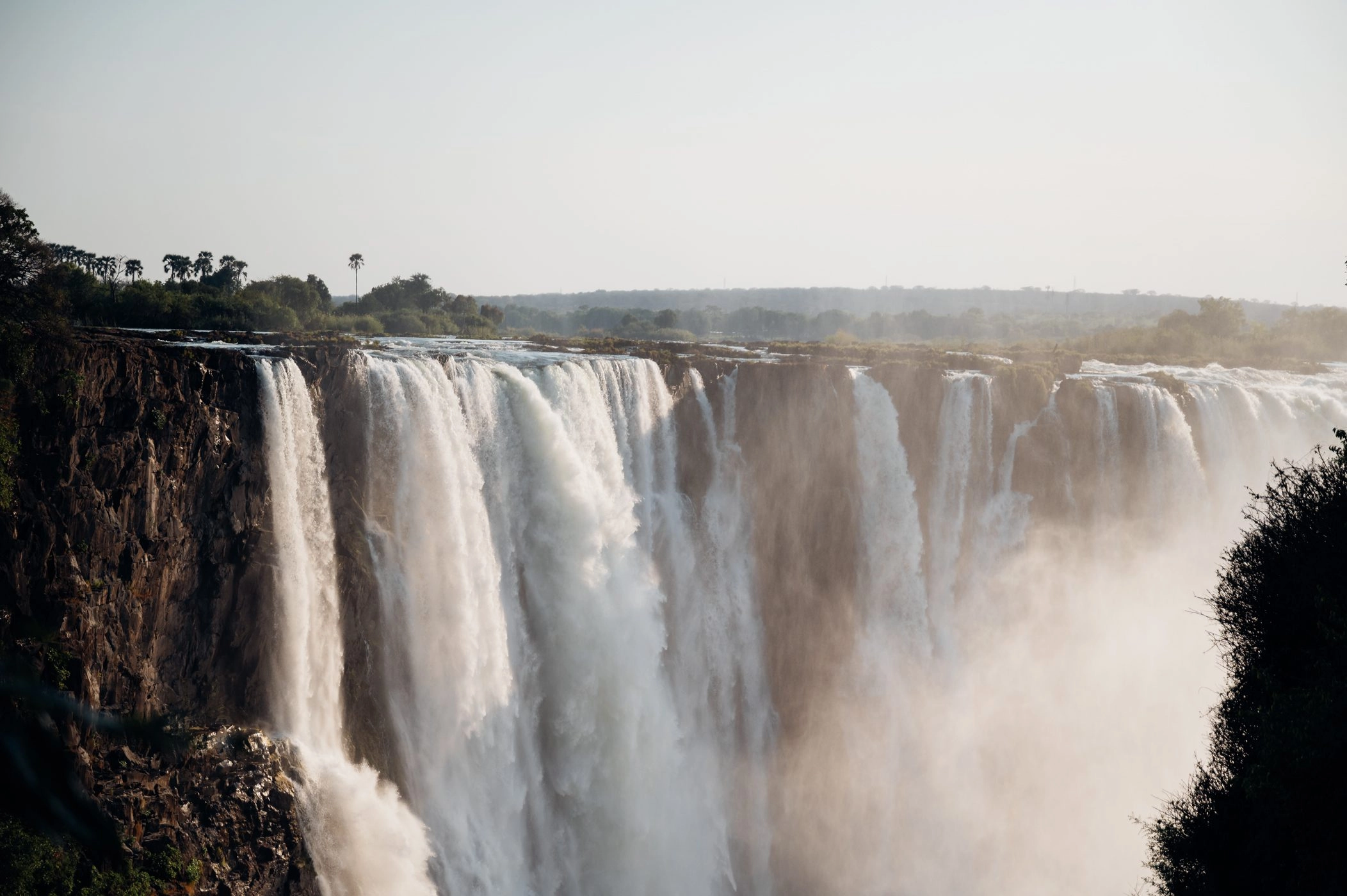
Understanding tipping in Zimbabwe is particularly important for safari travellers because the country has one of southern Africa's…
Read article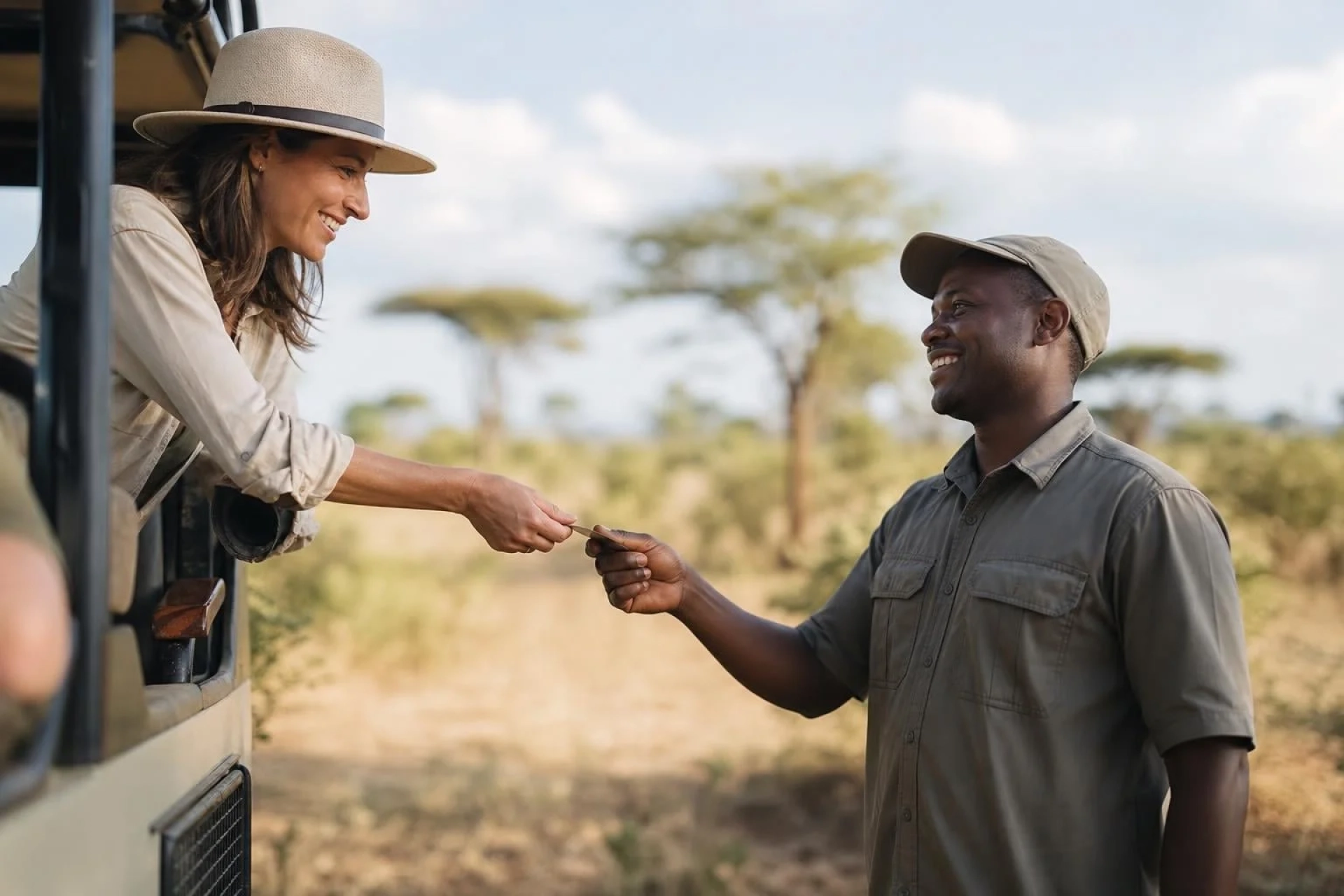
Tipping in Namibia differs subtly from tipping in many other major African safari destinations because a significant proportion…
Read article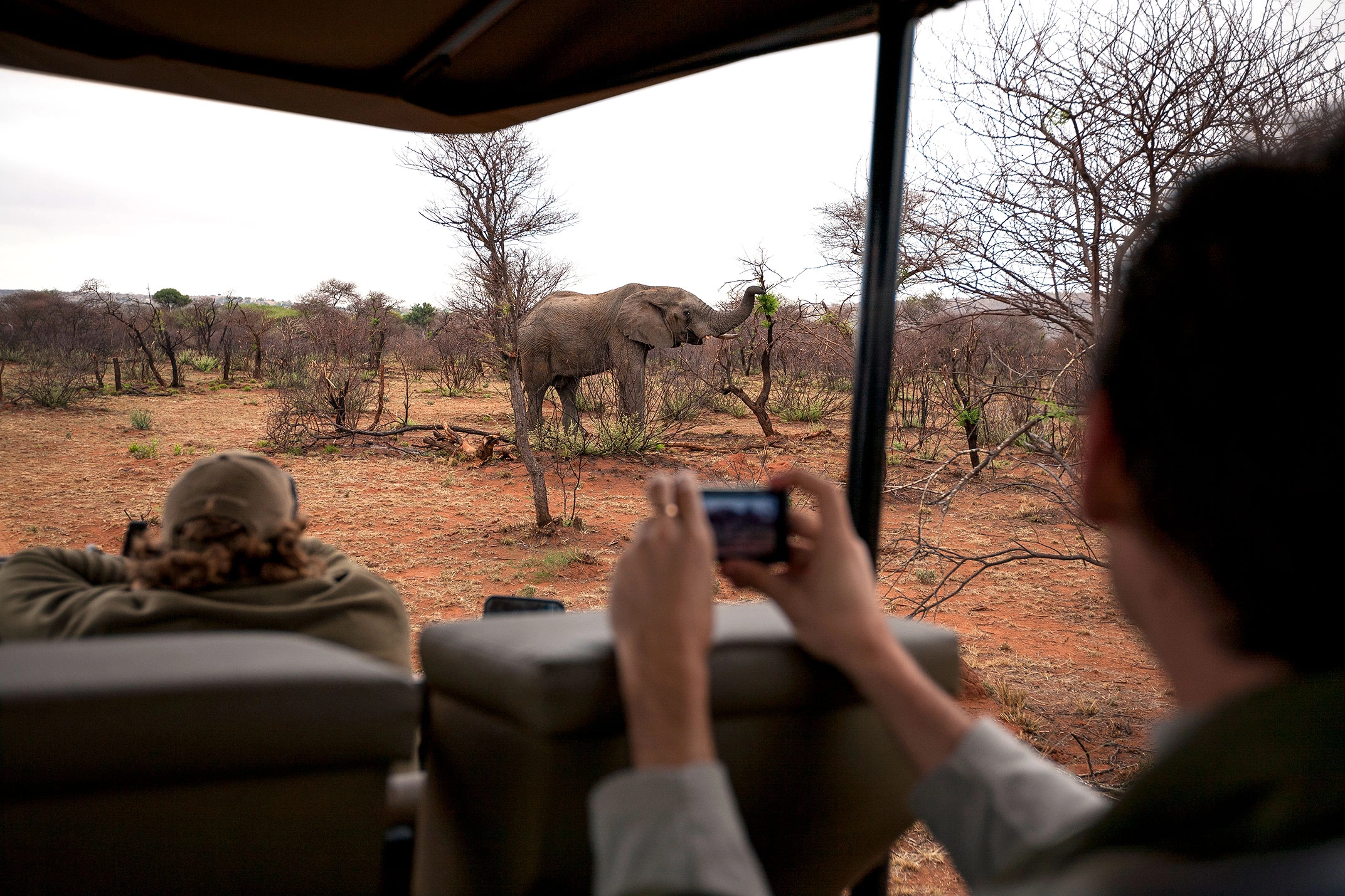
Tipping in Botswana is relatively easy once travellers understand how the country's safari industry operates. Unlike many East…
Read articleLet us take you closer to the wildlife, people and places that make Africa extraordinary.
Plan Your Safari Today