Tipping in Zimbabwe: Complete Safari, Victoria Falls & Travel Tipping Guide
Understanding tipping in Zimbabwe is particularly important for safari travellers because the country has one of southern Africa's…
Read article
Travel Guide
Understanding tipping in Zambia is particularly useful for safari travellers because Zambia is famous for highly personalised wilderness experiences. The country is regarded as one of the great homes of the African walking safari, while destinations such as South Luangwa, Lower Zambezi, Kafue and Liuwa Plain frequently offer small camps, expert resident guides and activities where guests spend substantial amounts of time with specialist safari professionals.
Understanding tipping in Zambia is particularly useful for safari travellers because Zambia is famous for highly personalised wilderness experiences. The country is regarded as one of the great homes of the African walking safari, while destinations such as South Luangwa, Lower Zambezi, Kafue and Liuwa Plain frequently offer small camps, expert resident guides and activities where guests spend substantial amounts of time with specialist safari professionals.
A Zambia itinerary may include game drives in South Luangwa National Park, walking safaris with a professional guide and armed wildlife scout, canoeing on the Lower Zambezi, boating, fishing, several nights in remote bush camps and a final stay near Victoria Falls at Livingstone. Each component involves different people and therefore different gratuity considerations.
The most important principle is that tips should correspond to the service relationship. Your professional safari guide normally receives a direct gratuity. A dedicated tracker or wildlife scout may receive a separate amount. The wider lodge team generally benefits from a communal gratuity. Canoe, fishing and other specialist guides can be recognised after their activities, while ordinary restaurants and city hotels follow more conventional hospitality practices.
There is no single mandatory national tipping tariff. Suggested figures should therefore be used as planning benchmarks rather than fixed charges.
Yes. Tipping is well established within Zambia‘s tourism and safari industry and is appreciated after good service.
However, travellers should distinguish between customary and compulsory.
Your accommodation, national park fees, transfers and activities are paid services. A gratuity is an additional acknowledgement of the people who deliver those services professionally.
This distinction is especially important at remote safari camps where a large team may contribute to the experience.
Trying to tip every employee individually is neither necessary nor particularly fair.
Use communal systems where they exist.
Approximately US$10–20 per guest per day can be used as a broad planning range for good professional safari guiding.
For a couple, approximately US$20–40 per day collectively is therefore a practical starting point.
Private specialist guiding, particularly where a guide accompanies guests throughout a long safari or conducts extensive walking activities, may justify a higher gratuity.
These amounts are not compulsory.
Individual camps may provide their own guidance, and those recommendations should be considered.
Zambia‘s safari tradition places considerable emphasis on interpretation and walking.
A professional guide may conduct morning game drives, afternoon walks, night drives and other activities over several days.
Their knowledge extends far beyond recognising large mammals.
A good guide interprets tracks, dung, bird calls, plants, insects, weather and animal behaviour. They understand how wind direction affects a walking approach, recognise when an elephant is relaxed or uncomfortable and know when a sighting should be abandoned rather than pushed.
This expertise is particularly valuable on foot.
A vehicle creates a physical barrier between guests and wildlife. A walking guide must manage the encounter through knowledge, judgement and careful positioning.
South Luangwa National Park is one of Zambia‘s most important safari destinations and one of the best-known walking safari areas in Africa.
Many camps operate with resident professional guides who conduct both game drives and walks.
If the same guide accompanies you throughout a three- or four-night stay, one gratuity at the end is normally sufficient.
There is no need to tip separately after every morning walk and evening drive.
If you move between bush camps and retain the same guide, wait until the guide’s service ends. If you receive a different guide at each camp, tip each separately.
Walking safari guiding carries substantial responsibility.
A guide must constantly interpret the environment while monitoring wildlife behaviour, terrain, wind and the position of the group.
For a specialist private walking guide who is separate from your normal camp guide, approximately US$10–20 per guest for a substantial half- or full-day walk is a useful broad benchmark.
Where your resident safari guide conducts all walks, include them in the normal end-of-stay guide gratuity.
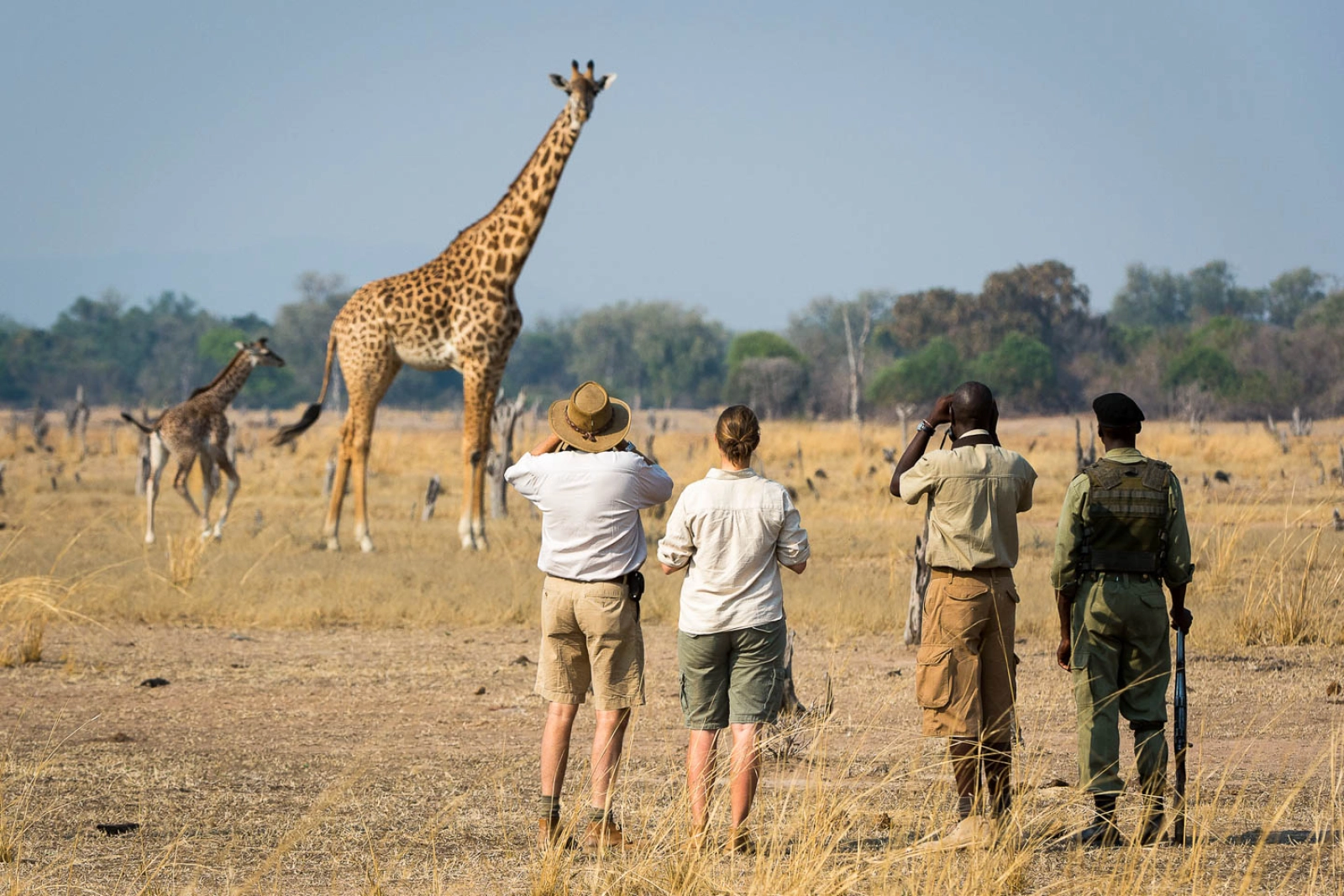
Zambian walking safaris may involve an armed wildlife scout accompanying the professional guide.
The scout plays an important safety role and may also contribute considerable tracking and bush knowledge.
Where the camp recommends tipping the scout separately, approximately US$5–10 per guest per day of walking can be used as a broad planning benchmark.
Some properties may pool scout gratuities.
Ask before distributing tips.
Where a dedicated tracker participates in game drives or specialist activities, approximately US$5–10 per guest per day is a useful benchmark.
Again, confirm whether the tracker participates in the guide gratuity or receives tips separately.
The Lower Zambezi creates a particularly diverse gratuity environment because guests can experience wildlife through game drives, walking safaris, motorboat excursions, fishing and canoe safaris.
If one resident guide conducts most of these activities, there is no need to tip them after every excursion.
Give a single end-of-stay gratuity.
If a specialist canoe or fishing guide conducts a separate activity, an additional gratuity may be appropriate.
Canoeing on the Zambezi requires professional judgement. Guides need to understand currents, channels, hippo behaviour, crocodiles, elephant movements and safe landing locations.
A guide responsible for a full-day or multi-day canoe safari carries considerable responsibility.
Approximately US$10–20 per guest per day is a reasonable broad planning benchmark for specialist canoe guiding.
On a multi-day expedition involving a support crew, ask the operator how gratuities should be divided.
The Lower Zambezi is well known for tiger fishing.
A private fishing guide may spend several hours locating productive areas, handling equipment, interpreting river conditions and assisting guests.
Approximately US$10–20 per guest for a substantial half- or full-day private fishing excursion can be a reasonable gratuity after good service.
Where a boat crew is involved, ask whether the gratuity is shared.
For a shorter lodge-operated sunset or wildlife cruise, approximately US$5–10 per guest can be appropriate where the guide is separate from your regular safari guide.
If your resident guide conducts the boat activity, include it in their final gratuity.
Kafue National Park is enormous and offers a highly varied safari environment.
Depending on camp location and season, visitors may take game drives, walks and boating excursions.
Resident guide tipping follows the same principles as South Luangwa and Lower Zambezi.
Recognise the guide when leaving the camp, and use the communal staff system for the wider lodge team.
The Busanga Plains region can offer exceptional predator and antelope viewing, but wildlife experiences remain natural and unpredictable.
Do not determine your guide’s gratuity exclusively according to whether lions, cheetahs or other desired animals were seen.
Judge effort, knowledge, ethical behaviour and interpretation.
Remote destinations such as Liuwa Plain National Park often involve considerable logistical complexity.
Guests may receive highly personalised guiding because visitor numbers are much lower than in more famous safari areas.
A guide who spends several days with you should be recognised according to the same daily principles used elsewhere in Zambia.
The remoteness of a destination does not automatically require a higher tip, but exceptional service can certainly justify one.
Zambia‘s bush camps are often intimate properties with small teams providing highly personalised service.
Behind every visible waiter or host are chefs, housekeepers, maintenance staff, laundry teams and other employees.
A communal staff gratuity of approximately US$5–15 per guest per night is a useful broad planning range.
Some premium properties recommend different figures.
Use the camp’s own guidance when available.
If a communal staff system exists, it is usually preferable to use it.
A waiter who serves every meal is highly visible. The kitchen staff preparing those meals are not.
Pooling gratuities ensures that less visible employees also benefit.
If somebody provides extraordinary personal service and individual gratuities are permitted, you may recognise them separately.
Usually assume that the professional guide is separate unless the camp specifically states otherwise.
The same may apply to trackers and wildlife scouts.
Ask the camp manager for clarification.
Visitors staying in Livingstone may combine their safari with Victoria Falls.
The tipping system here becomes more activity-based.
You may have a waterfall guide, sunset cruise crew, rafting guide, transfer driver or helicopter operator.
Each service should be considered separately rather than applying your safari-guide daily rate to the entire Livingstone stay.
For a professionally guided tour of the Falls, approximately US$5–10 per guest is a reasonable gratuity after good service.
A knowledgeable guide should provide more than directions between viewpoints. Interpretation of geology, history, ecology and local culture adds substantial value.
A sunset cruise may involve a captain, guide, waiters and other crew.
A collective gratuity of approximately US$5–10 per guest after excellent service is a useful general benchmark.
Use a communal tip box where available.
Professional rafting guides carry significant responsibility for safety.
Approximately US$5–15 per guest is a reasonable gratuity after a well-managed excursion.
Ask whether support staff share the gratuity.
Routine pilot tipping is generally unnecessary.
These are aviation services rather than conventional guided excursions.
If a private service includes exceptional personal assistance, travellers remain free to recognise it, but pilot tipping should not be treated as a standard requirement.
At restaurants in Lusaka, Livingstone and other tourist centres, approximately 5–10% is a reasonable benchmark for good table service when service has not already been included.
Always check the bill.
At casual cafés, rounding up is often sufficient.
For ordinary local services, Zambian kwacha (ZMW) are useful and convenient.
Within international safari camps, US dollars are also widely understood for gratuities.
Many travellers therefore carry both.
Use local currency for small urban and everyday tips and suitable US-dollar denominations for larger safari gratuities where accepted.
Do not arrive at a remote bush camp with only US$100 notes.
Prepare smaller denominations before travelling.
Access to ATMs can be extremely limited once you enter remote safari areas.

Cash remains the simplest method for guides, scouts, trackers and activity staff.
Many luxury camps allow guests to add the general staff gratuity to their final account.
If using a card, ask how the money will be distributed and whether guides are included.
For a straightforward transfer from Harry Mwanga Nkumbula International Airport in Livingstone to a nearby hotel, approximately US$3–5 equivalent per vehicle is a reasonable small gratuity.
Longer transfers may justify more.
If the transfer driver becomes your safari guide for several days, recognise the complete service at the end rather than tipping repeatedly.
Remote Zambian safari camps frequently rely on light aircraft.
Routine tipping of scheduled safari-flight pilots is generally unnecessary.
Pilots provide a transportation service rather than a conventional hospitality or guiding service.
At ordinary hotels, approximately US$1–3 equivalent is a reasonable gratuity for luggage assistance.
At safari camps with communal gratuity systems, separate porter tipping may be unnecessary.
At urban hotels, approximately US$2–5 equivalent per room per day is a useful broad benchmark.
At safari camps, use the communal staff gratuity where available.
Community visits should be treated respectfully.
A person providing several hours of genuine interpretation can receive a modest professional gratuity.
Avoid distributing cash indiscriminately to children or residents who have not provided a service.
Support established community projects, legitimate guiding initiatives and locally produced crafts.
| Service | Practical Planning Guideline |
|---|---|
| Professional safari guide | Around US$10–20 per guest/day |
| Couple’s private guide | Around US$20–40/day collectively |
| Wildlife scout | Around US$5–10 per guest/day where separate |
| Tracker | Around US$5–10 per guest/day |
| Lodge/bush camp staff | Around US$5–15 per guest/night |
| Specialist walking guide | Around US$10–20 per guest/activity |
| Canoe guide | Around US$10–20 per guest/day |
| Fishing guide | Around US$10–20 per guest/activity |
| Separate boat guide | Around US$5–10 per guest |
| Victoria Falls guide | Around US$5–10 per guest |
| Sunset cruise crew | Around US$5–10 per guest collectively |
| Rafting guide | Around US$5–15 per guest |
| Restaurant | Around 5–10% |
| Airport transfer | Around US$3–5 equivalent |
| Hotel porter | Around US$1–3 equivalent |
| Housekeeping | Around US$2–5 equivalent per room/day |
| Safari-flight pilot | Routine gratuity generally unnecessary |
These figures are planning benchmarks rather than mandatory Zambia tipping rates.
Consider a couple spending eight days across several South Luangwa camps while retaining the same professional guide.
If they decide on approximately US$30 per day collectively, their guide gratuity would be US$240.
If they allocate approximately US$15 per night collectively to lodge staff over seven nights, another US$105 would be required.
They might then allocate US$50–100 for wildlife scouts, trackers and additional specialist activities.
Their overall safari gratuity budget could therefore be approximately US$400–450.
This remains an example rather than a required amount.
A couple spending four nights at a Lower Zambezi lodge may have one resident guide conducting game drives, walks and boating activities.
Rather than tipping after each activity, they could give one guide gratuity at the end.
If they take a specialist fishing trip with another guide, they can recognise that person separately.
General lodge staff should receive a communal contribution.
This approach keeps the tipping system simple despite the variety of activities.
A traveller completing six days on safari and then spending two nights in Livingstone should treat these as different gratuity environments.
During the safari, budget for the guide, scout or tracker where relevant and lodge staff.
At Victoria Falls, switch to smaller activity-based gratuities for waterfall guides, cruises, rafting and transfers.
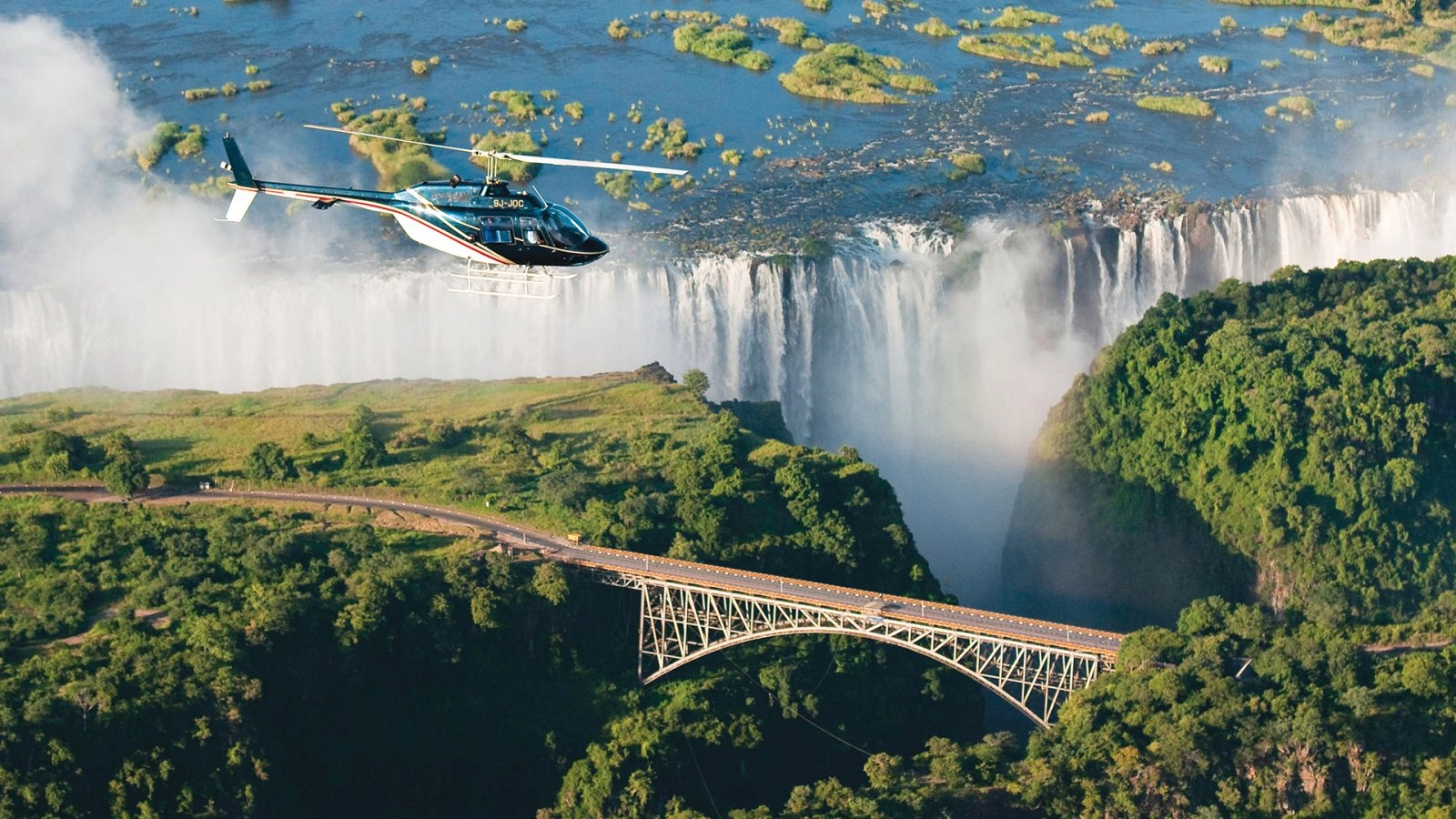
There is no reason to continue a full safari-guide daily gratuity during independent leisure days.
A mobile Zambia safari may involve one professional guide and a dedicated camp crew travelling with guests.
In this case, the guide should normally receive a separate gratuity while the wider crew receives a collective amount.
Approximately US$5–10 per guest per day for the camp crew can be used as a broad benchmark.
Ask your operator how the crew gratuity is normally distributed.
Per-person figures can become misleading when applied to larger families.
A family of five occupying one private vehicle should consider the total gratuity rather than automatically multiplying every individual recommendation by five.
If the family decides that US$40–60 per day collectively appropriately recognises excellent guide service, that may be entirely reasonable.
The amount remains discretionary.
There is no universal rule.
Consider children’s ages, group size and service level.
Where a lodge publishes its own per-person recommendation, ask whether it applies equally to children.
Solo travellers should not feel obliged to pay the same collective amount as a family.
However, remember that a private guide may still dedicate a vehicle and their full professional attention to one guest.
A per-person benchmark can therefore work well for solo travellers.
Tip professional guides when your time together ends.
Tip scouts or trackers according to the camp’s system.
Place general staff gratuities in the communal box at checkout.
Tip specialist canoe, fishing and activity guides when their service concludes.
Restaurant tips are given when paying the bill.
An envelope is useful for a substantial guide gratuity and allows you to include a short personal thank-you.
It is not necessary for smaller activity tips.
The communal lodge gratuity should be placed wherever the property instructs.
Any published range is a guideline, not a maximum.
A guide who demonstrates extraordinary knowledge, solves logistical problems calmly, consistently prioritises guest safety or transforms your understanding of Zambia‘s ecosystems may deserve considerably more.
Travellers should feel free to recognise truly exceptional service.
A gratuity is voluntary.
If service was genuinely poor, reduce or omit it.
Serious concerns involving safety, harassment, unethical guiding or significant service failures should also be reported to the safari company or camp management.
This is particularly important on walking and canoe safaris.
Never offer extra money to persuade a guide to approach elephants, hippos, lions or other wildlife more closely than they consider safe.
The guide’s judgement must take priority.
A professional who ends an approach because conditions have changed is demonstrating good guiding, not depriving guests of an experience.

Safari tourism plays an important role in supporting protected areas and employment around Zambia‘s wildlife destinations.
Responsible tipping should reinforce professional standards.
Reward guides who respect animals, follow park regulations, interpret ecosystems carefully and demonstrate strong safety practices.
Do not reward unethical behaviour merely because it produced a dramatic photograph.
One common mistake is tipping the professional guide while forgetting the wildlife scout who accompanied every walking safari.
Another is tipping only visible lodge employees rather than using the communal system.
Travellers also sometimes apply a separate tip to every game drive, walk and boat trip even though the same resident guide conducts all of them.
This is unnecessary.
Think in terms of people and service relationships, not the number of activities on the itinerary.
Tipping in Zambia should reflect the country’s highly personalised safari tradition. Professional guides deserve particular recognition because their knowledge, judgement and safety skills can fundamentally shape walking, driving and river-based experiences. Wildlife scouts and trackers may also make important contributions and should be recognised according to the system used by the camp.
At the same time, the employees working behind the scenes should not be forgotten. A communal lodge gratuity allows chefs, housekeepers, maintenance personnel and other staff to share in guests’ appreciation.
Carry a combination of suitable US-dollar denominations and Zambian kwacha, clarify each camp’s gratuity arrangements and separate safari tipping from the smaller activity-specific gratuities appropriate around Livingstone and Victoria Falls.
Most importantly, reward guides for professionalism, knowledge, conservation ethics and safety, not for taking unnecessary risks or manufacturing wildlife encounters.
When approached in this way, tipping remains simple: a voluntary and thoughtful acknowledgement of the people whose expertise and hospitality made your journey through Zambia more rewarding.
Get quick answers to the most common questions. If you still have questions, our safari experts are here to help.
Yes. Tipping is common throughout the safari and hospitality industry but remains discretionary.
Approximately US$10–20 per guest per day is a useful general planning range.
Approximately US$20–40 per day collectively is a useful benchmark for good service.
Yes. Where the walking guide is your regular resident safari guide, include the walking activities in their final gratuity rather than tipping after every walk.
Where the scout is tipped separately, approximately US$5–10 per guest per day of walking is a useful benchmark.
Yes, where dedicated trackers contribute directly to your safari.
Approximately US$5–15 per guest per night through the communal gratuity system can be used as a planning range.
Yes. Approximately US$10–20 per guest per day can be a useful broad benchmark for specialist canoe guiding.
Yes, after good professional service.
Yes, where guides, cruise crews or activity staff provide substantial personal service.
Routine pilot tipping is generally unnecessary.
Yes, particularly at international safari camps.
Yes, and local currency is particularly useful for smaller everyday gratuities.
Approximately 5–10% for good service when service has not already been included.
Not when the same resident guide accompanies you throughout the stay.
Usually not unless the itinerary specifically states that gratuities are included.
Routine tipping of scheduled safari-flight pilots is generally unnecessary.
Use judgement based on age and group size rather than automatically applying full adult figures.
Identify whether your guide, wildlife scout, tracker and general lodge staff are treated as separate gratuity categories, and then reward each according to the service actually provided.
Our safari experts are here to help you plan your safari. Get personalized advice, the latest information and a free, no-obligation quote.
We typically reply within a few hours.

Share This Article
Understanding tipping in Zimbabwe is particularly important for safari travellers because the country has one of southern Africa's…
Read article
Tipping in Namibia differs subtly from tipping in many other major African safari destinations because a significant proportion…
Read article
Tipping in Botswana is relatively easy once travellers understand how the country's safari industry operates. Unlike many East…
Read article
Understanding tipping in Tanzania requires more than knowing how much to give a safari driver. Tanzania offers an…
Read articleLet us take you closer to the wildlife, people and places that make Africa extraordinary.
Plan Your Safari Today