Tipping in Zambia: Complete Safari, Walking Safari & Travel Tipping Guide
Understanding tipping in Zambia is particularly useful for safari travellers because Zambia is famous for highly personalised wilderness…
Read article
Travel Guide
Tipping in Kenya is relatively straightforward once you understand that there is no single percentage or daily amount that applies to every situation. A traveller eating dinner at a Nairobi restaurant, spending four nights at a luxury camp in the Maasai Mara, taking a private safari through Amboseli and Tsavo, staying at a beach resort in Diani or travelling with the same driver-guide for ten days will encounter completely different service arrangements. The appropriate way to recognise good service therefore depends on who provided it, how long they assisted you, whether you travelled privately or as part of a group, and whether a service charge or staff gratuity has already been included.
Tipping in Kenya is relatively straightforward once you understand that there is no single percentage or daily amount that applies to every situation. A traveller eating dinner at a Nairobi restaurant, spending four nights at a luxury camp in the Maasai Mara, taking a private safari through Amboseli and Tsavo, staying at a beach resort in Diani or travelling with the same driver-guide for ten days will encounter completely different service arrangements. The appropriate way to recognise good service therefore depends on who provided it, how long they assisted you, whether you travelled privately or as part of a group, and whether a service charge or staff gratuity has already been included.
For safari travellers, the most important distinction is usually between the professional safari guide or driver-guide who accompanies you personally and the much larger team working at your lodge or tented camp. The guide is generally tipped directly, while lodge and camp employees are often recognised through a communal gratuity box. Additional people such as trackers, walking guides, Maasai community guides, porters, balloon-safari crews and transfer drivers may receive smaller activity-specific gratuities. Understanding these categories before travelling makes it much easier to budget appropriately without feeling that you need to hand out money constantly.
Tipping in Kenya is customary within the tourism and hospitality industry but it is not a compulsory tax. Recent Kenya-specific guidance similarly describes gratuities as voluntary while noting that they are widely practised in safari camps, hotels and restaurants.
Tipping is widely appreciated in Kenya‘s tourism industry, particularly when somebody has provided attentive, knowledgeable or highly personalised service. International visitors should nevertheless avoid thinking of every interaction as requiring a payment. A gratuity is fundamentally an acknowledgement of service rather than a fee for simply meeting an employee. Your safari package, national park entrance fees, accommodation charges and activity fees pay for the services included in your itinerary; gratuities are additional recognition for the people who deliver those services particularly well.
This distinction becomes important on safari because a Kenyan itinerary can involve a surprisingly large number of people. Your main driver-guide may accompany you for an entire week, while a Maasai Mara camp employs chefs, housekeepers, waiters, security staff, maintenance teams, reception employees and managers. A conservancy may provide a specialist walking guide or spotter, while a hot-air balloon excursion introduces another completely separate crew. Trying to tip everyone using the same formula makes little sense. Instead, think about the service relationship: long-term personal guides normally receive a direct gratuity based on the duration of the safari, camp staff normally share a collective gratuity, and short-duration activity providers receive smaller service-specific tips.
Your safari guide is normally the most significant individual gratuity on a Kenyan safari because this person has the greatest influence on the quality of your wildlife experience. Depending on your itinerary, your guide may meet you in Nairobi, drive you through several national parks and reserves, conduct game drives, identify mammals and birds, interpret animal behaviour, explain Kenyan history and culture, coordinate accommodation check-ins, communicate with park personnel, manage changing road conditions and ensure that you arrive at activities at the correct time. A knowledgeable guide also understands when to remain quietly at a sighting rather than constantly driving in search of another animal, where to position the vehicle without disturbing wildlife and how to give every guest a reasonable opportunity to photograph what they have travelled to see.
Current published Kenyan guidance varies, but figures around US$15–25 per guest per day are commonly suggested for driver-guides, while some operators or properties may recommend amounts on a per-vehicle or per-group basis. The important point is not to treat a single internet figure as an official Kenyan tariff. Before multiplying any suggested figure across a family or group, determine whether the recommendation is per traveller, per couple, per vehicle or from the entire travelling party.
For a couple on a private safari, approximately US$20–40 per day from the couple as a whole can be a sensible planning range for solid professional service, although travellers may choose to give more after exceptional guiding. Larger families and private groups should consider the overall amount rather than automatically multiplying a couple’s recommendation by every passenger. On scheduled group departures, a per-person approach can make more sense because several unrelated travellers contribute independently.
The guide’s gratuity is normally given at the end of the safari, not after every game drive. If your safari changes guides midway through the itinerary—for example, you travel overland with one guide and later fly into a conservancy where a camp guide takes over—tip each guide when their period of service finishes.
Wildlife sightings alone are a poor measure of guide quality. A guide cannot command a leopard to appear in the Maasai Mara, guarantee that elephants will stand in front of Mount Kilimanjaro in Amboseli or arrange for a cheetah to hunt during your morning drive. Wildlife encounters depend on natural behaviour, season, weather, luck and many other factors beyond a guide’s control.
Instead, evaluate the guide’s knowledge, professionalism, patience, driving standards, ability to interpret animal behaviour, consideration for other vehicles, respect for wildlife, communication and capacity to adapt the itinerary intelligently. An exceptional guide often demonstrates their value in subtle ways: recognising alarm calls before anybody sees a predator, knowing when an animal is likely to move, positioning the vehicle without blocking another guest, identifying an unfamiliar bird from a distant silhouette, adjusting a departure time to improve wildlife opportunities or understanding when a family needs a quieter afternoon rather than another long drive.
Guides who consistently respect park and conservancy regulations should be rewarded rather than penalised for refusing requests that would disturb wildlife.
The Maasai Mara National Reserve and surrounding private conservancies create several different guiding arrangements. If you arrive with your own private driver-guide from Nairobi and that guide conducts all your game drives, you normally tip that person at the end of the safari. If you fly into the Mara and use the camp’s open safari vehicles, however, you may have a camp-based guide for two, three or four days. In that case, tip the camp guide when you leave.
Some conservancy camps use a guide-and-spotter arrangement. Where a tracker or spotter has accompanied you consistently and made a meaningful contribution to sightings, it is appropriate to recognise that person separately unless the camp specifically tells guests that guide gratuities are pooled.
This is why asking about the camp’s tipping system is useful. A reputable property should be able to explain whether guides are tipped directly, whether spotters share the guide’s gratuity and whether the general staff gratuity box excludes guides.
The safari lodge or tented camp is where communal tipping becomes particularly valuable. Guests naturally interact most with waiters, bartenders and reception staff, but a comfortable safari stay depends on a much larger group of people. Housekeeping employees prepare rooms while guests are on game drives; kitchen teams may begin breakfast preparation before dawn; maintenance workers keep water and power systems functioning in remote environments; security staff may escort guests after dark; laundry teams, gardeners and stores personnel contribute to the operation without having lengthy conversations with guests.
For this reason, many Kenyan safari properties operate a general staff gratuity box. Rather than tipping every waiter or housekeeper separately, guests place one contribution into the communal system when checking out. This allows the property to distribute gratuities among eligible staff, including employees whose work is important but less visible.
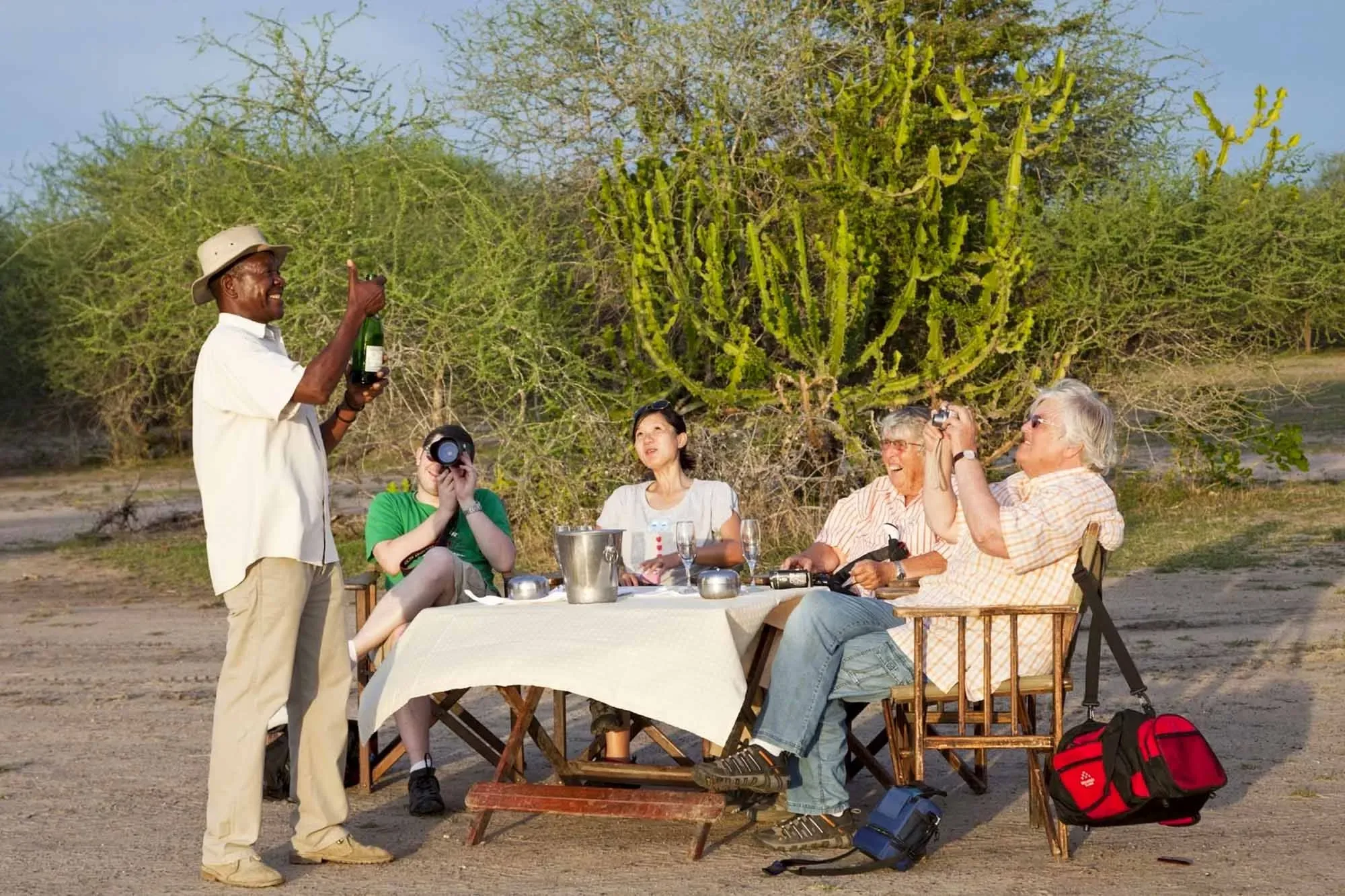
A reasonable general planning allowance is approximately US$5–15 per guest per night for the lodge or camp team, depending on the property, service level and your satisfaction. Some premium properties provide their own recommendations, and these should take precedence over a generic online figure.
Remember that the general staff tip often does not include your safari guide. Ask if you are uncertain.
If the property operates a communal gratuity system, repeatedly tipping individual waiters after every meal can undermine the purpose of that system. One employee who serves guests directly may accumulate substantial gratuities while chefs, housekeepers and maintenance workers receive nothing despite contributing equally to the stay.
Using the communal system is normally the fairest approach. If a particular employee has provided unusually personal service and you wish to recognise them separately, ask the camp manager whether individual gratuities are permitted and whether that employee already participates in the shared pool.
Restaurant tipping operates differently from safari tipping. At sit-down restaurants in Nairobi, Mombasa, Naivasha and other tourist centres, a gratuity of approximately 5–10% is a reasonable benchmark when good service has been provided and a service charge has not already been included.
Always examine the bill before adding a percentage. Some restaurants and hotels include a service charge automatically. In that situation, an additional gratuity is optional rather than necessary.
At cafés, takeaway counters and casual establishments, tipping is considerably less formal. Rounding up the bill or leaving a small amount for attentive service is perfectly acceptable. You do not need to apply a restaurant percentage to every cup of coffee or quick lunch.
For everyday tipping, Kenyan shillings (KES) are extremely practical because employees can spend them immediately without exchanging foreign currency. Kenyan guidance also commonly recommends local currency for ordinary service staff, although US dollars remain widely used in international safari environments.
For your main safari guide or a high-end camp gratuity, clean US-dollar notes can be convenient. For hotel porters, restaurant servers, transfer drivers and other smaller services, Kenyan shillings are generally easier.
Carrying both currencies gives you flexibility. What matters more than choosing one currency exclusively is having suitable denominations.
A common safari tipping mistake is arriving with nothing except US$50 and US$100 notes. These may be useful for your final guide gratuity but are impractical for a luggage porter, short transfer or activity guide.
Prepare a selection of smaller denominations before travelling. Kenyan shillings can be obtained from ATMs and exchange facilities in major towns and airports, while safari areas may have limited access to banking facilities.
Kenya‘s mobile-money infrastructure makes digital transfers possible in situations where both parties are comfortable using them, and contemporary Kenyan tourism guidance increasingly acknowledges mobile or digital tipping alongside cash. However, an international traveller should not assume that every safari employee wants or can conveniently receive a direct mobile-money transfer.
Cash remains the simplest universal option. Some lodges also allow gratuities to be added to a card payment or settled digitally through the property. If you use this approach, ask whether the money goes directly into the staff gratuity pool and whether guides are included.
At a Nairobi hotel, beach resort or safari lodge, a luggage porter who carries bags to your room can be given a small gratuity. Approximately KES 200–500 is reasonable for normal luggage assistance, with discretion to give more if there are numerous or particularly heavy bags.
There is no need to calculate this per kilogram or per suitcase. The amount simply recognises helpful service.
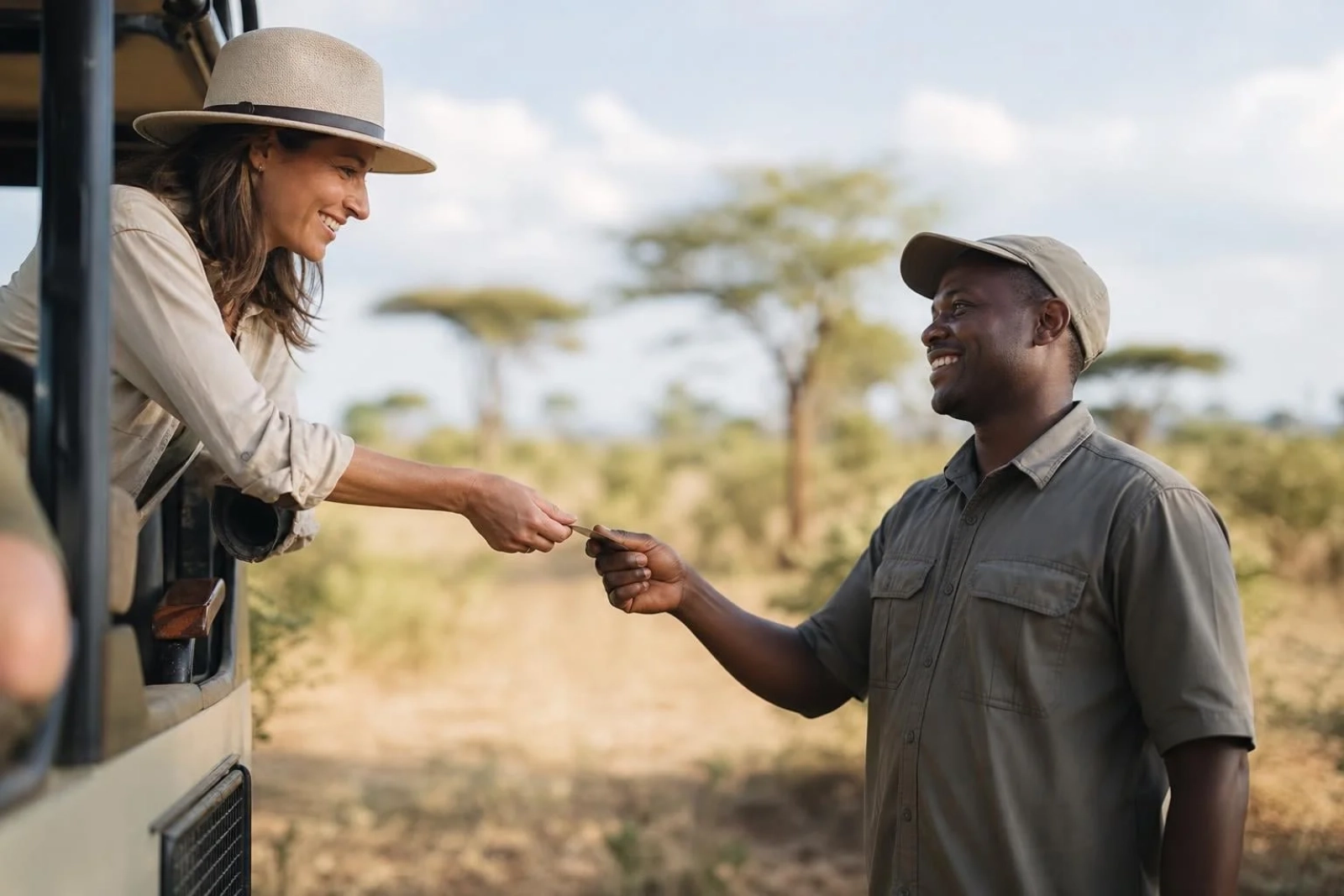
At a safari camp where all staff gratuities are explicitly pooled, you may not need to tip the luggage porter separately.
Housekeeping is easily forgotten because room attendants frequently work while guests are away. At full-service city hotels and beach resorts, leaving approximately KES 300–700 per room per day can be a reasonable gesture for good service.
If possible, leave housekeeping tips daily rather than only at checkout because a different employee may service your room on different days.
At safari lodges with a communal gratuity system, housekeeping should normally benefit from the shared pool instead.
For a straightforward transfer between Jomo Kenyatta International Airport and a Nairobi hotel, approximately US$3–5 equivalent is sufficient after good service. A longer transfer, significant waiting time or considerable luggage assistance may justify more.
If the person collecting you at the airport is also your safari driver-guide for the following week, there is no need to tip the airport pickup separately. Recognise their overall service at the end of the safari.
Kenya‘s fly-in safari network connects Nairobi with destinations including the Maasai Mara, Amboseli, Samburu, Lewa and Laikipia. Passengers do not normally tip scheduled airline pilots. However, a lodge representative who handles substantial luggage, coordinates a complicated transfer or provides a separate ground service may receive a small gratuity where appropriate.
A hot-air balloon safari in the Maasai Mara is a separately operated excursion and therefore should not be confused with your regular game-drive guiding.
The experience typically involves a pilot, ground crew, transfer drivers and breakfast staff. You are not required to tip every person individually. If the operator provides a gratuity system, use it. Otherwise, a discretionary gratuity to the pilot or crew after an excellent experience is appropriate.
Your balloon gratuity does not replace the tip for your normal safari guide.
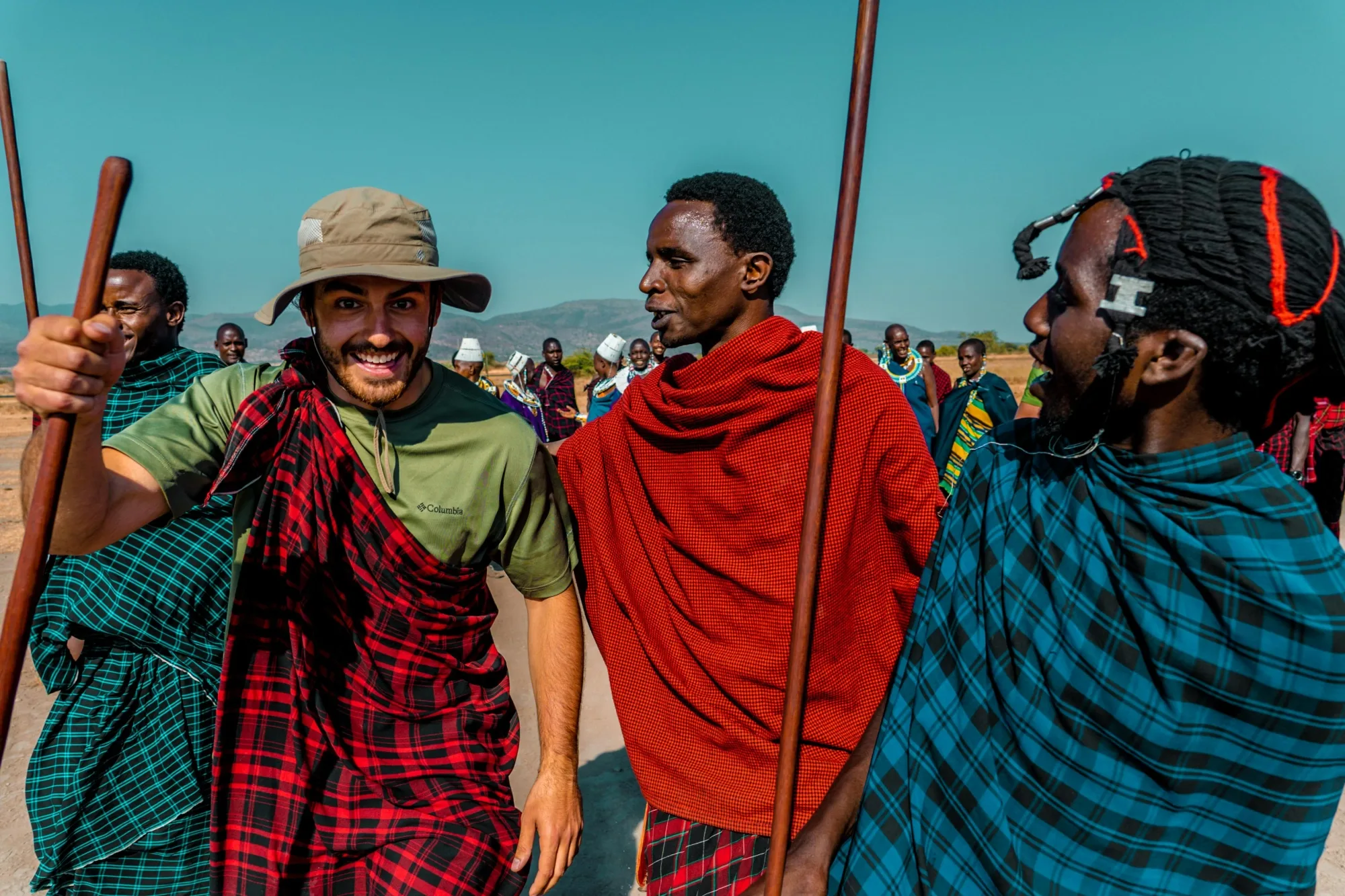
Visits to Maasai communities should be approached differently from ordinary commercial tipping. Where a community guide has spent significant time explaining traditions, livelihoods, local history or conservation relationships, a gratuity for that professional guiding service can be appropriate.
However, responsible community tourism should not become indiscriminate distribution of money. Avoid handing cash randomly to children or photographing people in exchange for spontaneous payments unless this forms part of an agreed arrangement.
Where possible, pay the official community visit fee, buy genuine locally produced crafts if you want souvenirs and tip the person who has genuinely provided a guiding service.
Walking safaris in private conservancies, Laikipia and other appropriate areas may involve a specialist walking guide, armed ranger or tracker. These professionals carry responsibilities that differ from those of a vehicle guide, particularly regarding guest safety and interpreting tracks, plants, insects and smaller ecological details that are easily missed from a vehicle.
If these specialists are separate from your regular guide, an activity-specific gratuity of approximately US$5–15 per guest can be appropriate, adjusted according to the length and quality of the experience.
For travellers visiting Amboseli National Park, the basic rules remain the same. If your private driver-guide travels with you from Nairobi and conducts your game drives, tip that person at the conclusion of your safari. Lodge employees should generally be recognised through the property’s communal system.
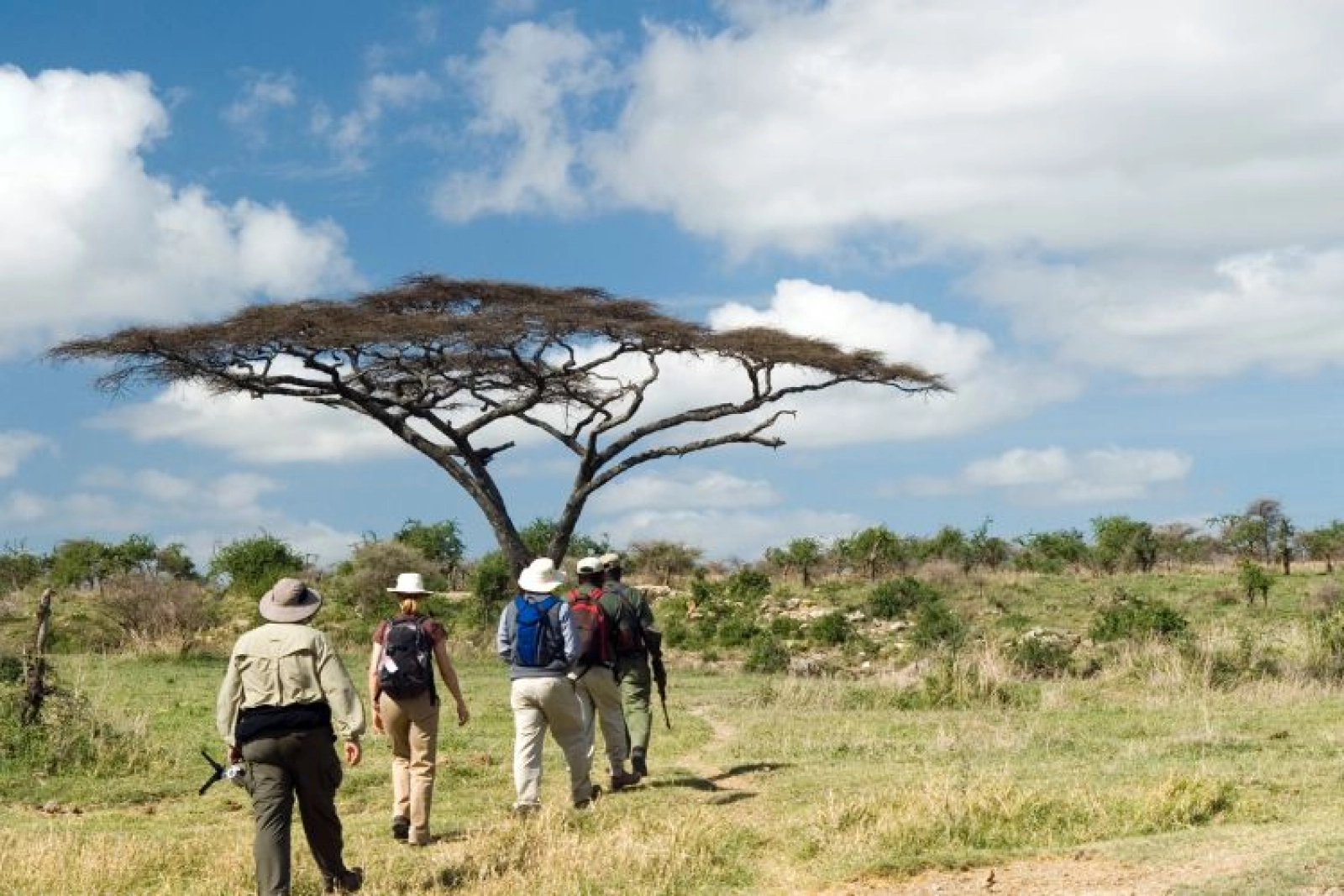
If you participate in a separate guided walk, cultural visit or specialist activity, consider a smaller additional gratuity for that service.
Northern Kenya frequently offers activities beyond traditional vehicle safaris, including guided walks, camel experiences, hides, conservation visits and cultural activities. Consequently, guests may interact with more specialist guides than they would on a conventional national-park itinerary.
Do not feel obliged to produce a large tip every time somebody introduces themselves. Distinguish between employees providing routine services covered by the communal lodge gratuity and specialists who have personally guided you for several hours.
A Kenya safari is frequently combined with Diani Beach, Mombasa, Watamu, Malindi or Lamu. Tipping at the coast resembles ordinary hotel and resort etiquette more than safari-camp etiquette.
Restaurant servers can receive approximately 5–10% where service is not included. Housekeeping may receive a modest daily gratuity, luggage porters a small amount per service and private excursion guides a larger activity-based gratuity.
For snorkelling trips, dhow excursions, diving or private boat trips, consider the size of the crew and whether gratuities are pooled. It is normally unnecessary to hand money separately to every crew member.
A Mount Kenya climb requires a completely different tipping calculation from an ordinary wildlife safari because trekking expeditions may involve a lead guide, assistant guides, cooks and several porters. The appropriate gratuity depends heavily on route length, expedition style, group size and the size of the support crew.
Before climbing, ask your trekking company for a written tipping recommendation showing the different crew roles and whether suggested figures are per traveller or from the group collectively. Pooling the group’s gratuity and distributing it transparently at the end of the trek is usually easier than tipping crew members randomly throughout the climb.
Do not apply a standard safari driver-guide rate to a mountain crew.
Budget camping safaris may include a safari driver-guide and a separate cook or camp assistant. The cook can easily be overlooked because travellers naturally associate the guide with the safari experience, yet the cook may be preparing several meals every day under basic field conditions.
Where you have a dedicated cook, consider approximately US$5–10 per traveller per day, adjusted according to group size and service. For larger groups, a collective group amount may be more appropriate.
| Service | Practical Planning Guideline |
|---|---|
| Private safari driver-guide | About US$10–20+ per traveller/day, adjusted for group size |
| Safari guide from a couple | Often approximately US$20–40/day collectively |
| Camp/lodge staff | Around US$5–15 per guest/night |
| Restaurant | Approximately 5–10% if service not included |
| Hotel porter | Roughly KES 200–500 |
| Housekeeping | Roughly KES 300–700 per room/day |
| Airport transfer | Approximately US$3–5 equivalent |
| Specialist walking guide | Approximately US$5–15 per guest/activity |
| Camp cook | Approximately US$5–10 per traveller/day where separately employed |
| Community guide | Modest activity-specific gratuity |
| Balloon crew | Discretionary gratuity |
| Beach excursion crew | Modest shared gratuity |
These figures are guidelines for budgeting rather than compulsory Kenyan rates.
Consider a couple travelling privately for seven days through Amboseli, Lake Naivasha and the Maasai Mara with the same driver-guide. If they decide that US$30 per day collectively is appropriate for their guide, they would set aside US$210 for the guide.
If they spend six nights at full-service safari properties and contribute US$15 per night collectively to staff gratuity boxes, they would budget another US$90. They might then allocate smaller amounts for a walking guide, luggage assistance or other optional services.
Their total safari gratuity budget could therefore be around US$300–400 before restaurant and city-hotel tips.
This does not mean every couple must spend that amount. It simply demonstrates why gratuities should be considered during trip planning rather than discovered on the final day.

A family should not automatically multiply every couple’s recommendation by four. If the family has one private vehicle and one guide, consider an appropriate gratuity for the service provided to the whole family.
For example, the family might decide on US$40–60 per day collectively for excellent guiding. Over seven days this would be US$280–420.
The appropriate amount depends on service, budget and the age of the children.
There is no national formula requiring this. A family with two small children should use judgement rather than treating each child as another independent adult traveller.
Where a lodge explicitly recommends a per-guest amount, ask whether children are included.
The easiest approach is to tip when a particular service relationship ends. Give your safari guide their gratuity when saying goodbye at the end of the safari. Place the lodge-team contribution in the communal gratuity box when checking out. Tip an activity guide when the activity concludes and a restaurant server when settling the meal bill.
This approach eliminates the need to carry an envelope on every game drive.
An envelope is particularly useful for a safari guide because it keeps the transaction discreet and allows you to include a short thank-you message.
It is not compulsory.
A sincere verbal thank-you accompanying the gratuity is equally important.
A tip is not compulsory compensation regardless of performance. If service was genuinely poor, you may reduce or omit a gratuity.
For serious issues involving unsafe driving, harassment, unethical wildlife behaviour or major service failures, speak to the safari company or lodge management rather than communicating exclusively through the tip.
Travellers should never offer extra money for off-road driving where it is prohibited, crowding predators, obstructing animals, approaching wildlife dangerously closely or remaining in restricted areas.
A professional guide who refuses such requests is protecting Kenya‘s wildlife and tourism industry.
One of the biggest mistakes is failing to distinguish between per-person and per-vehicle recommendations. Another is tipping only the guide while forgetting the wider camp team. Travellers also sometimes arrive with only large foreign notes, fail to check restaurant bills for existing service charges or assume that an expensive lodge rate automatically includes gratuities.
Another mistake is treating every cultural interaction as an opportunity for cash handouts. Responsible tourism supports legitimate services and community enterprises rather than creating expectations that every encounter with a visitor should produce money.
Tipping in Kenya becomes simple once you stop looking for one universal percentage. The person guiding you privately across the country should normally receive the largest direct gratuity because of the duration and responsibility of their service. Safari lodge and camp teams are best recognised through communal gratuity systems, while restaurants, porters, transfer drivers and specialist activity guides receive smaller service-specific amounts.
Carry a mixture of Kenyan shillings and suitable US-dollar denominations, ask properties how their staff pools work and clarify whether any recommendation is per guest or per vehicle. Most importantly, allow the quality of service to guide your decision.
A thoughtful gratuity accompanied by genuine appreciation is more meaningful than mechanically following a number found online.
Get quick answers to the most common questions. If you still have questions, our safari experts are here to help.
Yes. Tipping is common within tourism, safari camps, hotels and restaurants, although it remains discretionary rather than legally compulsory.
Approximately US$10–20 or more per traveller per day is a useful broad planning range for private safari guiding, but group size matters considerably.
Approximately US$20–40 per day collectively can be a practical benchmark for good private guiding.
No. Most travellers give their safari guide one gratuity at the end.
Around US$5–15 per guest per night through the camp’s communal system is a useful starting range.
Both are useful. Kenyan shillings are particularly practical for smaller everyday tips, while US dollars are commonly used for larger safari gratuities.
Sometimes. Ask whether the employee or lodge accepts digital gratuities.
Approximately 5–10% is appropriate for good table service when service has not already been included.
A discretionary gratuity to the balloon crew after good service is appropriate.
Yes, if the person has provided a genuine professional guiding service. Avoid indiscriminate cash handouts.
Not if the same guide accompanies you throughout your stay. Tip at the end.
Usually not unless your itinerary specifically states that gratuities are included.
Budget for gratuities before travelling, distinguish your personal guide from the lodge team, carry small denominations and treat published amounts as flexible benchmarks rather than mandatory tariffs.
Our safari experts are here to help you plan your safari. Get personalized advice, the latest information and a free, no-obligation quote.
We typically reply within a few hours.

Share This Article
Understanding tipping in Zambia is particularly useful for safari travellers because Zambia is famous for highly personalised wilderness…
Read article
Understanding tipping in Zimbabwe is particularly important for safari travellers because the country has one of southern Africa's…
Read article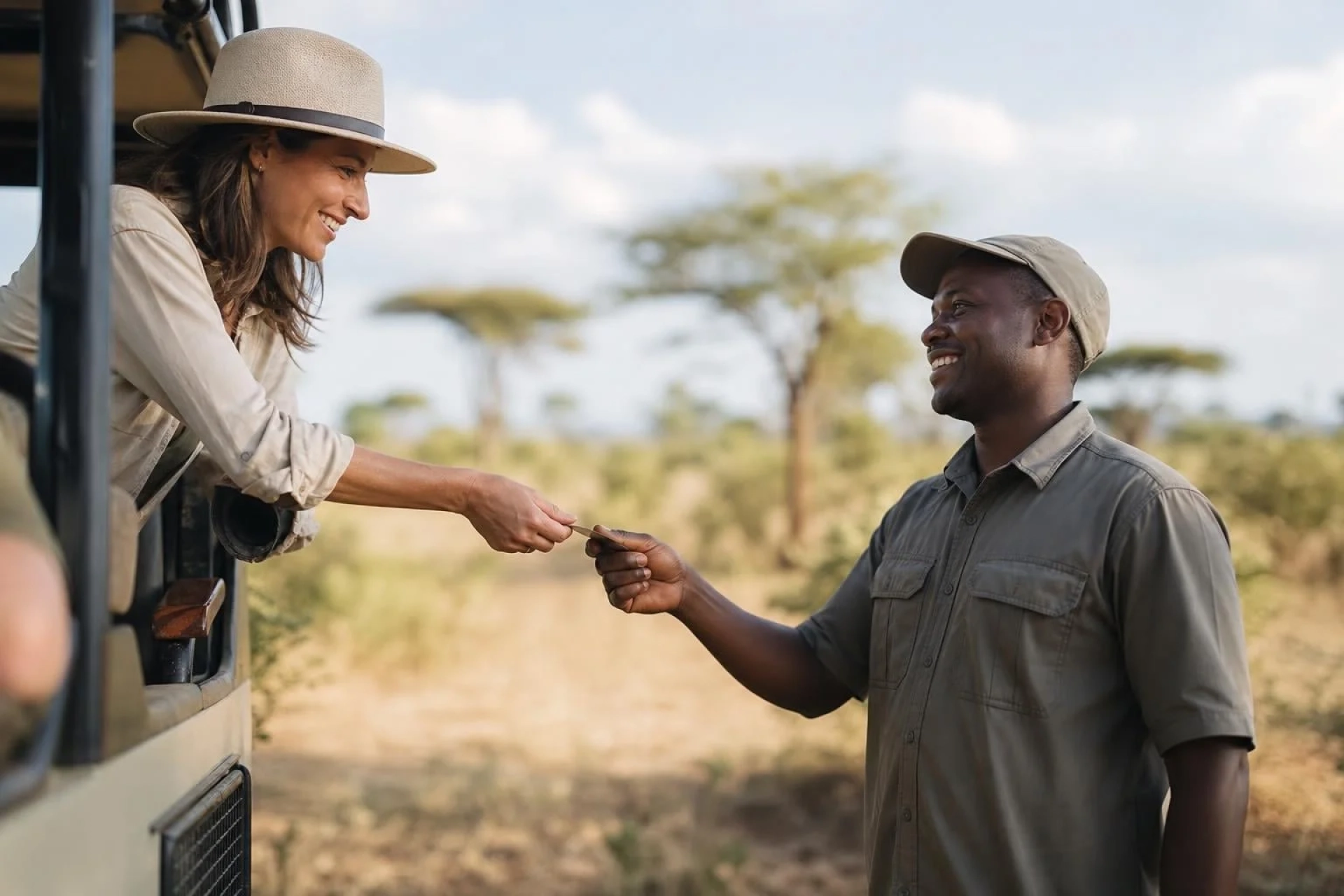
Tipping in Namibia differs subtly from tipping in many other major African safari destinations because a significant proportion…
Read article
Tipping in Botswana is relatively easy once travellers understand how the country's safari industry operates. Unlike many East…
Read articleLet us take you closer to the wildlife, people and places that make Africa extraordinary.
Plan Your Safari Today