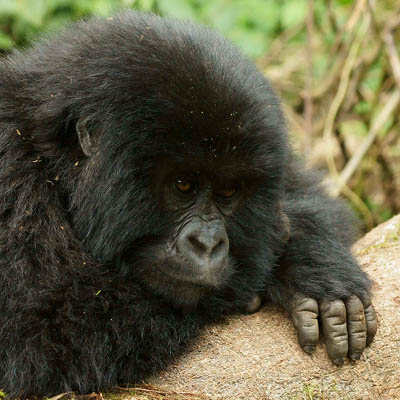
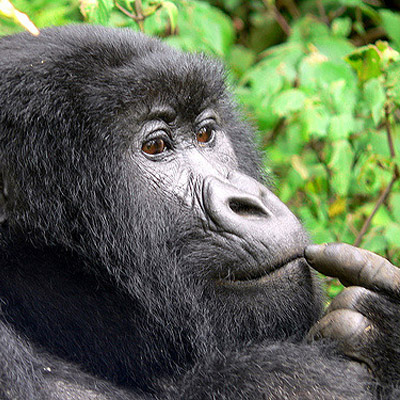
Mountain gorillas require protected habitat
Mountain gorillas require protected habitat. At the same time, communities around the park require land, employment and economic opportunities.


A cultural safari in Volcanoes National Park gives travelers an opportunity to discover the human stories surrounding Rwanda's most famous mountain gorilla destination. Set within the spectacular Virunga highlands of northwestern Rwanda, Volcanoes National Park is internationally recognized for mountain gorilla trekking, golden monkey tracking, volcanic scenery and its long history of primate research and conservation.
A cultural safari in Volcanoes National Park gives travelers an opportunity to discover the human stories surrounding Rwanda's most famous mountain gorilla destination. Set within the spectacular Virunga highlands of northwestern Rwanda, Volcanoes National Park is internationally recognized for mountain gorilla trekking, golden monkey tracking, volcanic scenery and its long history of primate research and conservation. However, the communities living around the park are equally important to understanding this remarkable region.
Travelers who arrive only for a morning Rwanda gorilla trek and immediately leave afterward experience just one part of the destination. Beyond the protected forest are densely cultivated volcanic landscapes where families grow crops, raise livestock, produce traditional crafts, prepare local foods and participate in cultural traditions passed between generations.
A well-planned cultural experience can introduce travelers to Rwandan community tourism, traditional music, dance, agriculture, craft production, local cuisine and the evolving relationship between conservation and community livelihoods.
Combining culture with gorilla trekking produces a more complete safari because visitors experience both the wildlife being protected and the people whose communities surround its habitat.
Plan Your Cultural Safari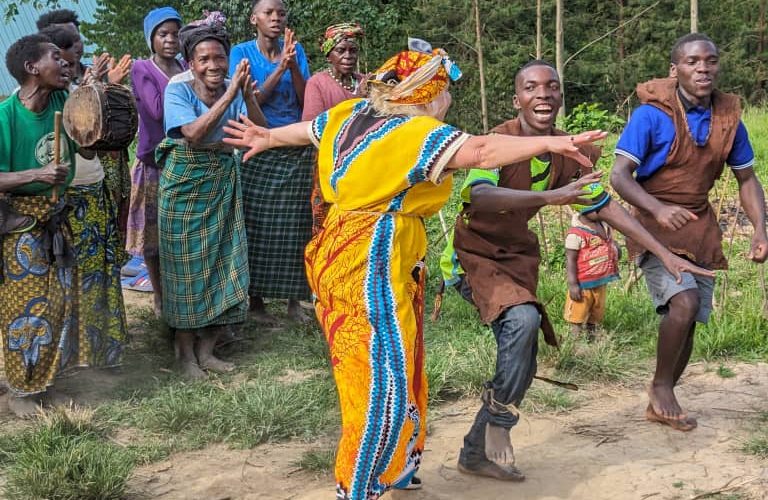
The park protects important montane and bamboo forest habitats and forms part of the wider ecosystem supporting the endangered mountain gorilla.
Its dramatic volcanic peaks dominate the surrounding countryside.
Several types of community experiences in Rwanda can be incorporated into a Volcanoes National Park itinerary.
Visitors may explore agricultural villages, meet craftspeople, learn about food preparation or attend cultural performances.
A cultural safari in Volcanoes National Park can include several complementary experiences. Exact programmes vary by community partner — responsible arrangements emphasise genuine interaction.
The park protects important montane and bamboo forest habitats and forms part of the wider ecosystem supporting the endangered mountain gorilla. Its dramatic volcanic peaks dominate the surrounding countryside. Outside the park boundary, fertile volcanic soils support intensive agriculture. Farms extend across the lower slopes, creating a striking transition between protected forest and cultivated land.
Several types of community experiences in Rwanda can be incorporated into a Volcanoes National Park itinerary. Visitors may explore agricultural villages, meet craftspeople, learn about food preparation or attend cultural performances. Programs vary according to location and community organization.
The wider Great Lakes and forest regions of Central and East Africa have historically been home to Batwa communities, whose cultural heritage has strong associations with forest environments. In some areas around Rwanda's conservation landscapes, community initiatives can provide opportunities to learn about historical forest knowledge and traditional ways of life. Such experiences require sensitivity.

Songs and rhythms have historically accompanied celebrations, ceremonies and social events. Drums are particularly powerful elements of many performances. The sound of traditional drumming against the backdrop of the Virunga Mountains can create an unforgettable experience.

Visitors may encounter performances featuring dancers wearing traditional clothing and moving to drums and songs. Different dances may historically have been associated with celebration, strength, beauty or court traditions. Travelers are sometimes invited to participate.

The volcanic landscape surrounding the park is intensely cultivated. Potatoes are particularly important in parts of northern Rwanda, while beans, maize and vegetables may also be seen. Walking through agricultural areas with a community guide allows visitors to learn about planting, harvesting and local markets.

Some community programs can connect agriculture with traditional Rwandan cuisine. Visitors may begin by learning about crops and then participate in preparing a meal. This farm-to-table approach demonstrates where ingredients originate and how they become part of everyday household food.
Food should be considered an important cultural attraction in its own right. A Rwandan food experience can introduce travelers to ingredients that appear throughout the country's agricultural landscapes. Meals may be prepared using relatively simple techniques, but their cultural value lies in the connection between household, farm and community.
Craft production provides another opportunity for meaningful cultural interaction. Community groups around the park may produce Rwandan baskets, woven goods, jewelry, textiles and decorative items. Basket weaving is particularly associated with Rwanda's cultural identity.
Some cultural programs allow visitors to try basic basket weaving in Rwanda. Experienced artisans demonstrate techniques before allowing guests to attempt simple patterns. Most visitors quickly discover that maintaining consistent tension and shape is difficult.
Exploring a local market around Musanze can reveal another dimension of community life. Farmers bring potatoes, vegetables, beans, fruit and other produce from surrounding villages. Other traders sell clothing, household products and prepared food.
The relationship between gorilla conservation and local communities is one of the most important subjects to explore during a cultural safari. Conservation requires long-term local support. Tourism provides jobs and business opportunities, while conservation programs and revenue-sharing initiatives can contribute to community development.
Cultural experiences are easiest to enjoy when they are woven into the wider itinerary rather than treated as an afterthought.
After cultural exploration and gorilla trekking, travelers can continue toward Lake Kivu. Rubavu provides one of the easiest lakeside extensions.
Best for: Combined itineraries
Most visitors travel between the park and Kigali. A broader cultural itinerary can include Kigali cultural tours, markets, art galleries and food before continuing north.
Best for: Combined itineraries
A cultural experience in Volcanoes National Park can be highly rewarding for families when children are prepared to be respectful guests.
Interactive crafts, markets and guided walks often become some of the most memorable moments of a family safari.
Ask your safari planner for family-friendly community visits with clear photography and gift guidelines.
Plan a Family Cultural Safari
A cultural safari in Volcanoes National Park can take place throughout the year.
The relatively drier seasons are comfortable for village and agricultural walks.
However, the Virunga highlands can receive rain in any month.
Travelers should ideally spend at least two nights for a basic gorilla itinerary.
Three nights are much better when adding cultural experiences.
A four-night stay can include gorilla trekking, golden monkey tracking, community tourism and another activity such as cave exploration.
Slowing the itinerary also allows travelers to appreciate the Virunga landscape rather than treating Musanze merely as a place to sleep before a trek.
Adventure in the Wild Safaris can match you with community partners where fees and craft purchases support residents directly.
Browse Rwanda Safaris
Responsible tourism requires respect for host communities.
Comfortable, modest clothing is appropriate for cultural visits.
Most cultural visits around Volcanoes National Park are arranged from nearby lodges, camps or town bases.
Tell us your preferred depth of cultural engagement when you enquire.
Choose a base near Volcanoes National Park that works with neighbouring communities when culture is a priority.
Combine Volcanoes National Park with other destinations in Rwanda for a richer cultural and wildlife itinerary.
Pair your cultural safari with wildlife, photography, birding or walking experiences in the same area.
 Bird Watching
https://www.gorillaugandasafaris.com/experiences/rwanda/volcanoes-national-park/birding-safari/
Learn More
Cultural Experiences
A cultural safari in Kigali is one of the best ways to understand modern Rwanda before or after…
Learn More
Cultural Experiences
An Akagera National Park cultural safari combines Rwanda's premier savannah wildlife experience with opportunities to understand the communities,…
Learn More
Cultural Experiences
A cultural safari in Nyungwe National Park adds an important human dimension to one of Rwanda's most celebrated…
Learn More
Cultural Experiences
A cultural safari in Lake Kivu is one of the most rewarding ways to experience Rwanda beyond its…
Learn MoreYes. Gorilla trekking and cultural tours are one of the best combinations around Volcanoes National Park.
A half-day provides a basic cultural experience, but a full day allows deeper community interaction.
Yes. Crafts, farming, food and music can be particularly engaging for families.
Yes. Volcanoes National Park and Lake Kivu combine very easily.
Most cultural activities are less strenuous than gorilla trekking, although village walks may involve uneven or hilly terrain.
Community tourism helps spread the economic benefits of wildlife tourism and can strengthen links between local livelihoods and conservation.
Ready for a Richer Journey?
Tell us your dates, travel style and how deeply you want to engage with communities around Volcanoes National Park — Adventure in the Wild Safaris will build cultural experiences into one seamless trip.